
Last updated November 24, 2026
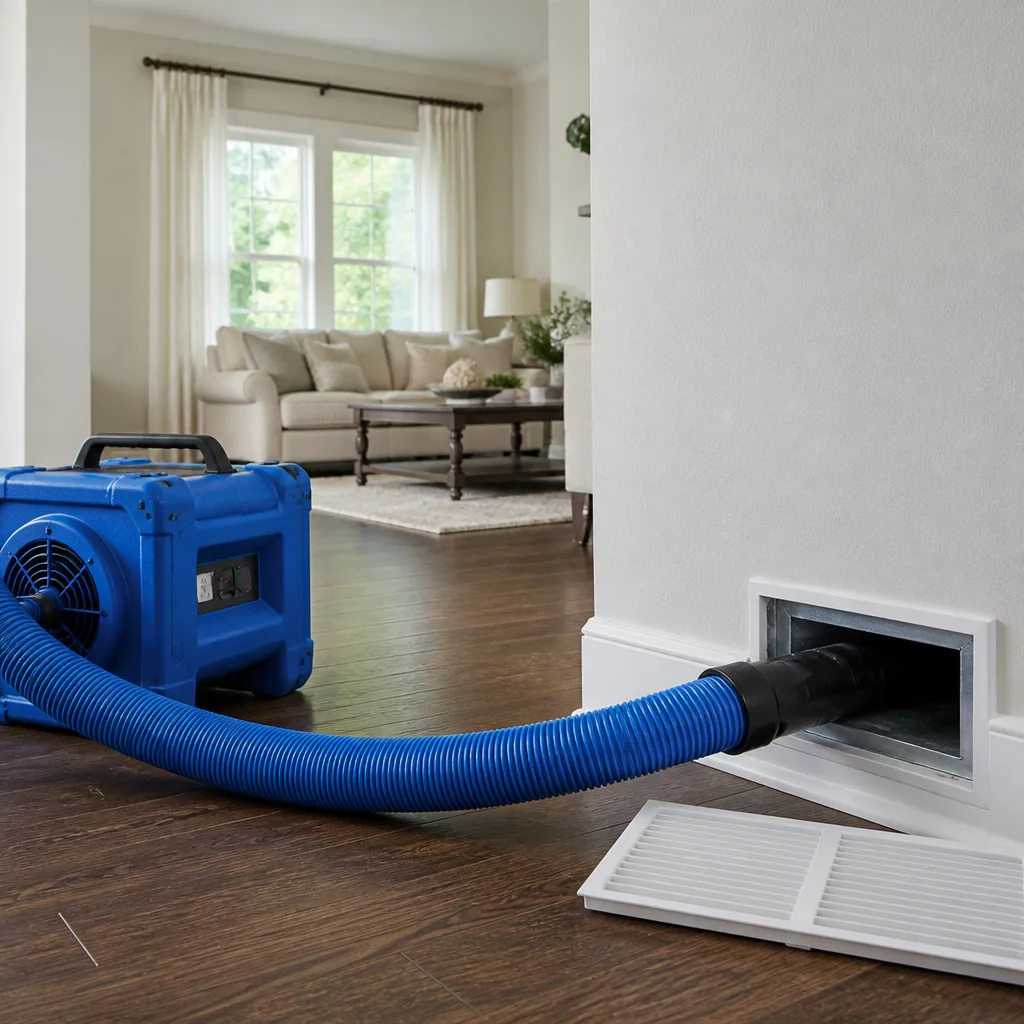 Whole-home duct cleaning
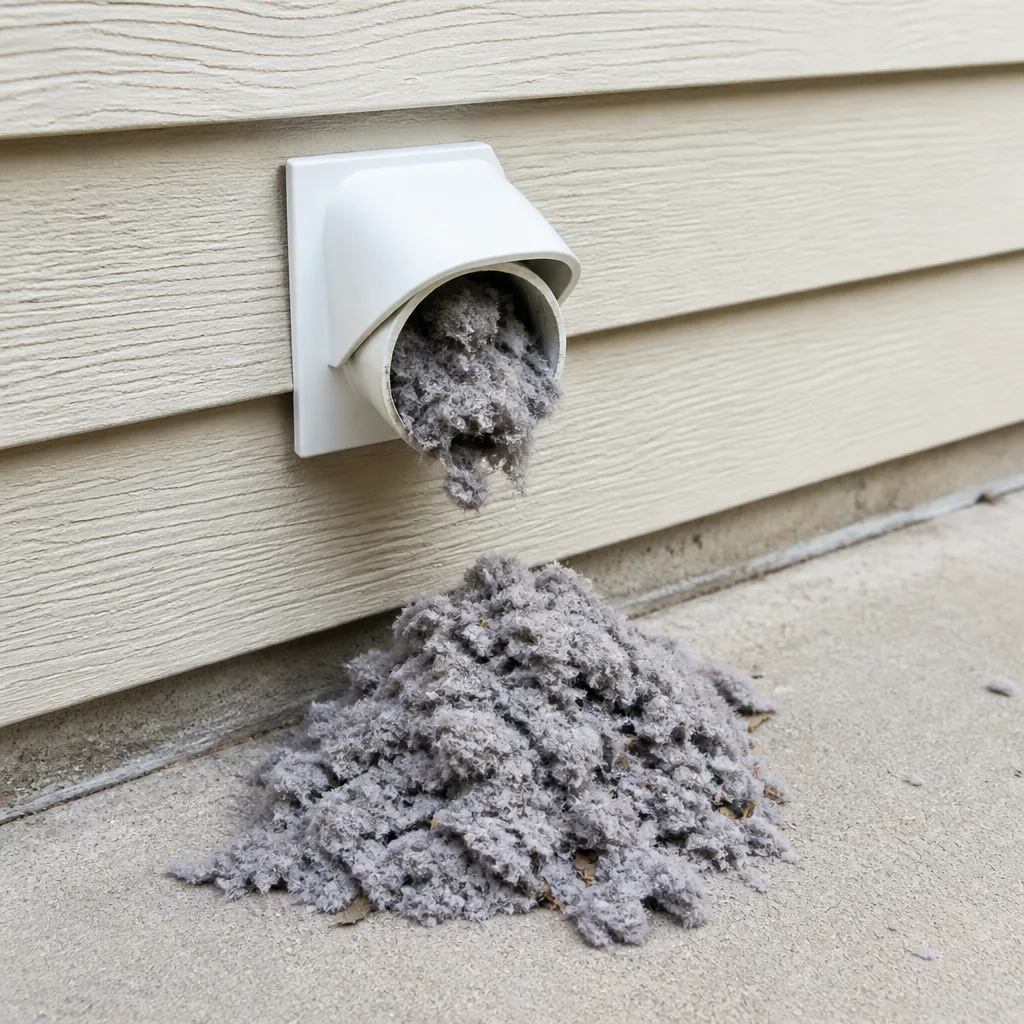 Dryer vent cleaning
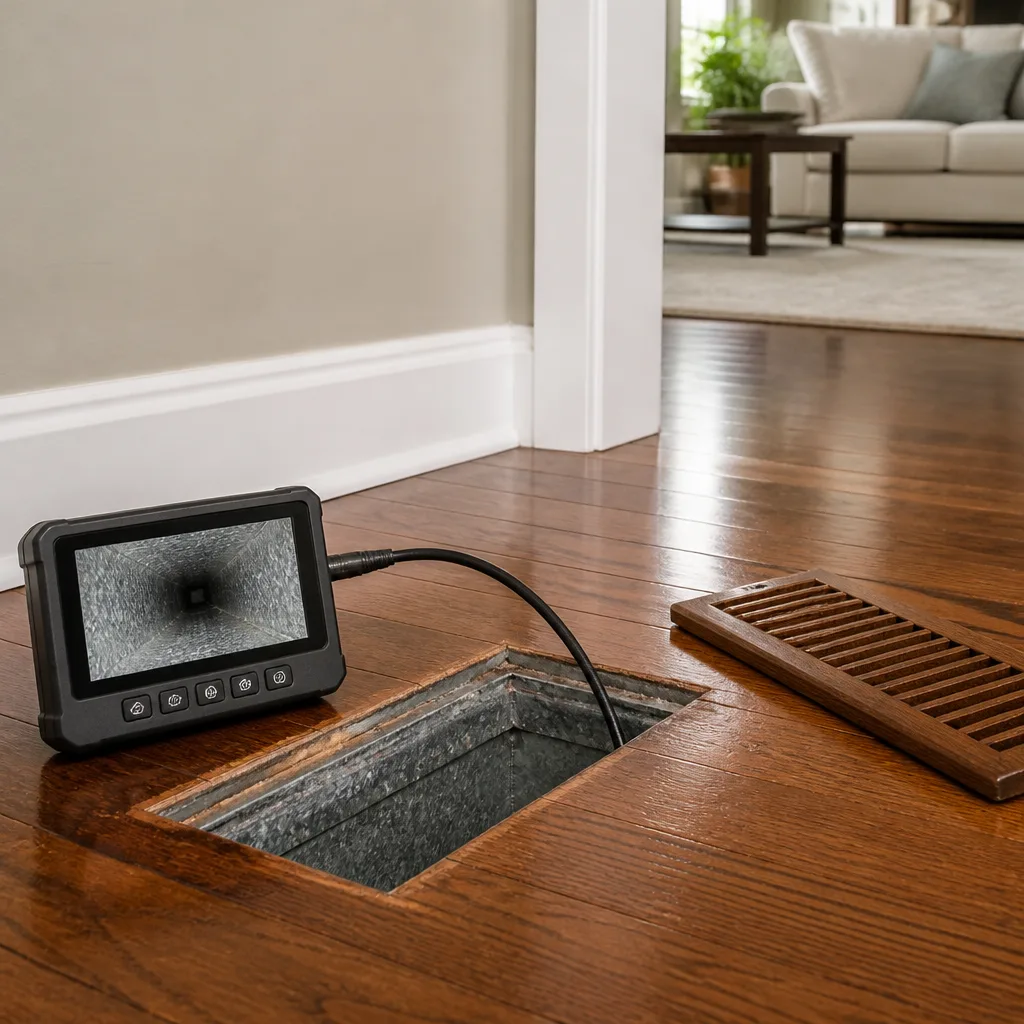 Camera inspection
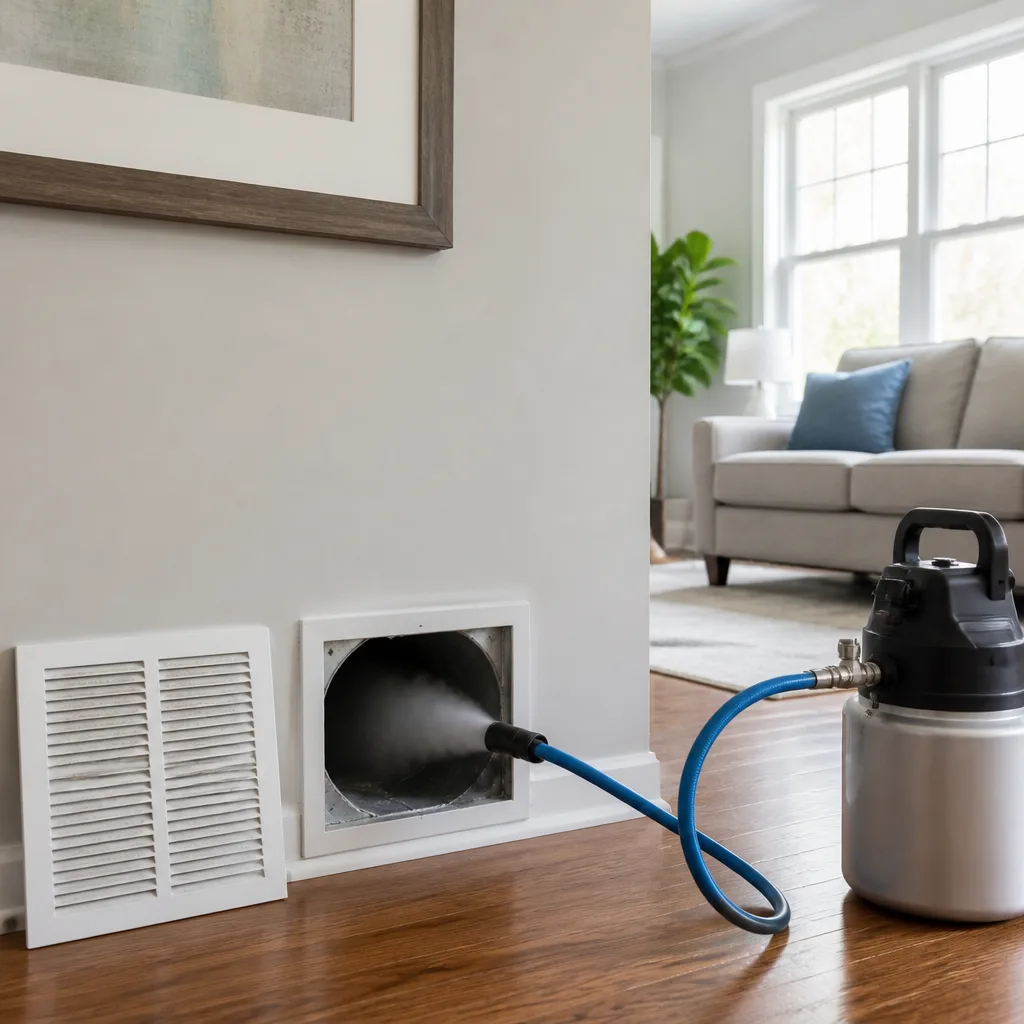 Sanitizing & deodorizing
Whole-system duct and dryer vent check with before-and-after photos - you see exactly what came out of your vents
That "$99 whole-house special" is a bait ad - the real number appears once they are in your hallway, or the "clean" is a shop-vac at the register. We photograph the inside of your ducts before and after instead.
Air Duct Cleaning Emergency Preparedness Guide for Woodbridge Homes
Most homeowners treat duct cleaning as routine housekeeping, something to get around to eventually. That assumption breaks down the moment an emergency hits. When wildfire smoke settles over the valley for days, when water intrudes into a crawl space, or when the HVAC system fails on a triple-digit afternoon, your ductwork becomes the delivery system for whatever is in the air. The system that keeps you comfortable is also the system that spreads contamination into every room. This guide lays out a practical response protocol for Woodbridge homes, from pre-season preparation through post-emergency verification, so you know exactly what to do with your air system when something goes wrong.
Quick Answer
After a wildfire smoke event, flood, or HVAC failure in Woodbridge, the right sequence is: shut the system down, protect the filter and return, document the condition with photos, then have the full air pathway inspected before you run the system again. Cleaning alone doesn’t fix water contamination or seal duct leaks. You need inspection, cleaning with containment, and repair where the system is compromised. Baseline documentation done before an emergency makes the insurance claim far easier.
Styles & brands we work with
- Whole-home duct cleaning
- Dryer vent cleaning
- Camera inspection
- Sanitizing & deodorizing
Table of Contents
- Why duct systems need an emergency protocol in Woodbridge
- Wildfire smoke protocol: when recirculation helps and when it hurts
- Flood and water intrusion: the mold colonization window
- HVAC failure during extreme heat: what happens to duct surfaces
- Pre-emergency preparation you can do now
- Scoping emergency duct work for insurance claims
- Common mistakes to avoid
- When to call a professional
Why Duct Systems Need an Emergency Protocol in Woodbridge
Woodbridge sits in a valley where smoke from regional fires pools and lingers, where summer heat pushes HVAC equipment hard, and where seasonal rain can find its way into older duct runs. Those three pressures converge on the same piece of infrastructure: the air pathway connecting your HVAC system to every room.
During a smoke event, whatever particles enter the return side of the system get distributed to bedrooms, living spaces, and closets. A standard filter catches some of it. It does not catch all of it, and it does nothing for the debris that settles inside the ducts and on the blower housing. Once those particles are inside the ductwork, running the fan continues to stir them up. After a water event, wet flex duct and duct board become a growth medium within days. After a heat-driven system failure, duct surfaces can experience condensation and thermal stress that loosens debris and creates new leaks.
In each case, the homeowner’s instinct is to wait and see. That instinct usually makes the problem worse. A duct system that stays contaminated keeps cycling contaminants into the living space. A duct system that stays wet keeps growing. A protocol gets you from “something happened” to “the system is verified clean and sealed” in a defined sequence instead of reactive guesswork.
We’ve seen this pattern repeatedly in Woodbridge: homeowners who documented and acted quickly ended up with a straightforward cleaning and repair job, while homeowners who waited ended up with a full remediation and a harder insurance conversation.
Wildfire Smoke Protocol: When Recirculation Helps and When It Hurts
The single biggest mistake during a smoke event is assuming the HVAC system is protecting the house. It might be. It might be doing the opposite.
When outside air quality is poor, the right move is usually to close windows, set the system to recirculate (no fresh air intake), and run a high-MERV filter if the equipment can handle it. That keeps interior air cycling through filtration and reduces the smoke load. But recirculation only works if the filter is fresh, properly seated, and matched to the equipment. A clogged or cheap filter just lets smoke particles pass through and deposit inside the duct system, where they stay.
Here is the sequence we recommend for a smoke event:
- Before the smoke arrives: replace the filter, close windows, and confirm the return grille is sealed against the wall or ceiling with no gaps.
- During the event: run the system on recirculation with the fan set to auto, not continuous. Continuous fan keeps stirring the same air and accelerates filter loading without improving filtration once the filter is saturated.
- If smoke is inside the house anyway: shut the system off and seal the return grille with painter’s tape and plastic. Contamination is getting in somewhere.
- After the event: replace the filter again, then have the ducts inspected, not just cleaned. Smoke intrusion often leaves deposits on the blower wheel, the evaporator coil, and the return plenum. A filter change does not remove any of it.
For homes near open fields or the eastern edges of Woodbridge where ash can land on roof-mounted equipment, add a step: inspect and clean the outdoor condenser coil, not just the indoor ducts. Ash on the coil reduces efficiency and can pull into the system.
When it does come time to clean, we use professional extraction equipment from Rotobrush and Nikro along with Abatement Technologies containment and HEPA filtration, so the debris that comes off the duct walls gets captured at the source instead of recirculating into the room. That matters more after a smoke event than at any other time, because the fine particles you are trying to remove are the easiest to stir up.
Flood and Water Intrusion: The Mold Colonization Window
Water and ducts are a bad combination, and the timeline is shorter than most homeowners expect. Once flex duct or duct board absorbs water, mold can begin colonizing within a 48 to 72 hour window. Drying the surface does not undo that. The material stays a growth medium, and every time the system runs, spores get pushed into living space.
The most common path for water to reach a duct system in Woodbridge is not a catastrophic flood. It’s a slow leak: a condensate line that cracks, an oversized downspout that discharges against the slab, or a roof leak that finds its way into a return chase. Homeowners often discover it by smell, which is already late.
What to do after water intrudes:
- Shut the system down. Running a wet system distributes moisture and spores into every connected space.
- Kill power to the air handler if there is any chance water is near electrical components. This is not a job to handle live.
- Photograph everything before anyone touches it, including the wet material, the water line, and any visible growth. Insurance documentation depends on this.
- Do not assume a fan and a dehumidifier solve it. Mechanical drying helps the structure. It does not remediate contaminated duct material. Wet flex duct and duct board typically have to be removed and replaced, and the surrounding pathway needs to be cleaned and sanitized.
- Get a camera inspection to see what the water touched. Interior moisture that dries invisible can leave behind growth in the run you never see.
If the cause of the intrusion was a leak in the duct itself, cleaning is only half the fix. The leak has to be sealed. That’s why we treat repair and sealing as part of the same job rather than a separate vendor call. Air that escapes through a leak is air you paid to condition, and a leak is also an open door for contamination.
HVAC Failure During Extreme Heat: What Happens to Duct Surfaces
On a 108°F afternoon in Woodbridge, an HVAC failure creates a specific kind of duct stress. The system cycles off, and the air inside the ducts in an unconditioned attic or chase heats up fast. When the system restarts, cold air hits hot duct surfaces, and condensation forms. Repeated cycling off and on during peak heat, especially if the system is struggling or short-cycling, produces a cycle of thermal expansion and moisture that stresses joints, loosens seals, and dislodges debris that had been settled.
What this means for a homeowner:
- Short cycling is a warning, not a quirk. If the system is cycling on and off rapidly during a heat wave, it’s often a sign of an oversized unit or a refrigerant issue. Both stress the duct system.
- Condensation on duct surfaces can form wherever ducts pass through unconditioned space. It appears as damp spots, staining, or a musty smell when the system comes back on.
- Debris displacement after a restart is real. If the system has been off for hours or days, the first run pushes loosened dust and debris into the living space. That’s a filter change plus a cleaning, not just a filter change.
- Check for seal failures after any long shutdown. Heat stress frequently opens up joints at the plenum and at flex duct connections. If you notice a room suddenly harder to cool, the culprit is often a disconnected or partially disconnected duct connection.
If the system failed outright, the repair priority is getting it running safely. The duct priority is testing after the repair, because restart after a stress event is when latent leaks show up. See our HVAC cleaning page for how we scope a post-failure cleaning, or the air duct cleaning service for a full pathway evaluation.
Pre-Emergency Preparation You Can Do Now
The work you do before an emergency is what keeps a bad situation from becoming a disaster. None of this requires special tools, and all of it makes the response faster and the insurance claim cleaner.
- Find and label your air handler shutoff. In an emergency, the fastest way to protect the system is to kill power to it. Locate the disconnect or breaker, label it with tape, and make sure everyone in the household knows where it is.
- Take baseline photos of your duct condition. Photograph every return grille, every supply register you can reach, the air handler, and the filter housing. Date the photos and store them in cloud backup. When a claim comes up, you have proof of the pre-emergency condition.
- Write down your HVAC contractor and your duct cleaning provider contact information and post it in the same place you keep emergency numbers. Response speed in an emergency depends on having the right number ready.
- Check the filter size and keep a spare on hand. After a smoke event, you may need to replace the filter two or three times in 72 hours. Knowing the right size ahead of time saves a trip.
- Walk the duct route. Look for disconnected flex duct, sagging runs, and any joint that looks loose. A duct system that already has leaks will fail harder when stressed, and knowing where the weak points are keeps you from hunting for them in an emergency.
- Note any areas that get water first (near a downspout, under a bathroom, along an exterior wall). These are the spots to check immediately after a storm.
For Woodbridge homes near areas where smoke events happen more often, add a step: keep a box of high-MERV filters sized for your equipment and a roll of painter’s tape for sealing returns. Small investment, big payoff.
Scoping Emergency Duct Work for Insurance Claims
Insurance claims and duct work don’t always play well together, and the main reason is documentation. Most carriers will cover duct cleaning or replacement after a covered event, but only if the claim shows a clear chain of evidence from the loss to the work performed.
What you need in place before you file:
- A camera inspection report. This is the single most important document. It shows the condition of the ducts before and after cleaning, with recorded footage. Without it, the carrier has to take your word for the scope.
- Photos of the triggering event and of the affected duct areas. If a water line burst and wet the return chase, photograph the water line on the material before any drying starts.
- A scope of work that separates “restoration cleaning” from “standard cleaning.” Restoration cleaning after a contamination event is different work: it typically requires containment, HEPA filtration during cleaning, antimicrobial treatment of the pathway, and verification afterward. Standard routine cleaning is none of those things. The claim should reflect the correct scope.
- Replacement scope where applicable. Wet flex duct and wet duct board are typically replaced, not dried. If your contractor says otherwise, ask for the reason in writing.
- Any repair or sealing work scoped separately. Leaks identified during the inspection that require sealing should be documented as a separate line item so the carrier understands the loss-caused versus pre-existing distinction.
We can work with your insurer on the documentation side. We provide before-and-after photos and inspection coverage as part of the job, and we keep the scope of work transparent: what we found, what we cleaned, what we repaired, what we replaced. The claim is only as strong as the evidence behind it.
If you need to re-establish a clean baseline after a smaller event, or you want to build a documented maintenance record for a home with unknown duct history, Woodbridge Air Duct Cleaning can help you structure that. There is value in having a prior inspection on file when the next event happens.
Common Mistakes to Avoid
- Leaving the system running through a smoke event. It feels protective, but if your filter is compromised or your return side has leaks, you are actively pulling smoke into the duct system and depositing it there. Run recirculation only with fresh filtration.
- Changing the filter and calling it done. A filter change addresses what’s at the filter. It does nothing for the debris that settled inside the ducts, on the blower wheel, or on the coil. After a contamination event, the system needs an inspection at minimum.
- Drying wet ducts instead of removing them. This is the most expensive mistake in the guide. Flex duct and duct board that has absorbed water cannot be dried back to a clean state. Drying without replacement often produces a recurring musty smell that never fully resolves.
- Skipping documentation to save time. In the first 24 hours after a water event, you may be tempted to grab a towel and start moving things. The photos come first. Take them before you touch anything that could be evidence.
- Restarting a system after a shutdown without checking seals. Restart is when latent duct leaks show up. Check the plenum connections and flex runs before you assume everything is fine.
- Hiring a crew that doesn’t use containment. A crew that cleans without containment can dislodge large amounts of debris and drive it back into the living space. Ask for the equipment list before they arrive. If the answer isn’t contractor-grade (Rotobrush, Nikro, Abatement Technologies), ask why.
- Trusting a verbal report over a camera inspection. If a provider can’t show you what they saw, the claim and the verification are weak. A camera report is the deliverable.
When to Call a Professional
Some duct conditions are safe to check yourself: a loose register, a filter change, a visual inspection of accessible flex duct. But several situations require a professional, and it’s better to call sooner than to wait and see.
Call us if any of the following applies: the system has been wet for more than 24 hours, you smell musty or smoky odor from supply registers after a filter change, you can see or suspect mold inside the register or on the air handler, the system failed or short-cycled during a heat wave and you have not inspected the ducts since, you are filing an insurance claim and need a camera inspection report, or you are moving into a Woodbridge home and the duct history is unknown.
Woodbridge Air Duct Cleaning offers free estimates in Woodbridge. Call (855) 658-4123. We answer 24/7. Fast dispatch from 7am to 7pm, Sunday through Friday. The estimate is free, the price is set per job by the written estimate, and before-and-after photos of your own ducts come with the work.
See the difference
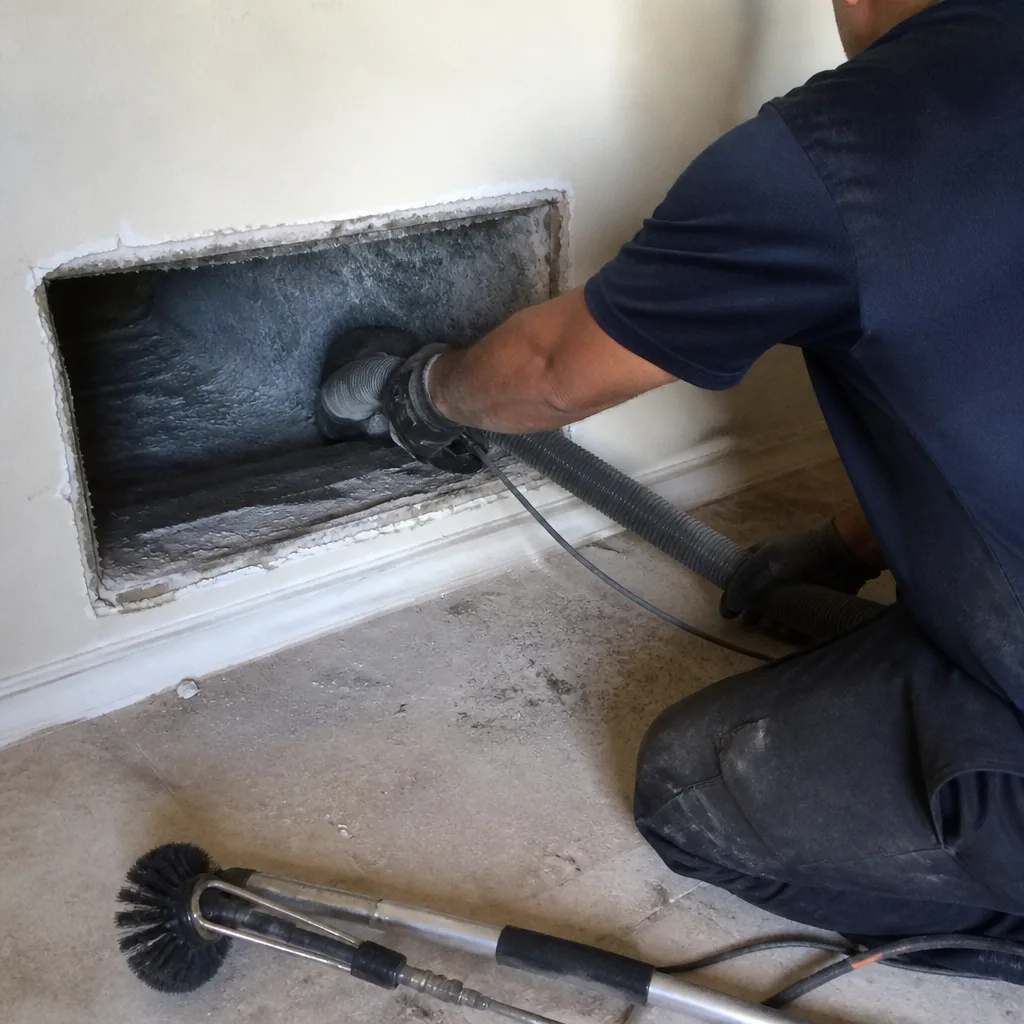 Before
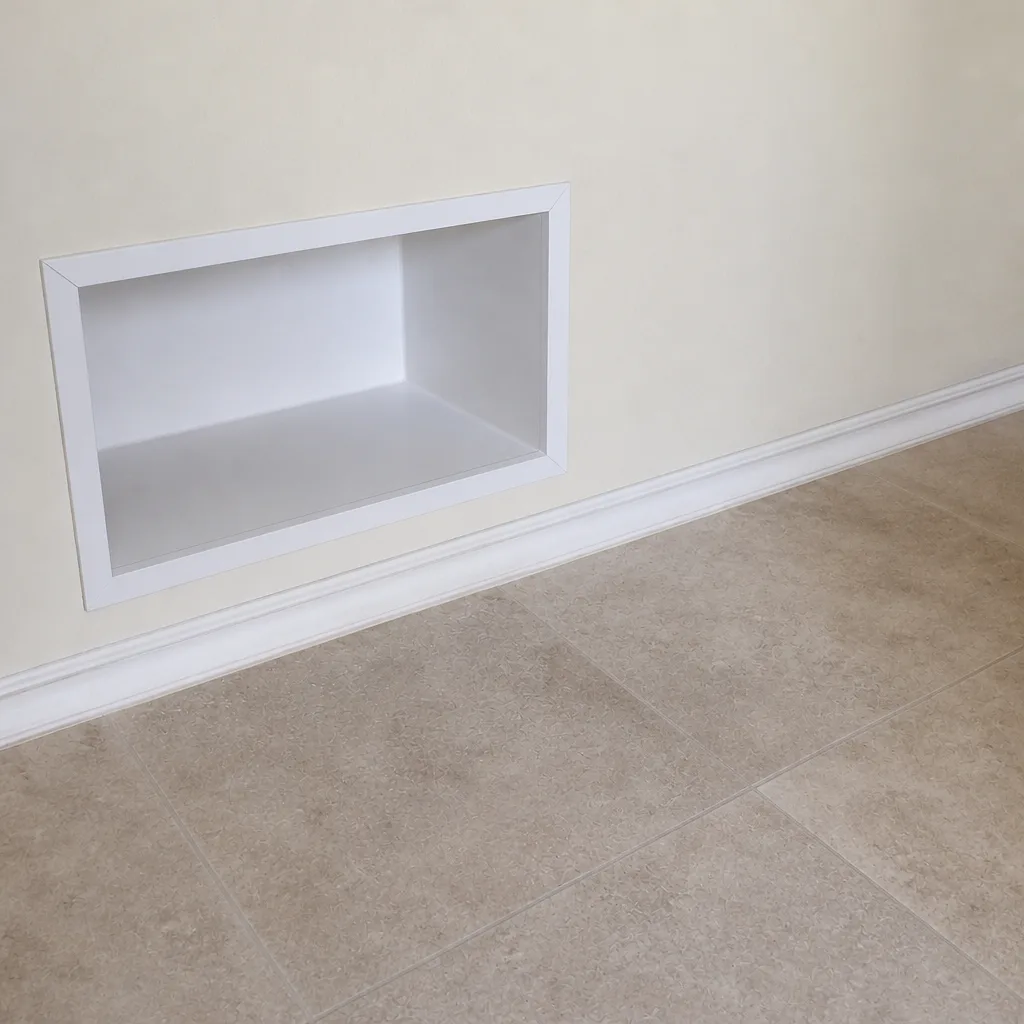 After
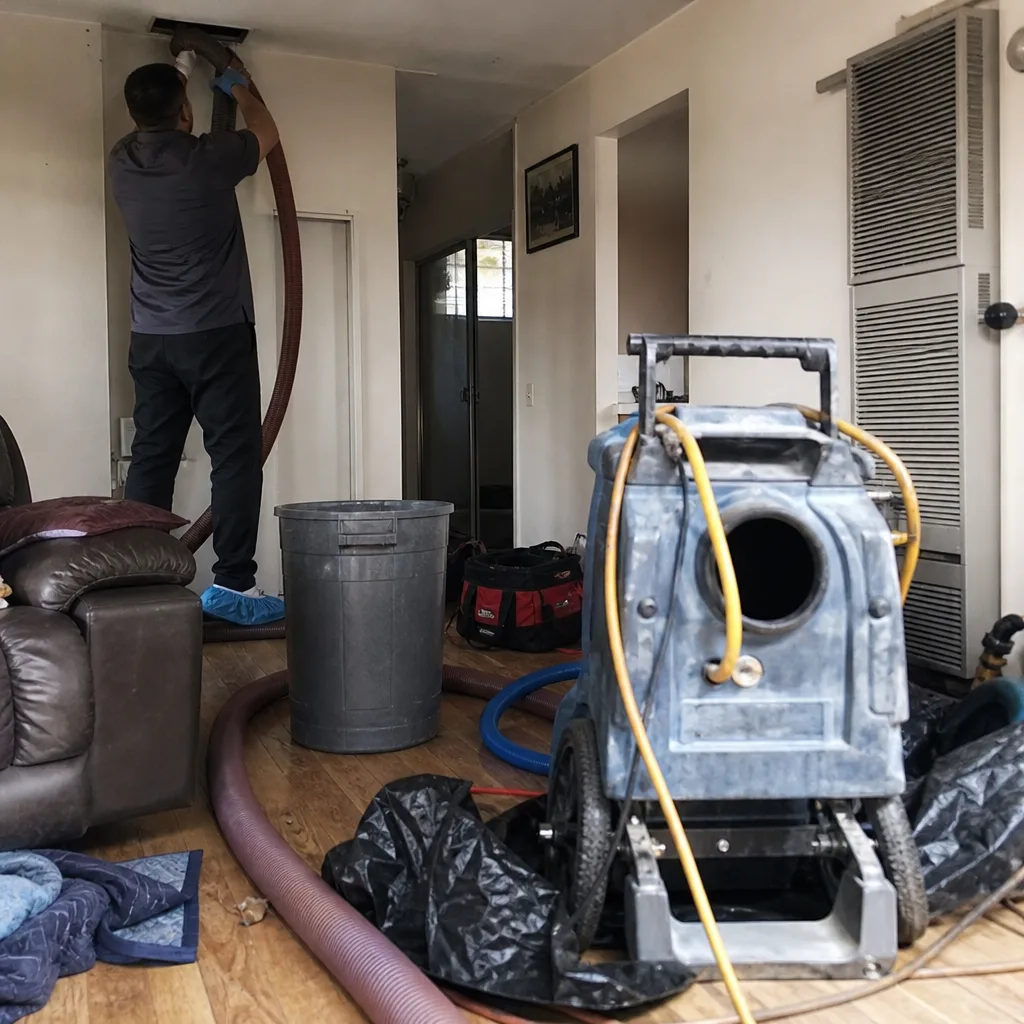 Before
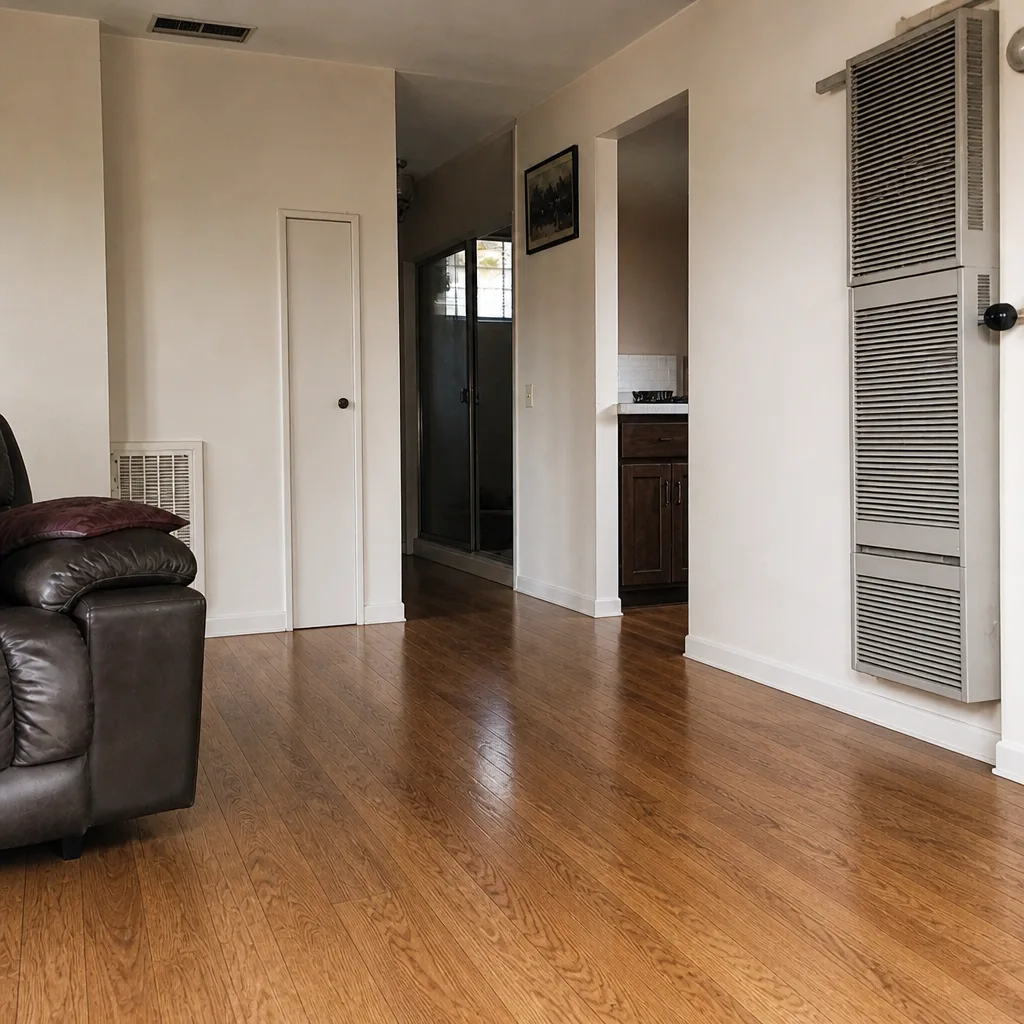 After
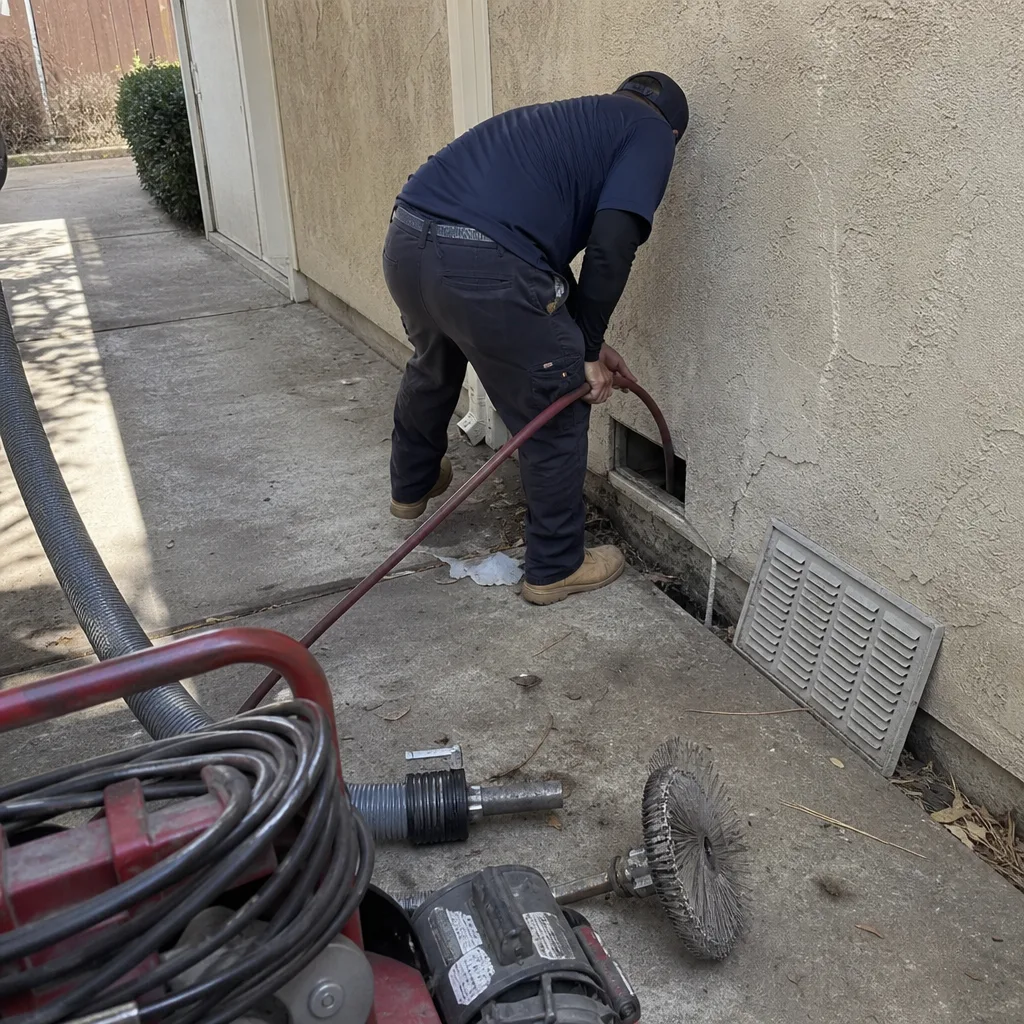 Before
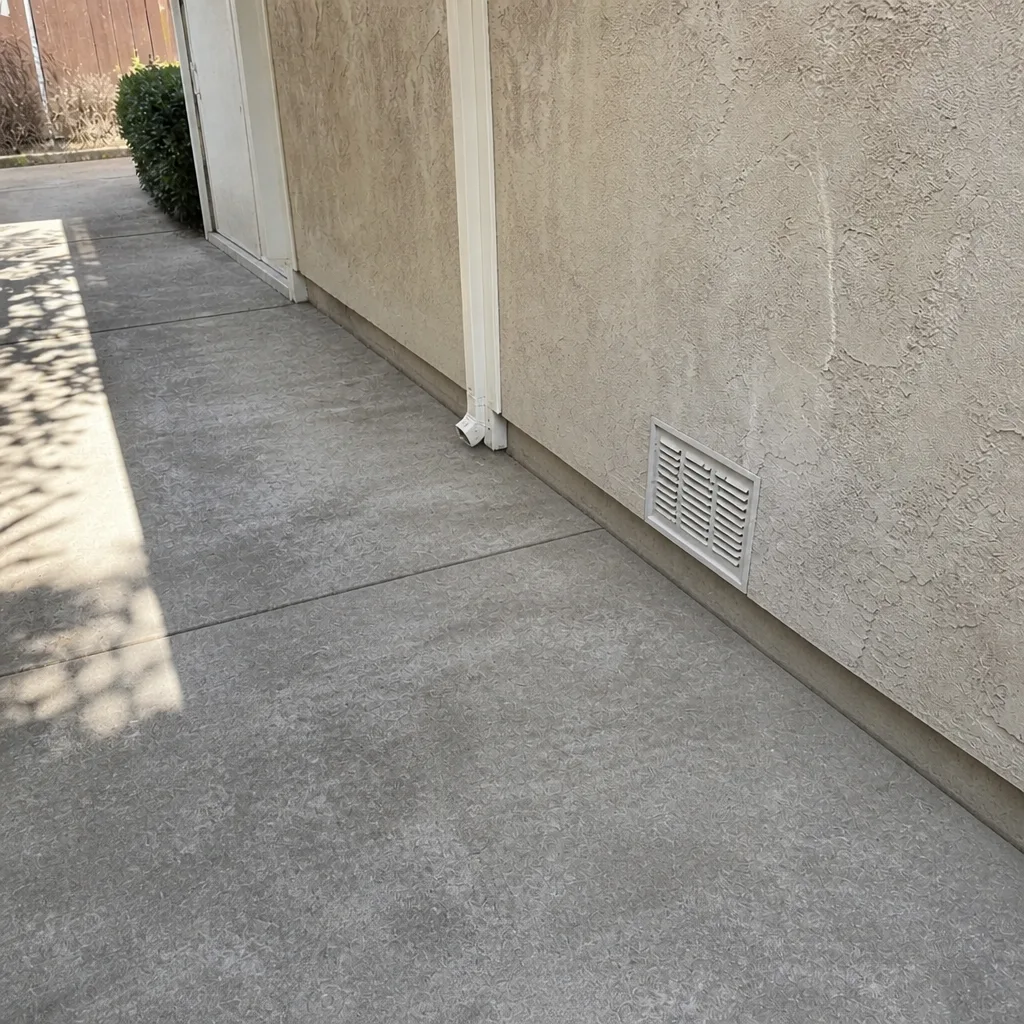 After
Frequently Asked Questions
Post-emergency duct cleaning in Woodbridge is typically priced per job based on the scope of the system, not per vent, and the final price is set by the written estimate after inspection. A standard cleaning after a smoke event and a restoration cleaning after water intrusion are different jobs with different scopes, so the estimate reflects what your system actually needs. Call (855) 658-4123 for a free estimate.
Running a wet HVAC system spreads moisture and any mold growth into every connected living space. Flex duct and duct board can begin colonizing mold within 48 to 72 hours of water contact, and pushing air through wet material distributes spores that would otherwise stay contained. The safe move is to shut the system down and call for an inspection before restarting.
A filter change is almost never enough after a smoke event. Smoke particles deposit on duct walls, the blower wheel, and the evaporator coil, and those surfaces keep releasing particles into the air every time the system runs. After a smoke event, have the ducts inspected, and if debris or odor persists after a fresh filter, get them cleaned.
For a typical Woodbridge home with no emergency events, most households do well having a duct cleaning done on a longer cycle, roughly every few years, with a filter change more frequently. After a smoke event, water intrusion, or HVAC failure, treat it as an emergency trigger: inspect immediately, then clean and repair based on what the inspection shows. Call (855) 658-4123 if you’re unsure where your system stands.
Cheap quotes usually leave out the parts that make cleaning effective: containment, HEPA filtration, camera inspection, and post-cleaning verification. A crew that runs a vacuum without containment can do more harm than good by dislodging debris and pushing it back through the system. We use Rotobrush and Nikro extraction equipment with Abatement Technologies containment so the debris gets captured, not redistributed. Call (855) 658-4123 to see what a thorough estimate looks like.
You know because you see it. A proper emergency response includes before-and-after photos of your own ducts and a camera inspection report you can keep for insurance documentation. We also provide a written scope of work showing what was cleaned, repaired, or replaced so you have a record that holds up.
The Bottom Line
Emergencies that compromise a duct system in Woodbridge come in three flavors: smoke, water, and heat. Each one requires a defined response, and in every case the worst move is waiting to see if it clears up. Shut down the system when contamination is possible. Photograph everything before anything moves. Get a camera inspection before you run the system again. Then clean with containment, repair the leaks, and verify the result with photos and a report you can hand to your insurer if needed.
Pre-season preparation is the sleeper investment: a labeled shutoff, baseline photos, the right filter size, and a contact card for your duct professional. That preparation can turn a disaster week into a two-visit cleanup.
If you’re mid-emergency right now, or you simply want a baseline inspection before the next fire season, we’re here for it. Woodbridge Air Duct Cleaning handles the full air pathway, including dryer vent cleaning, duct repair and sealing, and IAQ upgrades. Call (855) 658-4123 for a free estimate. We answer 24/7. Fast dispatch from 7am to 7pm, Sunday through Friday.
Written by the team at Woodbridge Air Duct Cleaning.