
Last updated November 24, 2026
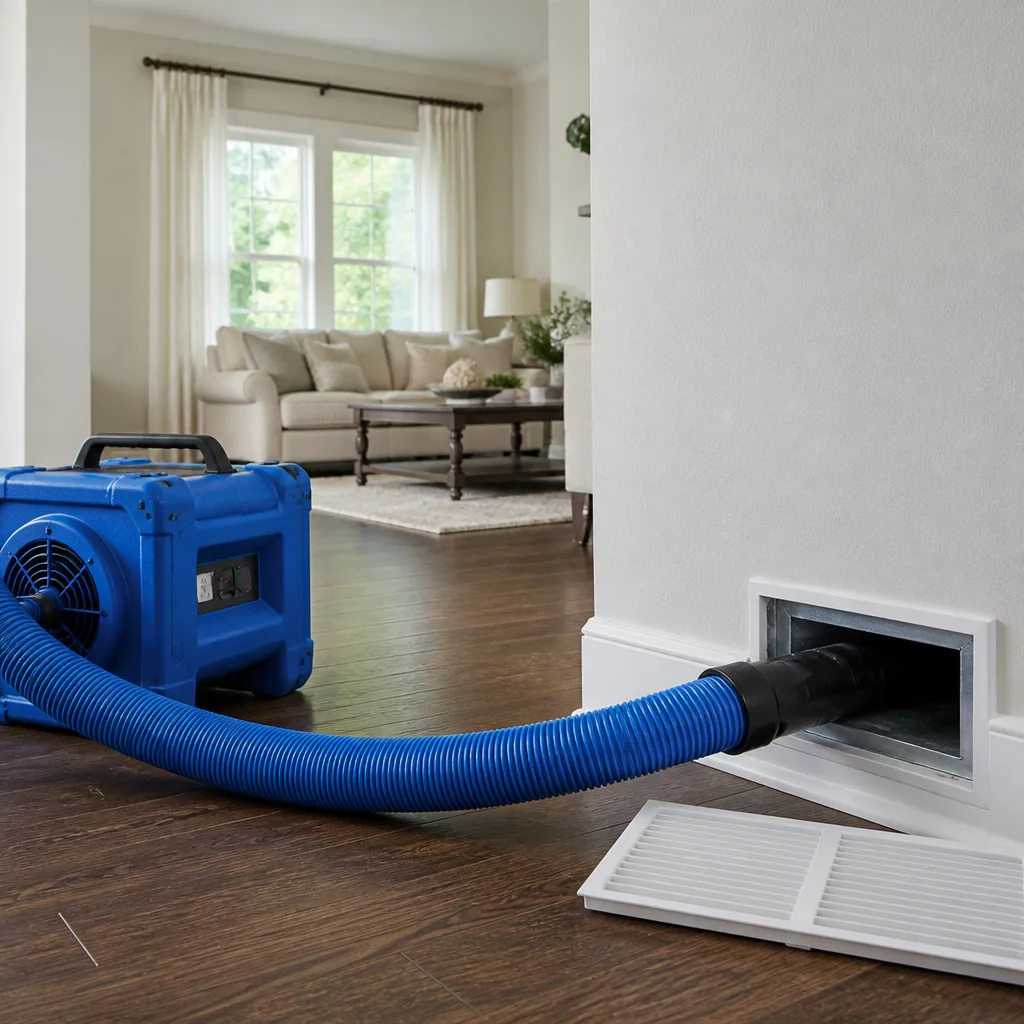 Whole-home duct cleaning
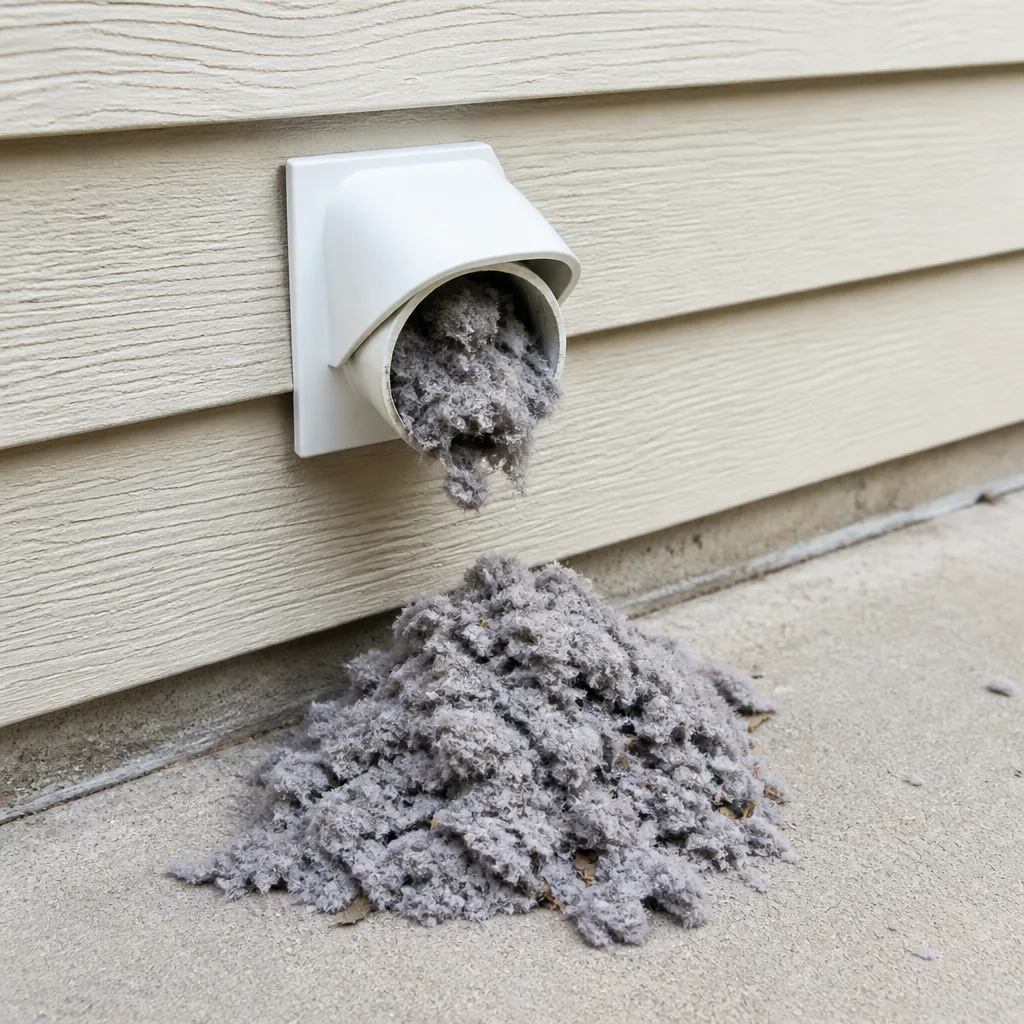 Dryer vent cleaning
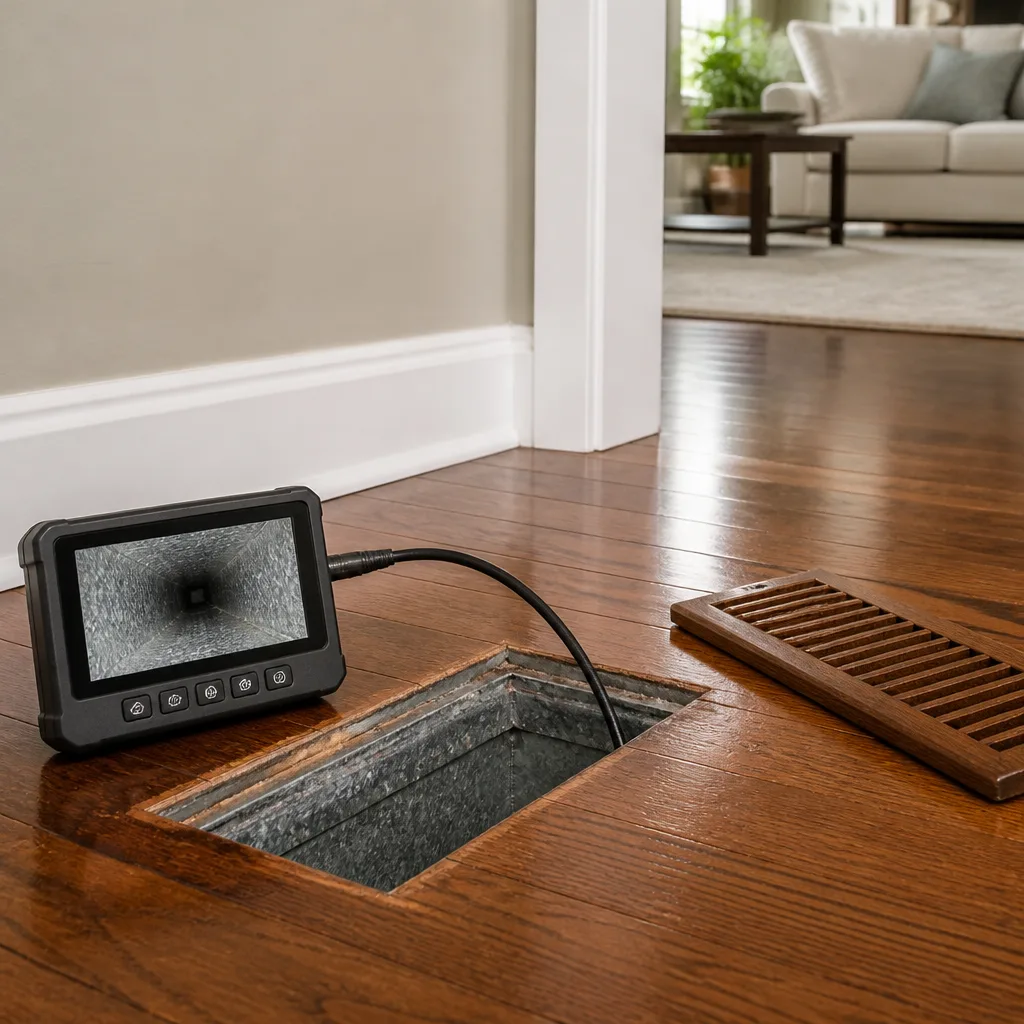 Camera inspection
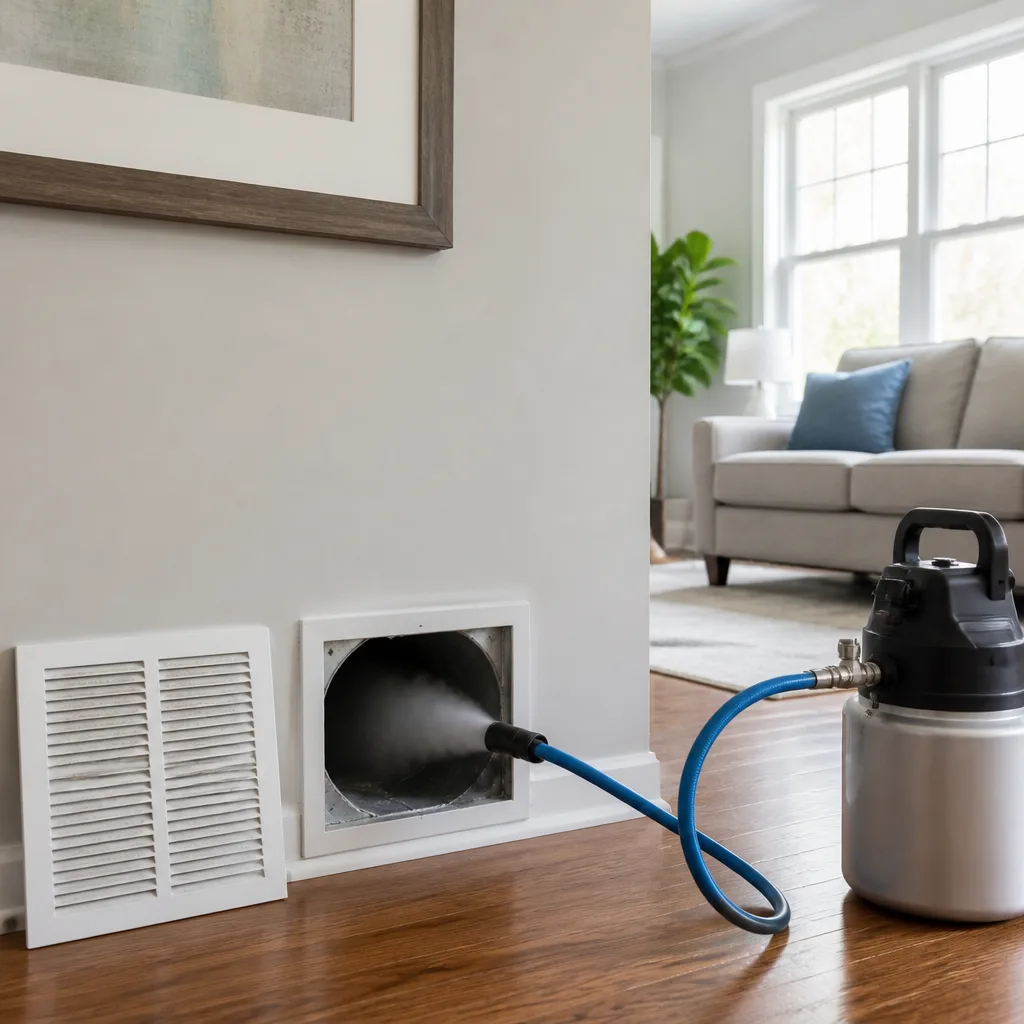 Sanitizing & deodorizing
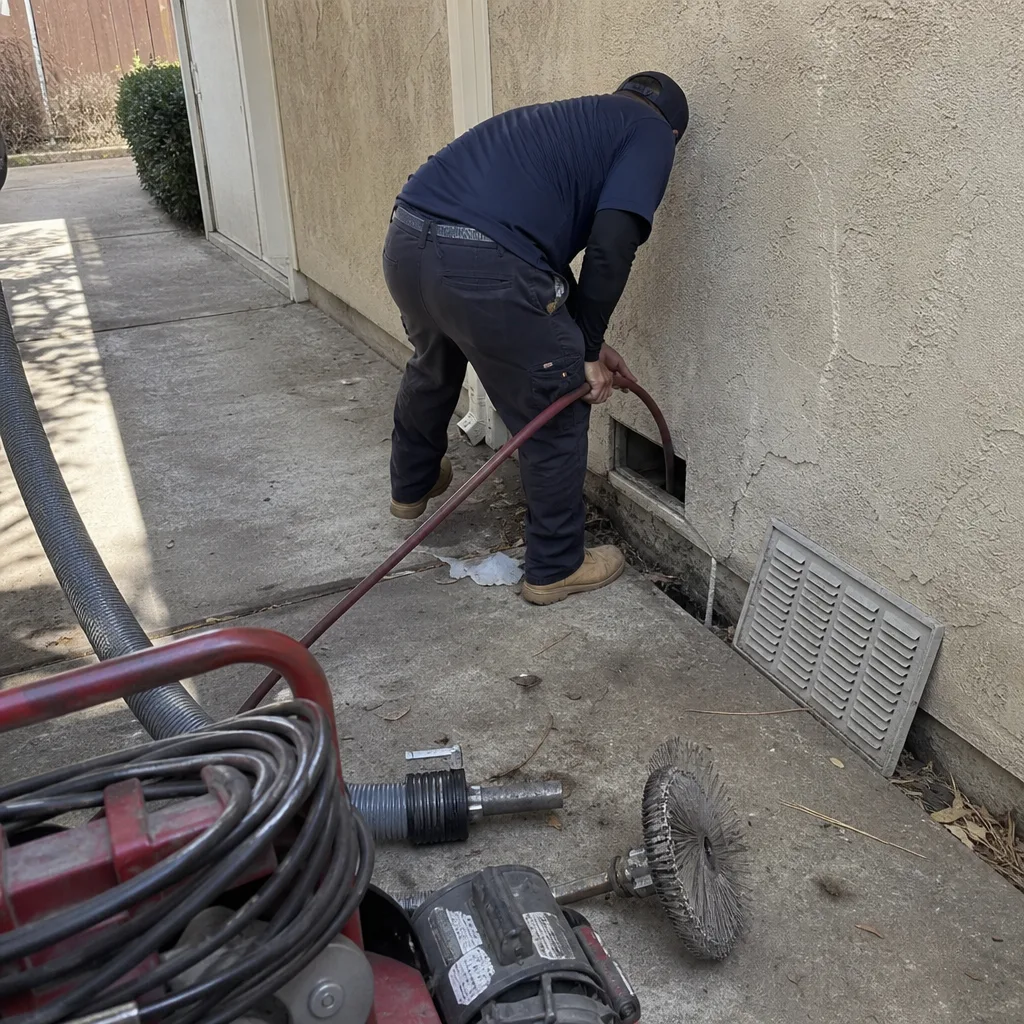
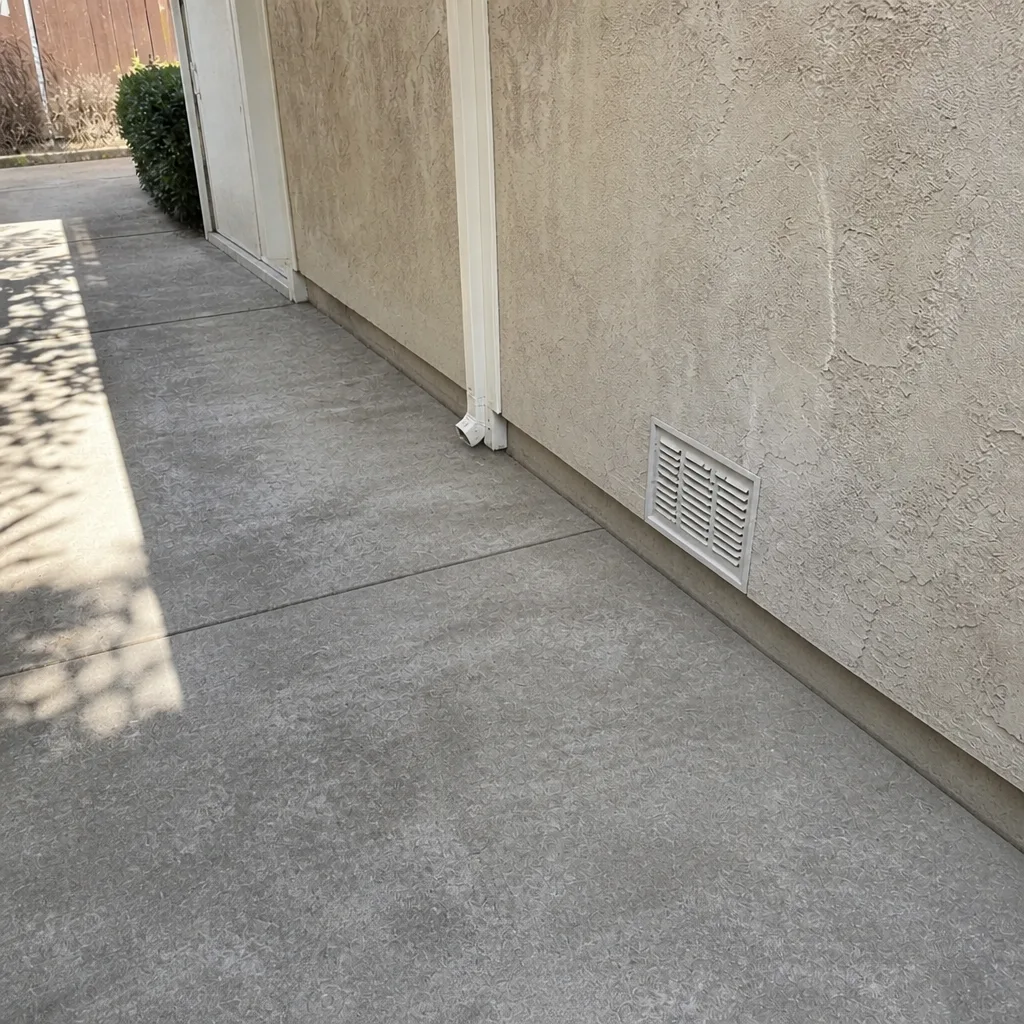
Whole-system duct and dryer vent check with before-and-after photos - you see exactly what came out of your vents
That "$99 whole-house special" is a bait ad - the real number appears once they are in your hallway, or the "clean" is a shop-vac at the register. We photograph the inside of your ducts before and after instead.
Air Duct Cleaning Maintenance Checklist for Woodbridge Homeowners
Replacing a duct cleaning every three to five years regardless of conditions is like changing your oil by the calendar instead of the dipstick. The schedule ignores everything that actually happens inside your home: the pet hair, the pollen, the renovation dust, the filter you forgot to change. A duct maintenance checklist isn’t a cleaning schedule at all. It’s a monitoring system, and it tells you what’s changing in your ductwork between professional visits so you catch deterioration before it becomes an air quality or efficiency problem. This guide gives Woodbridge homeowners a checklist built around observable indicators you can see, smell and hear, with specific thresholds for when a finding is a filter change and when it’s a phone call.
Styles & brands we work with
- Whole-home duct cleaning
- Dryer vent cleaning
- Camera inspection
- Sanitizing & deodorizing
Quick Answer
A working duct maintenance checklist for a Woodbridge home runs on three rhythms: monthly no-tool checks (grilles, filter weight, room-by-room airflow), quarterly early-warning checks (dust trails, odor timing, condensation), and an annual pre-summer inspection before cooling season starts. Document what you find with a dated phone photo log so you build a defensible baseline for HVAC warranty or insurance questions. When a check crosses a specific threshold, that’s a professional call, not a filter change.
Table of Contents
- Why a Condition-Based Checklist Beats a Cleaning Schedule
- The Monthly Checklist: No Tools Required
- The Filter Weight Test: How Often Does It Really Need Changing?
- The Quarterly Checks That Catch Early Warning Signs
- The Annual Pre-Summer Inspection for Woodbridge Homes
- Building a Photo Log: Your Duct Condition Baseline
- When a Checklist Item Means Call a Professional
- Common Mistakes to Avoid
- When to Call a Professional
- Frequently Asked Questions
- The Bottom Line
Why a Condition-Based Checklist Beats a Cleaning Schedule
Two identical-looking houses on the same Woodbridge street can have completely different duct conditions. One has two dogs, a woodshop in the garage and a remodel happening in the back bedroom. The other has one occupant, no pets and a filter changed like clockwork. A calendar-based cleaning interval treats both the same way, which means one house gets cleaned too rarely and the other gets cleaned for no reason. Neither outcome is useful.
A condition-based checklist flips the logic. Instead of asking “how long has it been,” you ask “what’s changed.” The indicators that matter are all observable, and most of them require nothing more than your eyes, your nose and a minute or two at each register.
Here’s what the checklist is actually looking at:
- Airflow balance. Every supply register should push roughly comparable air for its size. A register that’s gone weak while others stayed strong is telling you something upstream has changed.
- Particulate evidence. Dust trails, dark streaks and staining below or around a register are the ductwork writing down where it’s losing or collecting material.
- Odor timing. Whether an odor appears when the system starts, runs or stops points to different parts of the air pathway.
- Moisture behavior. Condensation around a vent, a musty smell in a closet return or dampness near the air handler are the early warnings that matter most in a mild-winter climate like ours.
- Filter loading rate. How fast your filter loads tells you more about your duct conditions than any single visual inspection. We’ll get to the weight test in a moment.
In our experience, the homes that have the fewest problems are the ones where the homeowner noticed the change and wrote it down. The homes with the worst surprises are the ones where nobody looked between professional visits. That’s the whole argument for a checklist. It moves your attention from the schedule on the refrigerator to what your house is actually doing.
The Monthly Checklist: No Tools Required
This is a fifteen-minute walkthrough you can do without opening a toolbox. Do it on a consistent day so it becomes habit, and jot your findings in a notes app. The point isn’t to fix anything on this pass; it’s to notice and compare against last month.
- Grille inspection. Walk every supply and return register in the house. Look for dust accumulation on the face, dark streaks on the surrounding drywall or ceiling, bent or blocked louvers, and anything sitting in front of a register that shouldn’t be (furniture, storage boxes, curtains). Note which grilles look different from the others.
- Filter check and weight comparison. Remove the filter and compare how your hand feels holding it now versus a fresh one from the same package. This is the key monthly data point, and we’ll cover it in detail on the next section.
- Room-by-room airflow comparison. Hold your hand (or a tissue) at each supply register for a few seconds. You’re not measuring CFM; you’re comparing rooms. If the guest bathroom register used to push hard and now barely moves air, that’s a change worth writing down. Do the same check at the returns. A return that whistles harder than usual can be just as telling as a supply that’s gone soft.
- Listen. Stand near the air handler while the system runs. Normal airflow has a steady, low background sound. New rattles, ticking, whistling or a rise in loudness should be noted. These sounds often mean a loose joint, a partially blocked path, or a component that’s starting to fail.
- Sniff test at start-up. Note any odor when the system starts, and where in the house you notice it. Smells that appear only at start-up are different from smells that build during long run times.
The monthly rhythm isn’t about spotting a crisis. It’s about building enough familiarity that when something changes, you notice. A homeowner who’s touched every register once a month for a year knows what “normal” sounds and feels like in their own house. That’s knowledge you can’t get from any inspection report.
The Filter Weight Test: How Often Does It Really Need Changing?
Filter change intervals get quoted in months, which is the wrong unit. The right unit is loading rate, and the easiest way to read it is weight.
Here’s how it works. Keep track of the date you last installed a fresh filter. Each month, lift the filter out and feel it. Compare it to a new one from the same package. You’re looking for three things:
- Weight. A loaded filter is heavier than a fresh one. The difference will be subtle at first, but you’ll feel it by month two or three in most homes.
- Face appearance. Hold it up to light. A filter that’s darkening on the face is loading from the whole house. A filter that’s darkening on one side more than the other suggests an uneven draw, which can point to a duct issue upstream.
- Flex and sag. A filter that’s lost its rigidity and sags at the edges isn’t sealing properly. That’s a filter that’s stopped doing its job even if the middle still looks light.
Filter loading rate tells you a lot about your duct conditions. A home where the filter is fully loaded in four weeks is pulling more material through the system than a home where the filter is barely dark after three months. If your loading rate has gotten noticeably faster than it used to be for the same filter type, that’s a duct condition change worth investigating. If the loading rate has slowed noticeably, that can also be a signal: sometimes it means the system is pulling less air overall, which points to a blockage or a duct problem rather than cleaner air.
None of this substitutes for knowing what your filter is rated to do, so check the rating on the packaging and replace within its rated loading window or when the weight test tells you it’s loaded, whichever comes first.
The Quarterly Checks That Catch Early Warning Signs
Every three months, add a second round of checks that require a closer look and a little interpretation. These are the checks that catch early warning signs before they become air quality or efficiency issues.
Visible dust trails below supply registers. Look below, around and adjacent to every supply register. A faint dust trail means fine material is moving through and settling right at the edge. A dark, greasy-looking streak along a register frame usually means air is escaping at the joint, carrying dust with it. Either one is information. A streak that has been there for years is different from a streak that appeared this quarter, so check your monthly notes.
Odor timing relative to system cycles. Write down the exact trigger moment:
- At start-up. An odor that hits in the first thirty seconds after the system starts points to something sitting in the ductwork that gets pushed into the house when airflow begins. Common sources are material accumulated near the plenum, a loaded filter, or a return that’s drawing from a musty space like a closet or crawlspace.
- Mid-cycle. An odor that develops while the system is already running suggests the source is being fed continuously, often a return-air path that pulls from a damp space.
- At shutdown. An odor that appears when the fan stops can point to standing moisture or biological activity near the air handler, where airflow has been drying the surface and then stops.
Condensation around vents. Check supply and return vents for condensation, especially in rooms that get heavy moisture from showers or cooking. A vent that beads up moisture is often a sign of a temperature difference between the duct surface and the room air, which can be normal, but if it’s paired with a musty odor or visible biological growth, it’s a professional call. Woodbridge’s mild winters keep this kind of condensation less common than in cold climates, but it does show up around return vents in kitchens and bathrooms and near any ductwork that runs through an unconditioned space.
Pest activity near ducts in crawlspaces and attic runs. On the quarterly pass, look at places where ductwork enters the crawlspace or attic. Look for droppings, gnawed insulation, nesting material or the entry points pests are using. A single sighting is a pest-control call. Ongoing signs near a duct run usually mean the duct itself needs attention, because compromised duct material is one of the ways pests get into the system.
The Annual Pre-Summer Inspection for Woodbridge Homes
The best time to look at your ductwork in Woodbridge is before the cooling season begins. Once summer heat settles in and the system runs hard for months, any issue you missed gets worse and harder to diagnose. Do this inspection in spring, once, and do it the same way every year.
- Walk the full run. Trace the visible ductwork from the air handler outward. Look at every joint, seam, connection and support. Note loose tape, disconnected joints, sagging runs, crushed flexible duct, and any duct material that looks torn or deteriorated. Flexible duct that has collapsed or kinked is a common finding and it blocks airflow regardless of how clean the interior is.
- Inspect the crawlspace and attic entries with a light. Before cooling season, this is where pest activity shows up. Check for droppings, nesting, gnawed duct insulation, and any evidence that animals are using the duct penetrations as a path. A duct run that’s already compromised in the crawlspace will pull crawlspace air into the living space all summer.
- Check the air handler cabinet seals. Look at the panels, the filter access door and the duct connection at the cabinet. Gaps here pull return air from wherever the cabinet sits, and that air bypasses your filter entirely.
- Feel every supply register again. Do a full comparison across the house and note every register that’s weaker than the others. Any room that has gotten noticeably harder to cool than it was last summer is worth investigating before the heat wave arrives.
- Look at the dryer vent run. Even though it’s not part of the HVAC air pathway, the dryer vent is part of the same connected system in most homes. Check the exterior termination for a lint bonnet, blocked louvers or visible debris buildup, and check behind the dryer for a crushed or kinked flex section.
“Before cooling season” isn’t arbitrary. Spring is when temperatures are still mild, the system isn’t running hard, and any change you make has the whole season to pay off. It’s also the easiest time to get a duct inspection scheduled without squeezing it into peak demand.
If your inspection finds anything in the “call a professional” range, we handle Woodbridge Air Duct Cleaning as a full-system service, which means we’re looking at supply ducts, returns, the air handler and the rest of the connected system on one visit rather than sending you to a different vendor for each piece.
Building a Photo Log: Your Duct Condition Baseline
A photo log is the single most useful thing you can start today. It takes about ten minutes, creates a record you can compare against for years, and gives you something concrete if you ever need to answer a question from an HVAC warranty provider or an insurer.
Here’s the simple method:
- Shoot the same set of locations every time. Pick a standard list: every supply register (face on), every return grille (face on), the filter in the air handler, the air handler cabinet front, the visible duct runs in the attic or crawlspace, and the dryer vent termination. That’s usually fifteen to thirty photos for a typical Woodbridge home.
- Date every photo. Most phone cameras embed the date automatically; just make sure you don’t strip it when you move the photos. If your camera doesn’t embed dates, add a small written note in the frame or use a notes app to record the date of the batch.
- Shoot the same angle every time. The photo only becomes useful for comparison if the framing is repeatable. Stand in the same spot, hold the phone at the same height, and use the same zoom.
- Shoot with the same light. Turn the room lights on for every photo, or shoot during daylight at the same time of day. Mixed lighting makes comparison hard.
- Do it on a schedule. Once at the start, then quarterly, and after any professional service. If you have work done, photograph before and after so you have the record of what changed.
What makes this defensible is the combination of dated photos and a written log noting what you observed. A phone photo with a date and a note that says “dark dust trail appeared on the ceiling below the master bedroom supply register, didn’t see this on last quarter’s photo” is a much stronger record than a memory.
And the log does something less obvious: it turns your maintenance checklist into a comparison tool. Over a year of quarterly photos, you’ll see things you’d never notice month to month, like a slow dust build-up pattern in one wing of the house or a duct insulation change that’s crept in gradually. That’s the difference between a maintenance checklist and an inspection. The checklist is yours. The inspection is a snapshot. You want both.
When a Checklist Item Means Call a Professional
This is the part most maintenance checklists leave out: the thresholds. Vague guidance like “call if you have concerns” is useless in practice. Here’s what we’d tell a homeowner in Woodbridge to use as a hard line.
Call a professional when:
- Any register has no measurable airflow when the system is running. Zero airflow at a single register is a duct blockage or a collapsed run, and it won’t resolve with a filter change.
- You can hear whistling, ticking or a clear new rattle from a specific run of ductwork. Sounds that localize to a single run usually mean a mechanical issue, not just dirty ductwork.
- You see moisture or condensation on any duct surface, especially if it’s paired with a musty smell. Biological growth inside ductwork is a professional job.
- You find pest droppings or nesting material in the crawlspace or attic duct runs. This is a two-part job, pest control plus duct assessment.
- Your filter is loading fully in under four weeks when it used to last two to three months with the same filter type. That’s a loading-rate change, and it means something upstream has changed.
- You see a dark dust trail or greasy streak that has appeared since the last quarter’s photos. Especially if it’s growing from quarter to quarter.
- You hear or feel air movement at a duct joint when you hold your hand against the seam. That’s a leak, and leaks don’t clean up; they need to be repaired and sealed.
A filter change or a monthly-check fix is usually enough when:
- The filter is loaded but the loading pattern is even and the rate is stable.
- One register is blocked by furniture, a rug or a curtain that’s crept over it.
- A single grille has visible dust on its face and everything else looks normal.
- You notice one room is warmer than others, but you also just discovered the supply register is closed or partially obstructed.
The distinction between a filter change and a professional call is usually whether the finding is a one-time item or a trend. A dusty grille that cleans up and stays clean is a filter change problem. A streak that appears and grows is a call.
When a leak or a compromised joint is the finding, the fix is duct repair and sealing. Cleaning the duct without sealing the gap doesn’t solve the underlying problem, and on a system with a leak you’re pulling air from wherever the leak draws from, which is often not the air you want in the living space.
Common Mistakes to Avoid
- Treating the checkup as a cleaning. A half-hour glance at the registers and a filter swap is not a duct cleaning. It’s the monitoring layer that tells you when a real cleaning is due, and mistaking one for the other means you stop looking between professional visits.
- Skipping the filter weight test because you “know” the interval. Filter life varies by home and season. If you change on a fixed calendar without checking loading rate, you’ll either replace filters way too early (wasting money) or run them too long (loading the system).
- Assuming a weak register is a duct problem before checking for simple obstructions. A rug over the register, a couch pushed against a return, a half-closed louver or a curtain that’s fallen over the grille all mimic duct problems. Rule out the obvious ones first.
- Ignoring the crawlspace between visits. In Woodbridge, crawlspace duct runs are vulnerable to pest activity and to flexible duct collapsing. If you only check inside the house, you’ll miss the most common duct problem source in the region.
- Photographing with changing framing. A photo log is only useful if you can compare. Move around, change lighting, use a different zoom, and the photos stop telling you anything.
- Treating the dryer vent as a separate concern. The dryer vent is part of the connected air pathway in most homes. Skip it in your checklist and you’re describing the system as if a piece of it doesn’t exist.
- Cleaning before repairing. If you find a leak and clean the duct system without repairing the leak, the cleaned duct will pull the same uninvited air in from day one. Repair and sealing come first when a leak is the finding.
When to Call a Professional
Call when a checklist finding crosses a threshold: zero airflow at any register, air movement at a duct joint, moisture or a musty smell inside a duct run, pest activity near a crawlspace duct, a loading rate change, or a dust trail that’s grown since last quarter. Call when you’re planning a renovation that will generate significant dust, when you’re moving into a Woodbridge home with unknown duct history, and once a year for a pre-summer inspection if you want an expert eye on the system before cooling season.
Woodbridge Air Duct Cleaning offers free estimates in Woodbridge. Our technicians have up to 9 years of experience, and we come with contractor-grade equipment: Rotobrush and Nikro extraction systems, and Abatement Technologies containment and HEPA filtration to capture dislodged material during the work. When we find leaks, we repair and seal them rather than cleaning the duct and leaving the gap in place. Call (855) 658-4123. We answer 24/7. Fast dispatch from 7am to 7pm, Sunday through Friday. The written estimate sets the price, so there’s nothing to guess at.
If a checklist finding points to a full air duct cleaning on its own, that’s the job we’d be doing anyway; the checklist is what tells you which of the connected services you actually need.
Frequently Asked Questions
There’s no single right interval, and that’s the point. Homes with pets, recent renovations, or someone with allergies or asthma in the house need cleaning more frequently than a low-occupancy home with no pets. The checklist exists because condition tells you more than a calendar: if your loading rate has sped up, your registers have developed dust trails, or you’ve had a renovation, that triggers the cleaning rather than the number of years since the last one. Call (855) 658-4123 for an exact quote. Estimates are free.
Typical estimates for a whole-home duct cleaning in Woodbridge fall in the range you’d find for a job that includes supply ducts, returns and the air handler, with the exact figure set per job by the written estimate after the system is assessed. If the job also includes duct repair and sealing, that’s a separate scope and adds to the estimate. Woodbridge Air Duct Cleaning sets one flat price per system, agreed before work starts, so there’s no per-vent pricing and no coupon that turns into a larger invoice. Call (855) 658-4123. We answer 24/7. Fast dispatch from 7am to 7pm, Sunday through Friday.
Cheap duct cleaning quotes are usually quoting a smaller scope, not a lower price for the same scope. The common differences are: no return ducts included, no air handler work, no HEPA containment during cleaning (so dislodged debris blows back into the rooms), and consumer-grade equipment rather than contractor-grade extraction. A coupon-priced job that “cleans the ducts” for a few hundred dollars is usually a face-of-grille job. Ask each contractor exactly which parts of the system are in scope, what equipment they bring, and whether the quote includes repair and sealing if leaks are found. The answer to those three questions tells you what you’re actually comparing.
Ask for before-and-after photos of your own ducts, which gives you a record you can compare against your own photo log. Ask which parts of the system were cleaned and whether the returns and the air handler were included. Ask whether containment was used during cleaning. Any contractor who does the work properly will happily answer all three; if a contractor hedges on them, that’s your answer. Our work includes before-and-after photos of your own ducts on every job.
Cleaning removes what’s inside the ducts. Repair and sealing address what’s happening to the ducts themselves: leaks at joints, disconnected runs, crushed flexible duct, deteriorated connections. A duct that’s clean but leaking pulls air from where it shouldn’t, so cleaning alone doesn’t solve an air quality or efficiency problem if there’s a leak somewhere in the run. That’s why we offer both as part of the same connected air pathway service, and why our pre-summer inspection in Woodbridge looks at joints and seams as well as interior condition.
For a home with an active allergies or asthma concern, cleaning can help when the trigger is material in the ducts, and it doesn’t help when the trigger is something else in the house. That’s why the checklist matters here more than anywhere else: if a register has developed a dust trail, if a return pulls from a musty space, or if the filter is loading fast, you have evidence there’s material in the system worth removing. If the checklist is clean and the symptoms persist, the next step is a professional assessment of the system and the connected air quality equipment rather than a cleaning booked on the assumption that ducts are the problem.
Every home should be doing dryer vent cleaning as a safety check, because a clogged dryer vent is a leading cause of residential fires. Check the exterior termination at least quarterly and clean the run at the frequency your home’s lint production suggests. Homes with high laundry use, long vent runs, or a vent with multiple elbows need it more often. A crushed or kinked vent section behind the dryer is the most common finding, so include that check on your pre-summer inspection and your monthly walk.
The two are connected. HVAC cleaning addresses the system components (the air handler, coils and other parts outside the ducts themselves), while duct cleaning addresses the supply and return runs. If your checklist finds evidence of material loading on the air handler cabinet or buildup on the system side, HVAC cleaning is usually the right next step. For most homes, the pre-summer inspection is when this question gets answered, because it’s the moment to look at both together.
Start with the photo log method described above: capture the registered and duct condition before you do anything else, then run through the quarterly checks. A home with an unknown duct history is exactly the case for a professional assessment and, if the condition warrants it, a cleaning. From that point on, the checklist tells you when the next one is due. Don’t clean a home’s ductwork based on the seller’s say-so; look at the actual condition and use the checklist as your ongoing record.
The Bottom Line
A duct maintenance checklist isn’t a cleaning schedule, and that’s the point. It’s a monitoring system: monthly no-tool checks on grilles, filter weight and room-by-room airflow; quarterly early-warning checks for dust trails, odor timing and condensation; and an annual pre-summer inspection covering joints, crawlspace ducts and the dryer vent. Document everything with a dated photo log so you can spot trends and, if you ever need to, defend a warranty or insurance question. The checklist’s job is to tell you when a finding is a filter change and when it’s a professional call, with specific thresholds, not vague guidance. When a finding crosses a threshold, call (855) 658-4123. We answer 24/7. Fast dispatch from 7am to 7pm, Sunday through Friday. Estimates are free, and we’ll look at the whole air pathway rather than just the part that shows up in the photo.
Written by the team at Woodbridge Air Duct Cleaning.
See the difference
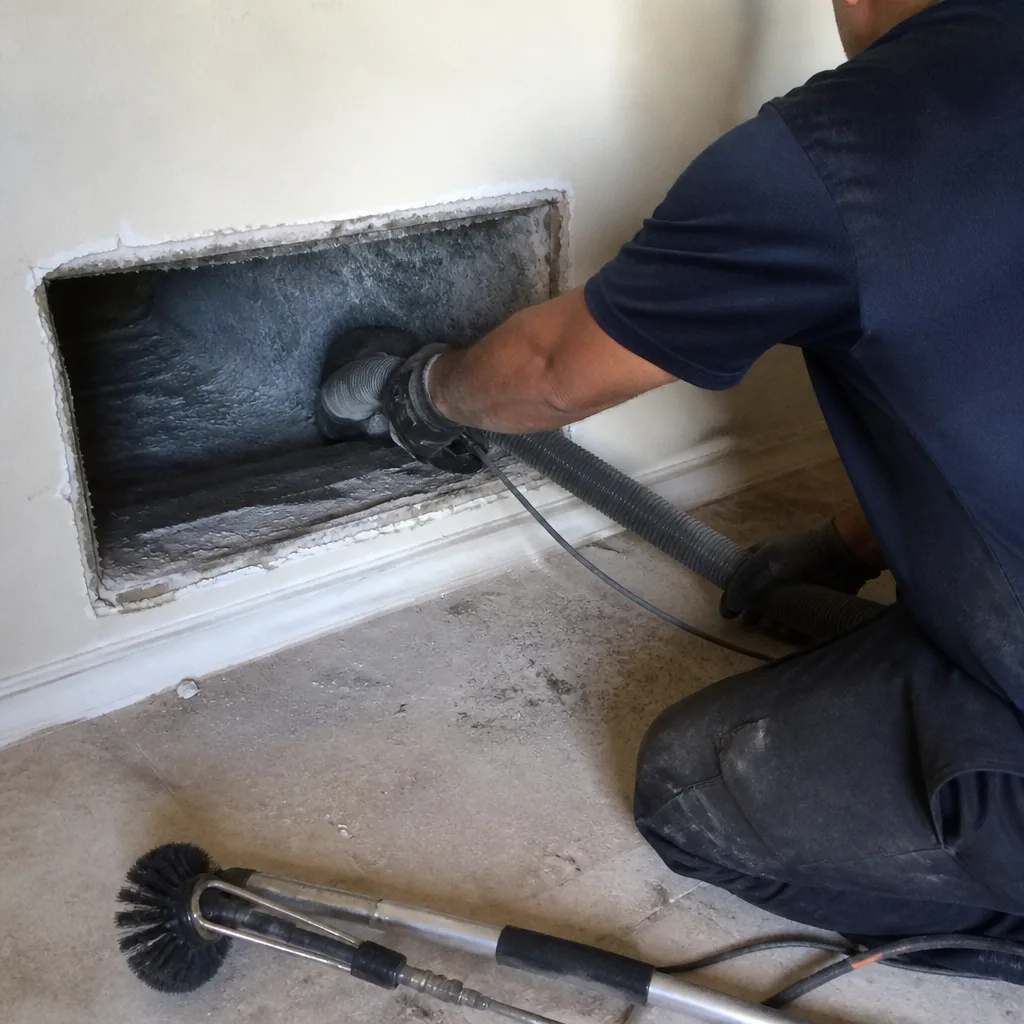 Before
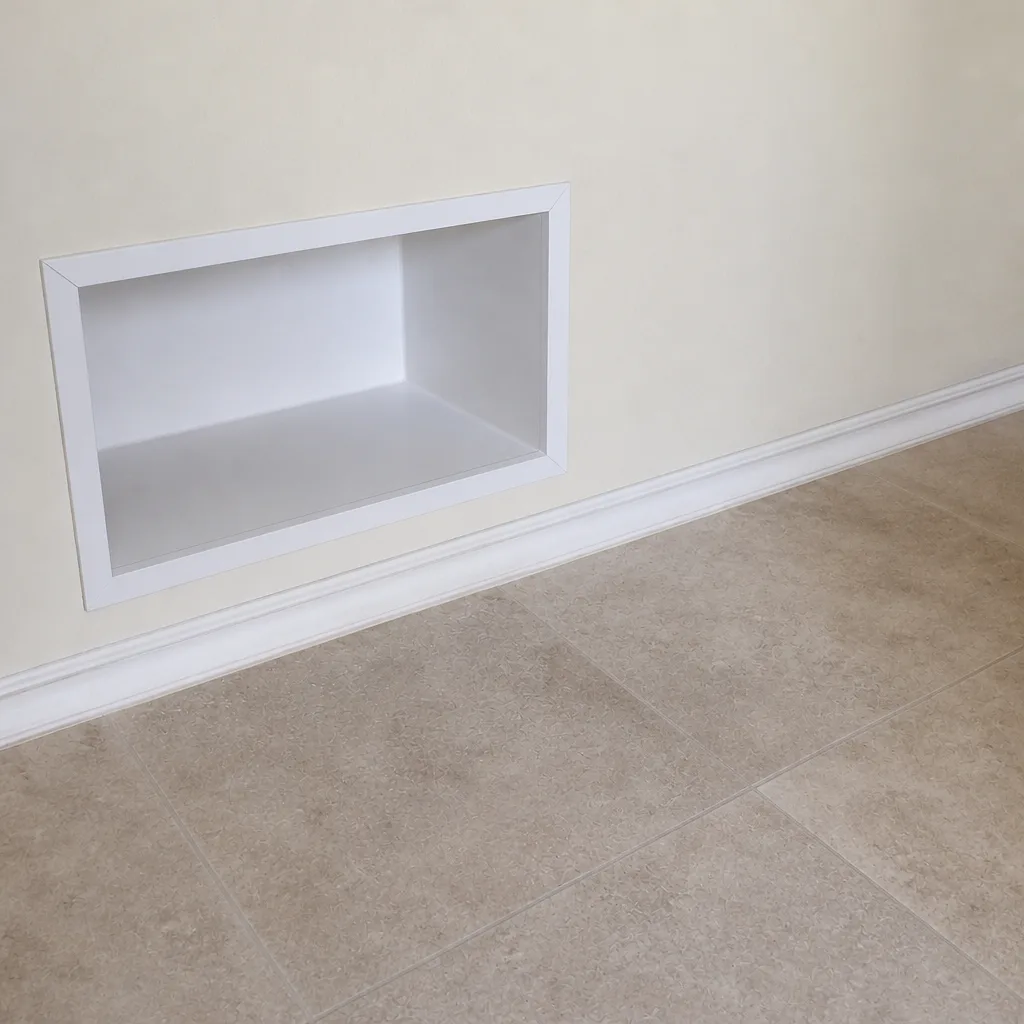 After
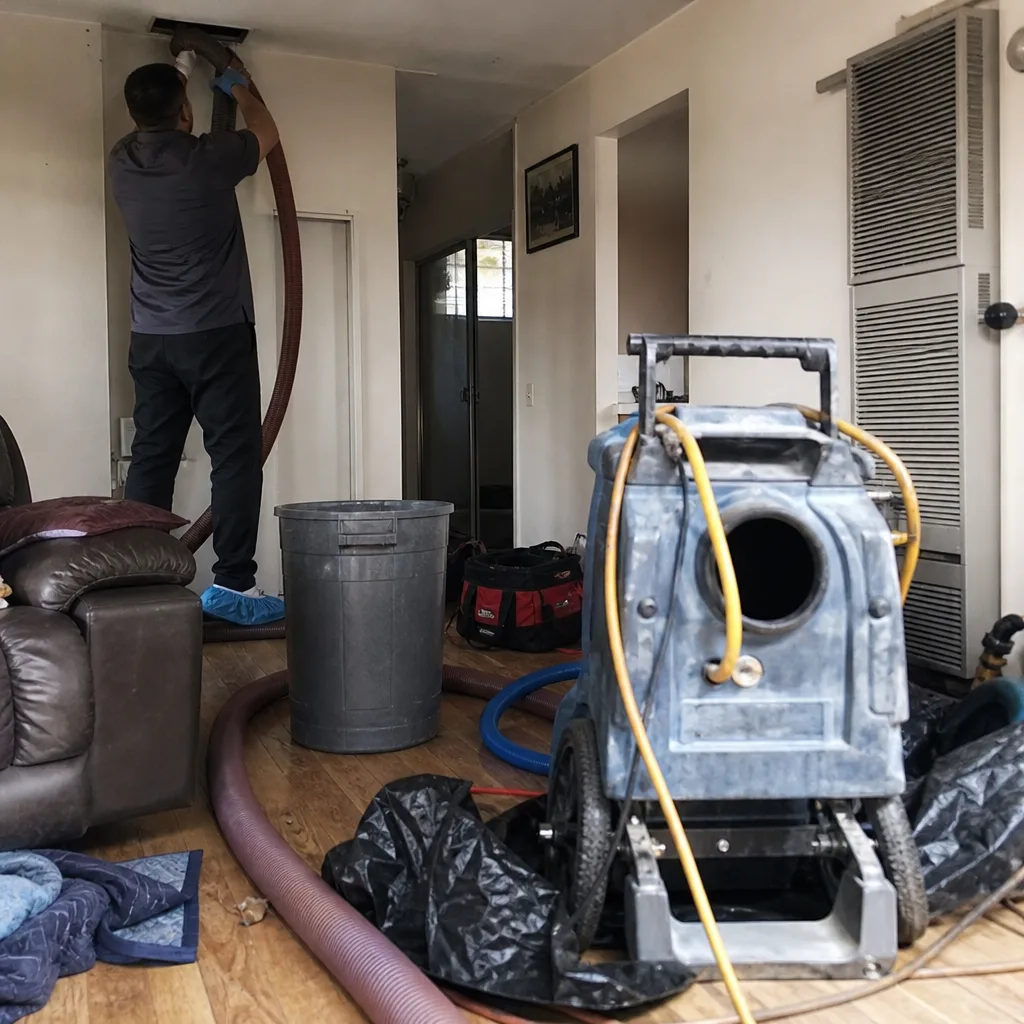 Before
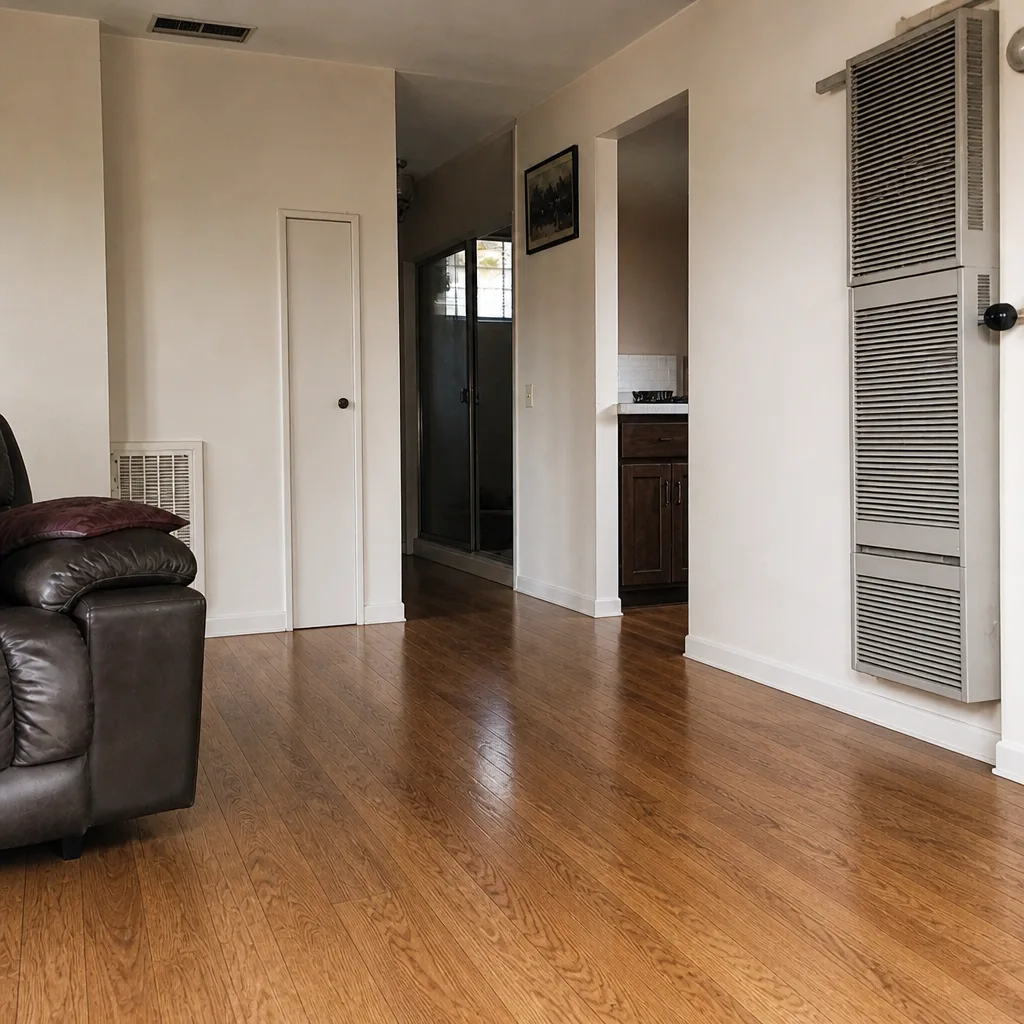 After
 Before
 After