
Last updated November 24, 2026
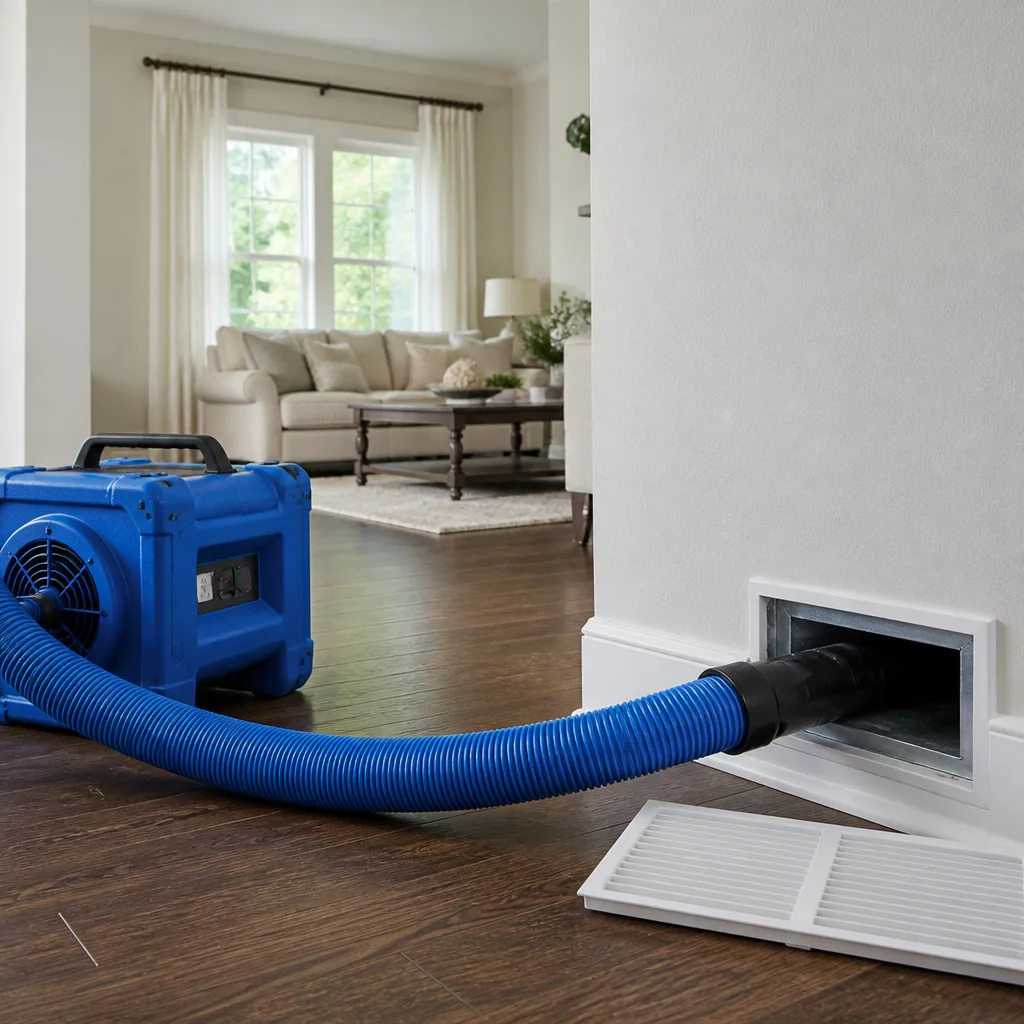 Whole-home duct cleaning
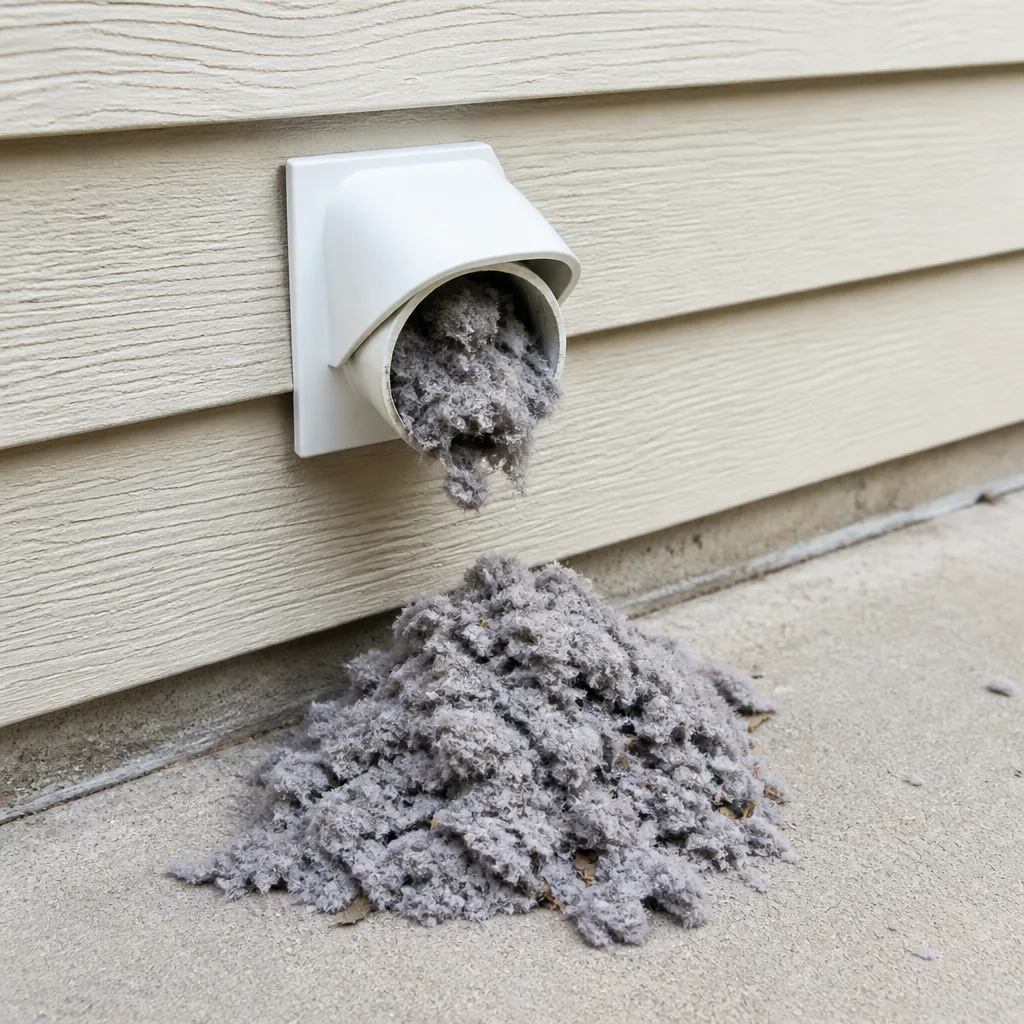 Dryer vent cleaning
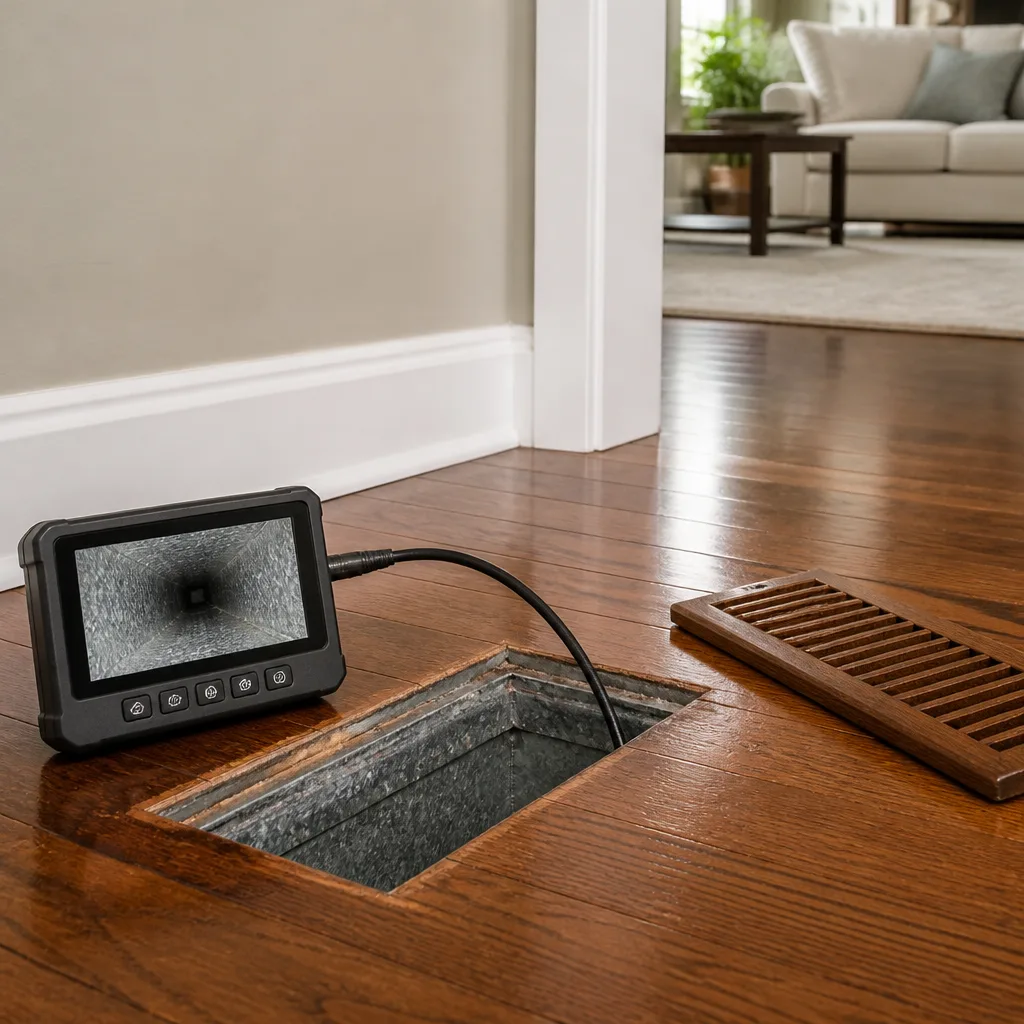 Camera inspection
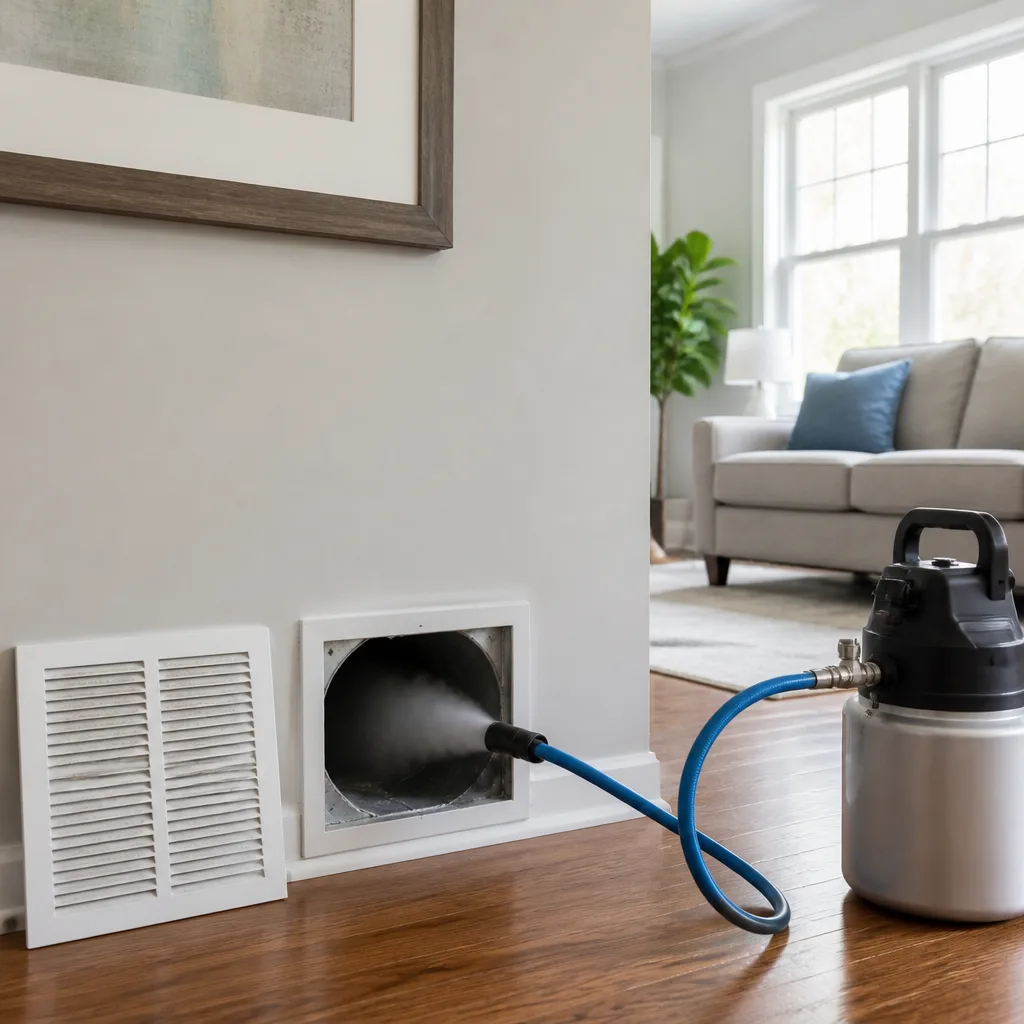 Sanitizing & deodorizing
Whole-system duct and dryer vent check with before-and-after photos - you see exactly what came out of your vents
That "$99 whole-house special" is a bait ad - the real number appears once they are in your hallway, or the "clean" is a shop-vac at the register. We photograph the inside of your ducts before and after instead.
Choosing the Right Air Duct Cleaning Brand: A Buyer’s Guide for Woodbridge
A nationally recognized duct cleaning franchise on the side of a van is not a guarantee of contractor-grade equipment. Franchise agreements standardize logos, pricing scripts, and call centers. Equipment specifications are often left to the individual operator, which means a franchise location can run the same portable unit as an unlicensed solo operator with a magnet on the door. The brand tells you how the business was sold to its owner. It rarely tells you what gets pulled through your ducts. This guide breaks down the two business models you’ll meet in Woodbridge, what each one controls and doesn’t, how to evaluate equipment by job type, and the specific questions that separate technically credible operators from marketing-first companies.
Quick Answer
The best air duct cleaning company is the one that brings contractor-grade extraction equipment, uses HEPA filtration and containment during the job, inspects before quoting, and shows you what came out of your system afterward. In Woodbridge, that means looking past the franchise sign and evaluating the operator, the tools, the scope of service, and the review content that speaks to process rather than politeness. A brand name on a truck is a marketing decision. Equipment and training are the operational ones.
Styles & brands we work with
- Whole-home duct cleaning
- Dryer vent cleaning
- Camera inspection
- Sanitizing & deodorizing
Table of Contents
- Franchise vs. Independent: What Each Model Controls
- Evaluating Equipment by Business Type
- How to Evaluate Local Reputation Credibly
- Service Scope: Cleaning vs. Clean, Repair, Seal, and Sanitize
- Questions That Separate Credible Operators
- What a Professional Air Duct Cleaning Job Actually Involves
- How Woodbridge Housing and Climate Affect Duct Contamination
- Common Mistakes to Avoid
Franchise vs. Independent: What Each Model Controls
The franchise model sells a system, not a guarantee of technical depth. A franchisee buys the right to use a name, a marketing package, a scheduling platform, and a set of operating guidelines. What the franchisor typically mandates is how the business presents itself to customers. What it often leaves open is which machines the operator buys, how much training the technicians receive beyond the initial onboarding, and how the operation handles a job that goes sideways. In practice, this means two franchise locations can deliver very different jobs under the same sign.
An independent local specialist controls the equipment decision directly. That cuts both ways. An independent operation can invest in contractor-grade extraction systems, HEPA filtration, and ongoing technician training because those choices live inside the business. An independent operator can also run cheap portable units and a shop vac, because nothing outside their own reputation forces the upgrade. The model itself is neutral. What matters is what the operator actually carries and how they run a job.
Liability is the quieter difference. When a franchise technician dislodges debris into a living space or damages a flexible duct connection, the homeowner’s remedy usually runs through the franchisee, who may be a single-location owner with limited resources. The franchisor’s role in that dispute is typically narrow. With an independent, the owner of the operation is the one answering the phone. Neither model automatically protects you. Ask directly who carries the liability for damage and how a complaint is handled. The answer tells you more than the logo on the truck.
What each model controls
- Franchise: marketing, call scripts, scheduling software, brand consistency, sometimes pricing structure. Rarely equipment specification or deep technical training.
- Independent: equipment choice, training investment, service scope, how a job is run, and who owns the outcome.
- Both: the technician who shows up, and whether that person knows what they’re looking at inside your ductwork.
In Woodbridge, you’ll meet both. The useful question is never “is this a franchise or not.” It’s “what equipment is coming into my house, who trained the person running it, and who stands behind the work.” Our technicians have up to 9 years of experience, and that experience lives in evaluating a duct system before a single tool comes out of the truck.
Evaluating Equipment by Business Type
Air duct cleaning equipment falls into three broad categories, and each one can or can’t accomplish certain jobs. Knowing which is which protects you from paying contractor prices for consumer-level work.
Truck-mounted systems
A truck-mounted unit connects to the ductwork through a hose run from the vehicle, usually to the main trunk line. The advantage is sustained negative pressure: the system pulls air and debris through the ducts and exhausts it outside the home. On large or heavily loaded trunk lines, this is the most powerful option available. Its limit is reach. A hose can only run so far, and on a house with several branch runs, the technician still needs agitation tools to loosen debris that clings to duct walls. Truck-mounted power means nothing if nobody agitates the surfaces.
Portable units
Most residential jobs in Woodbridge are done with portable extraction machines. The better ones are contractor-grade: Rotobrush and Nikro units are built for duct cleaning specifically, with enough airflow and filtration to handle a real job. The lesser ones are consumer shop vacs with a hose adapter, which pull weakly and can recirculate fine dust back into the room. Portable units reach places a truck hose can’t, work well in tighter attics and crawlspaces, and pair naturally with containment. The tradeoff is that air volume depends entirely on the specific machine and how well it’s sealed to the duct opening.
Hybrid rigs
A hybrid setup pairs portable extraction with a truck-mounted vacuum for the trunk line, or uses a portable unit with HEPA filtration on the exhaust. This is where the real quality difference shows. A well-run hybrid job combines strong negative pressure with proper containment, so dislodged debris goes into the machine or outside, never into your living room. Abatement Technologies containment and HEPA filtration units are the contractor standard for exactly this reason.
Job types and equipment fit
- Single small system with light dust: a portable Rotobrush or Nikro unit with containment is sufficient if it’s run correctly.
- Heavily soiled trunk lines or a large house: truck-mounted negative pressure or a hybrid rig does meaningfully better work.
- Flexible duct runs in tight attic spaces: portable with proper agitation tools and containment, since a truck hose can’t reach.
- Any job where dust recirculates into the room: the operator skipped containment and HEPA filtration, regardless of what brand is on the truck.
How to Evaluate Local Reputation Credibly
Google review volume is a poor proxy for technical quality. A company with hundreds of five-star reviews can be excellent or it can be good at asking for reviews after a pleasant, quick visit. Review count measures marketing reach and follow-up discipline, not duct-cleaning skill. In Woodbridge, as anywhere, the number tells you how many people were asked. It doesn’t tell you what was done.
Review content is the better signal. Read for patterns, not stars. Reviews that mention specific tools and processes are written by customers who watched the work happen. Reviews that describe the technician’s demeanor and nothing else are written by customers who couldn’t tell you whether the work was thorough or not.
Review patterns worth reading for
- Tool and equipment names: mentions of the extraction system, HEPA filtration, or a camera inspection indicate the customer saw the process.
- Before-and-after evidence: customers who describe being shown the ducts before and after, or photos of the debris removed.
- Specific processes: agitation, containment, sealing, sanitizing, dryer vent work described as separate from duct cleaning.
- Follow-up details: a return visit to reseal a connection, a call to check on airflow afterward. That’s accountability.
- Scope accuracy: a review that matches what was quoted to what was done, with no surprise charges.
Our view: the reviews worth trusting are the specific ones, and the operator who shows you before-and-after photos of your own ducts is telling the truth whether you check or not. That’s the standard to hold both franchises and independents to when you’re comparing quotes in Woodbridge.
Service Scope: Cleaning vs. Clean, Repair, Seal, and Sanitize
A company that only cleans will clean. If the cleaning reveals a disconnected flex duct, a crushed run, or a joint leaking air into an attic, the cleaner stops there and tells you to call someone else. That gap between cleaning and repair is where a lot of Woodbridge homeowners end up hiring two vendors for one connected system. Full-system capability means the company that found the problem can fix it and then verify the fix.
The full air pathway includes supply ducts, return ducts, HVAC system components like the blower and coil, and dryer vents. That’s a connected system, not a set of unrelated parts. Debris dislodged in the return can end up in the coil. A leaking duct joint pulls attic air into the supply. Sanitizing only makes sense after cleaning and sealing, because sanitizer applied over a dirty surface does little good.
Why scope matters at quote time
- Cleaning only: appropriate when an inspection shows sealed, intact ductwork and the job is a scheduled maintenance clean.
- Cleaning plus repair and sealing: the right scope when the inspection finds leaks, disconnected runs, or gaps at the boot and register.
- Cleaning plus air quality integration: where a homeowner wants measurable improvement, filtration equipment like Honeywell or Aprilaire whole-home products can be part of the plan, configured by someone who understands the whole pathway.
- Dryer vent cleaning: a safety service on its own, since a clogged dryer vent is a leading cause of residential fires. It shouldn’t be an upsell tacked onto an air duct job; it’s a separate system with its own risk.
A good approach when you’re shortlisting options in Woodbridge is to ask what happens if the cleaning uncovers a problem. The answer should be “we handle it” or “we’ll tell you what’s needed and why we don’t do it.” Both are honest. A shrug isn’t.
Questions That Separate Credible Operators
The questions below cut through marketing language. A technically credible operator answers them with specifics. A marketing-first company deflects, generalizes, or tells you it doesn’t matter. Asking three or four of these on a phone call before you book will save you a bad afternoon.
- “What does your equipment exhaust through?” A HEPA filter on the exhaust or a vacuum running outdoors, not open into the room. If debris dislodges and goes back into your air, the cleaning made things worse.
- “What agitation tools do you use, and why?” Different duct geometries need different tools: a rotary brush for round rigid duct, a whip line for flex, air-driven agitation for tight runs. An operator who names the tools and when each is used is describing a real technique.
- “Do you use containment?” Abatement Technologies-style containment around the work area keeps dislodged debris out of the room while the job runs. A crew that skips it is making your problem worse before it gets better.
- “How do you verify the job after cleaning?” A camera inspection before and after, or before-and-after photos of your own ducts. If they can’t show you, you can’t know.
- “What’s the scope of a standard visit, and what’s extra?” You want the scope in writing, with a per-job price, not a per-vent number that grows once the technician is in the door.
- “Who carries liability if something is damaged?” A direct answer, ideally with proof of insurance via the vetted local pro. Independents and franchisees both have to answer this one.
Ask about the equipment brand names too. Rotobrush and Nikro are the contractor-grade standard for portable and hybrid duct cleaning. If the operator can’t name the brand, that’s information. Our own technicians work with these systems, plus Honeywell and Aprilaire products when a homeowner wants a whole-home air quality upgrade beyond the cleaning itself. We don’t lead with the brand name. We lead with the process. The brand name is just proof that the process has a machine behind it.
What a Professional Air Duct Cleaning Job Actually Involves
A real air duct cleaning in Woodbridge starts with an inspection, not a machine. The technician looks at the system layout, the duct material, the condition of the registers and returns, and usually the blower and coil area. That inspection sets the scope and the price. A company that quotes a per-vent number over the phone, before looking, is quoting a guess and will likely adjust it once the tools are out.
Once the scope is set, the workflow looks roughly like this:
- Protect the space. Drop cloths and containment around the work area. Floor and furniture covered where the crew is working.
- Set up the extraction and containment. The portable or hybrid extraction unit connects to the main trunk, with HEPA filtration capturing what comes out. Abatement Technologies containment units keep the dust from migrating during the job.
- Agitate the duct surfaces. The right tool for each geometry. Brushes and whip lines loosen the debris that clings to duct walls; the vacuum pulls it into the machine.
- Clean the HVAC components. The blower and the accessible portion of the coil get attention, since debris collects there too. This is why HVAC cleaning is part of the same visit for many jobs.
- Inspect and verify. A camera or visual check, before-and-after photos of your own ducts, and a clear explanation of what was found and what was done.
- Address what the cleaning revealed. A disconnected flex run, a leaking boot, gaps at the register: repair and sealing are folded in so the system doesn’t immediately re-contaminate.
If a homeowner wants sanitizing or a whole-home filtration upgrade, that step comes after cleaning and sealing, not before. We’ve seen sanitizer sprayed over a dirty coil more than once. It doesn’t do much beyond the smell. Measured air quality, not just a cleaned vent, is the standard the job should be held to.
If you’re comparing this to what a general HVAC service involves, our HVAC cleaning page covers the blower and coil side in more detail. The two jobs are connected, and a full-system operator does both.
How Woodbridge Housing and Climate Affect Duct Contamination
Woodbridge sits in a mild-winter climate, which changes the duct cleaning conversation in a way that’s easy to miss. When winters are mild, a house runs its furnace less, and window use stays open longer into the year. That matters, because an open-window season pulls outdoor air into the return side more often. Dust, pollen, and whatever’s blowing in from the yard come in through the returns along with the conditioned air. The ducts don’t get a hard winter flush the way they would in a colder place.
The housing stock matters just as much. A lot of Woodbridge homes have accessible attics and crawlspaces, which means flexible duct runs in tight spaces. Flex duct is convenient, but its ribbed interior catches dust and its joints are a common leak point. A cleaning that doesn’t include a lighting and camera inspection of those runs can miss a disconnected or crushed flex section hidden above the insulation, which pulls attic air straight into the supply side. That’s a contamination path no amount of cleaning will fix if it stays sealed over.
Pets add another layer. A house with a dog or a cat loads the filter and the return side faster than a house without, and the pet dander settles into the same ribbed flex ductwork. Allergy and asthma sufferers notice it first, especially in the room closest to the return. If someone in your Woodbridge household is sensitive, the inspection should include the return side specifically, not just the supply runs. And if you’re moving into a house with an unknown duct history, assume the ducts are dirty until a camera and a technician tell you otherwise. A pre-move inspection is cheap compared to moving into someone else’s dust.
Common Mistakes to Avoid
- Choosing a company by review count alone. High volume tells you the marketing works, not that the ducts get clean. Read for tool names, process descriptions, and follow-up details.
- Accepting a per-vent quote over the phone. Registers aren’t the unit of work. A proper quote starts with an inspection, ends with a per-job price, and the written estimate sets the final number.
- Booking a crew with no containment. Without HEPA filtration and containment, dislodged debris recirculates into your living space. Ask what the exhaust runs through before you book.
- Skipping the dryer vent because you’re already cleaning the ducts. A clogged dryer vent is a fire risk and a separate system. It needs its own inspection. Don’t let it get bundled and skimmed.
- Sanitizing over a dirty coil. Sanitizer needs a clean surface to do its job. Cleaning and sealing come first, sanitizing after.
- Ignoring a leak the cleaning reveals. If the technician finds a disconnected flex run or a leaking boot, fixing it now is cheaper than a second cleaning next year. Cleaning that doesn’t address the leak just resets the clock.
- Assuming a big sign means big equipment. The franchise logo on the truck says nothing about the machine inside it. The brand names on the equipment tell you more than the brand name on the door.
See the difference
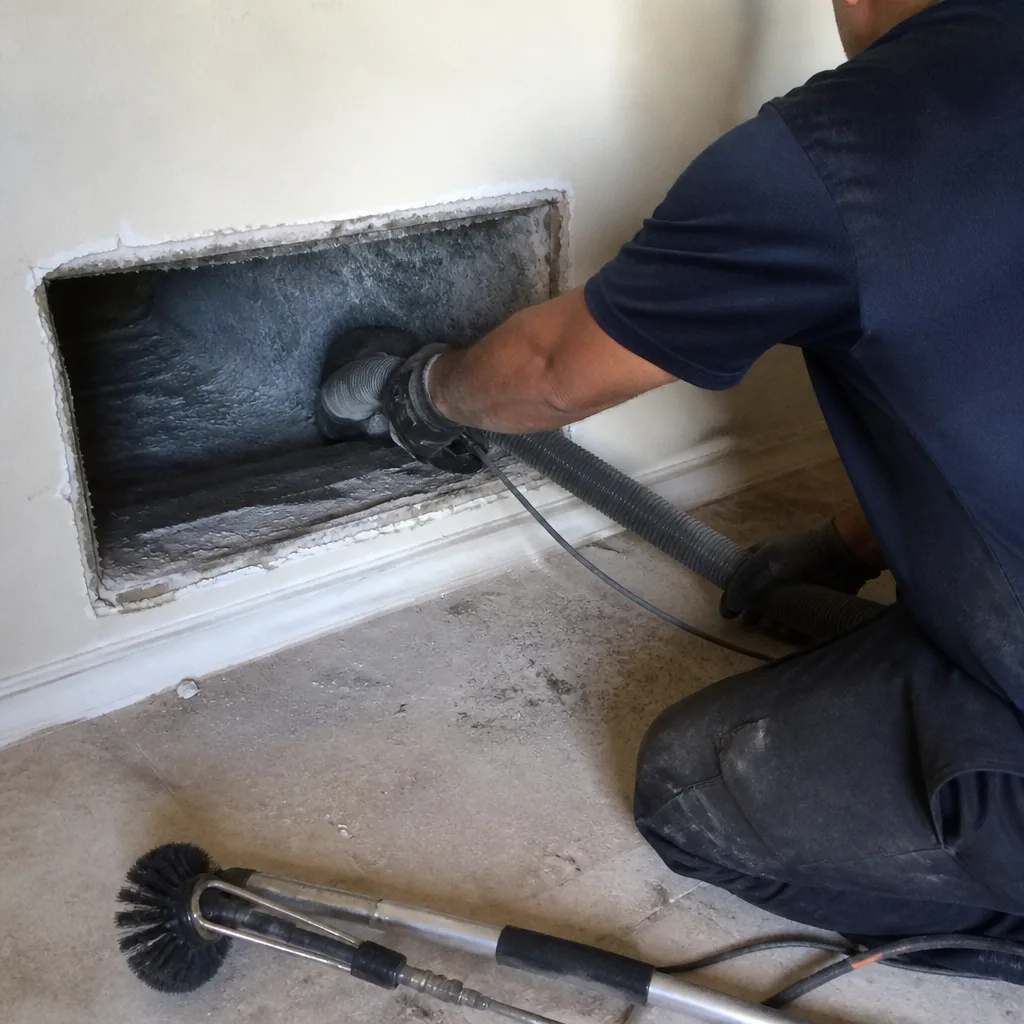 Before
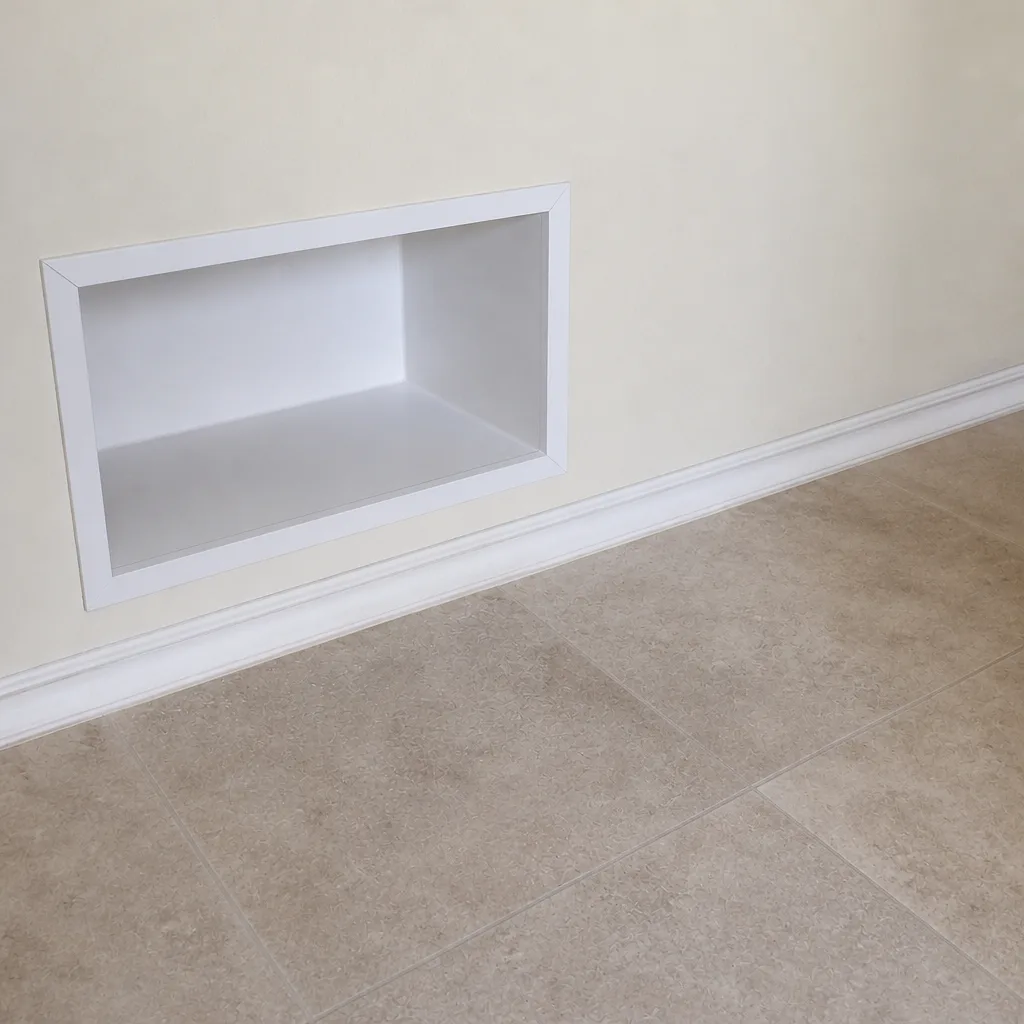 After
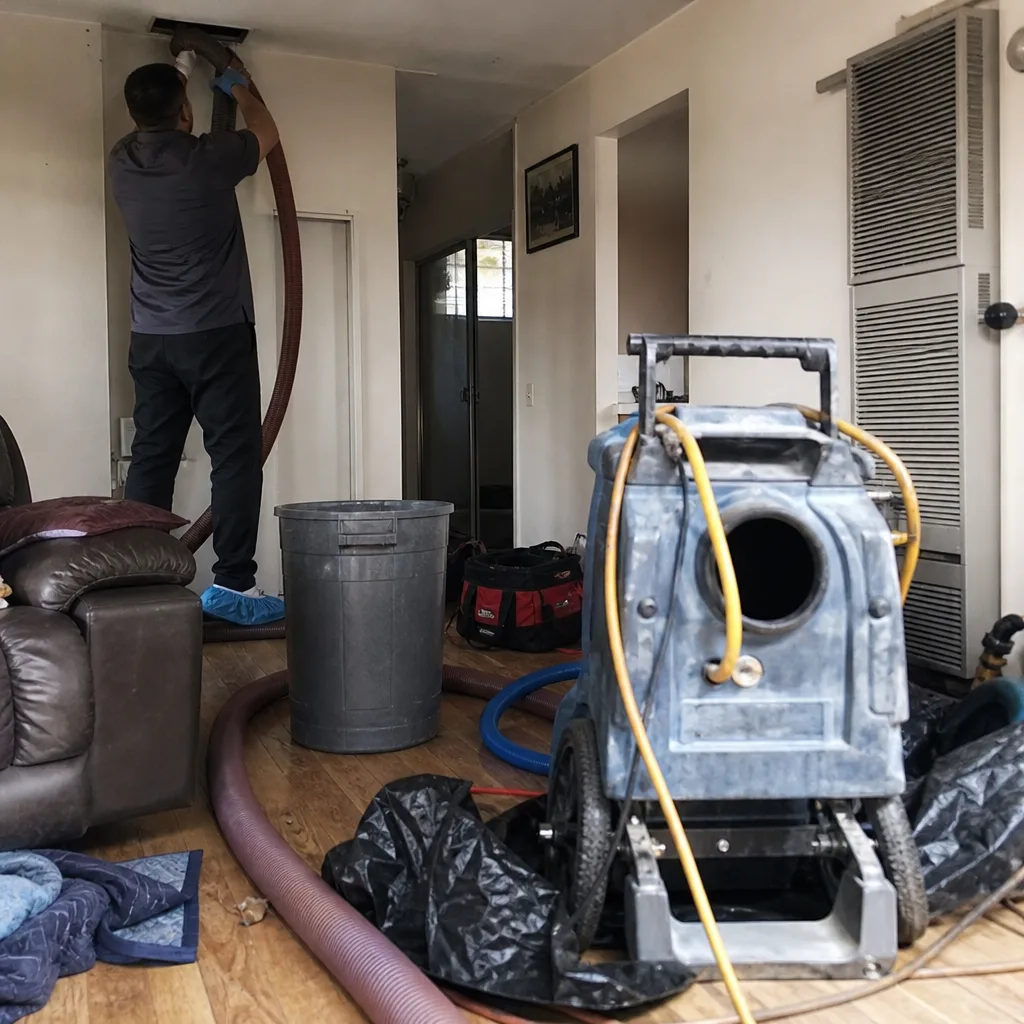 Before
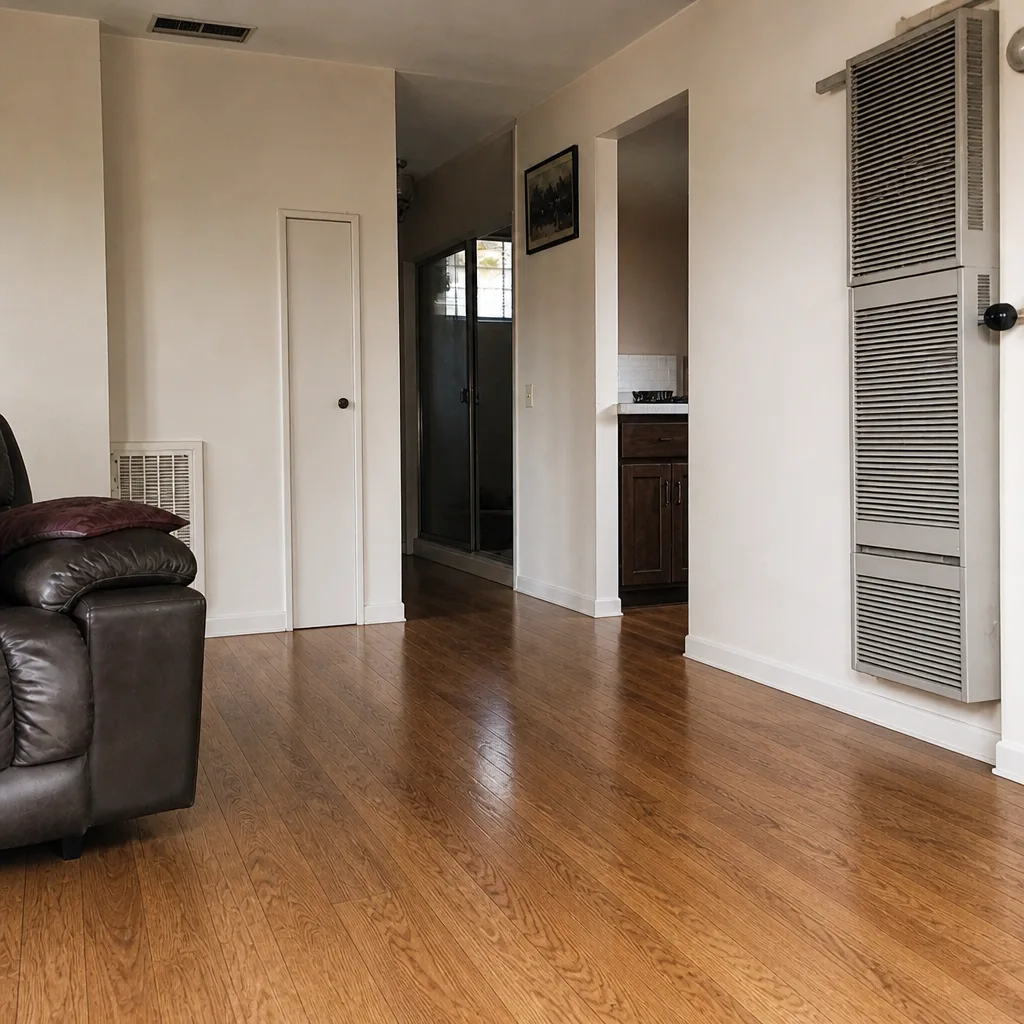 After
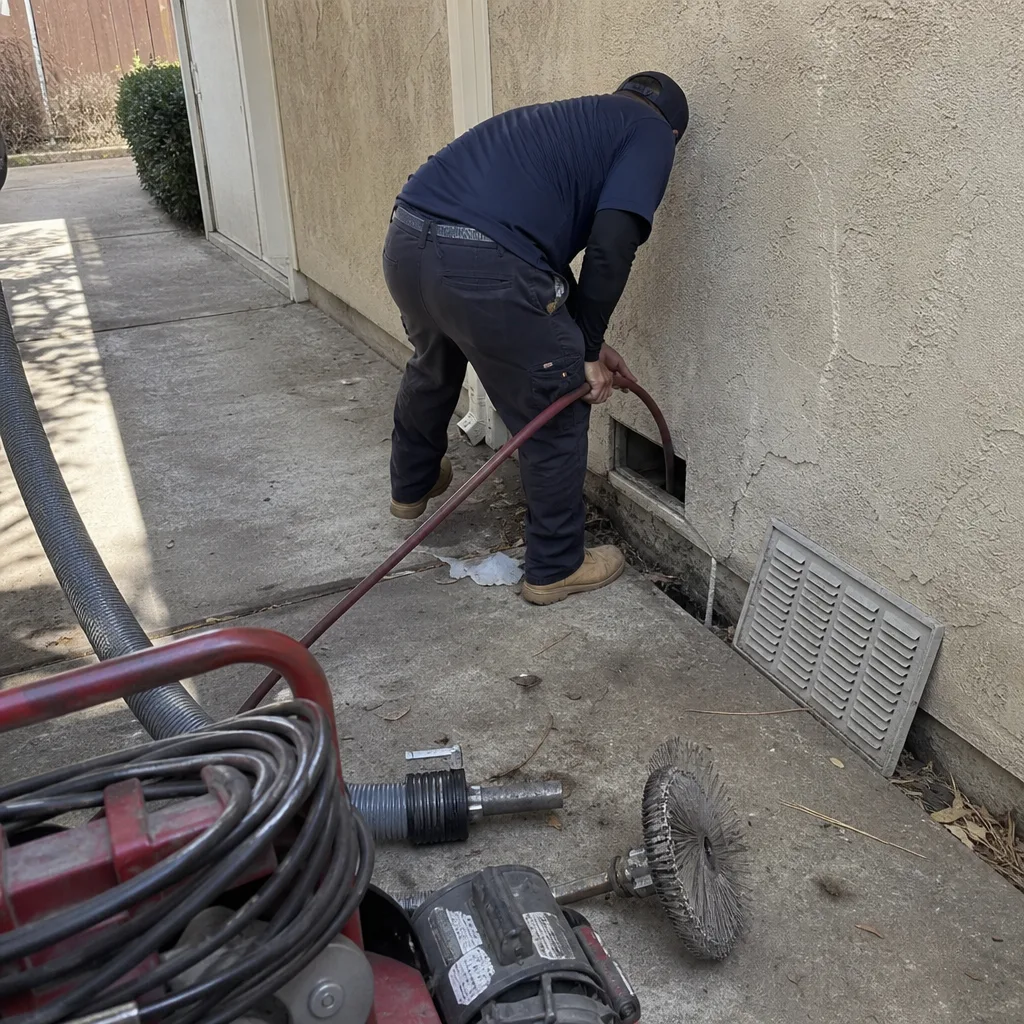 Before
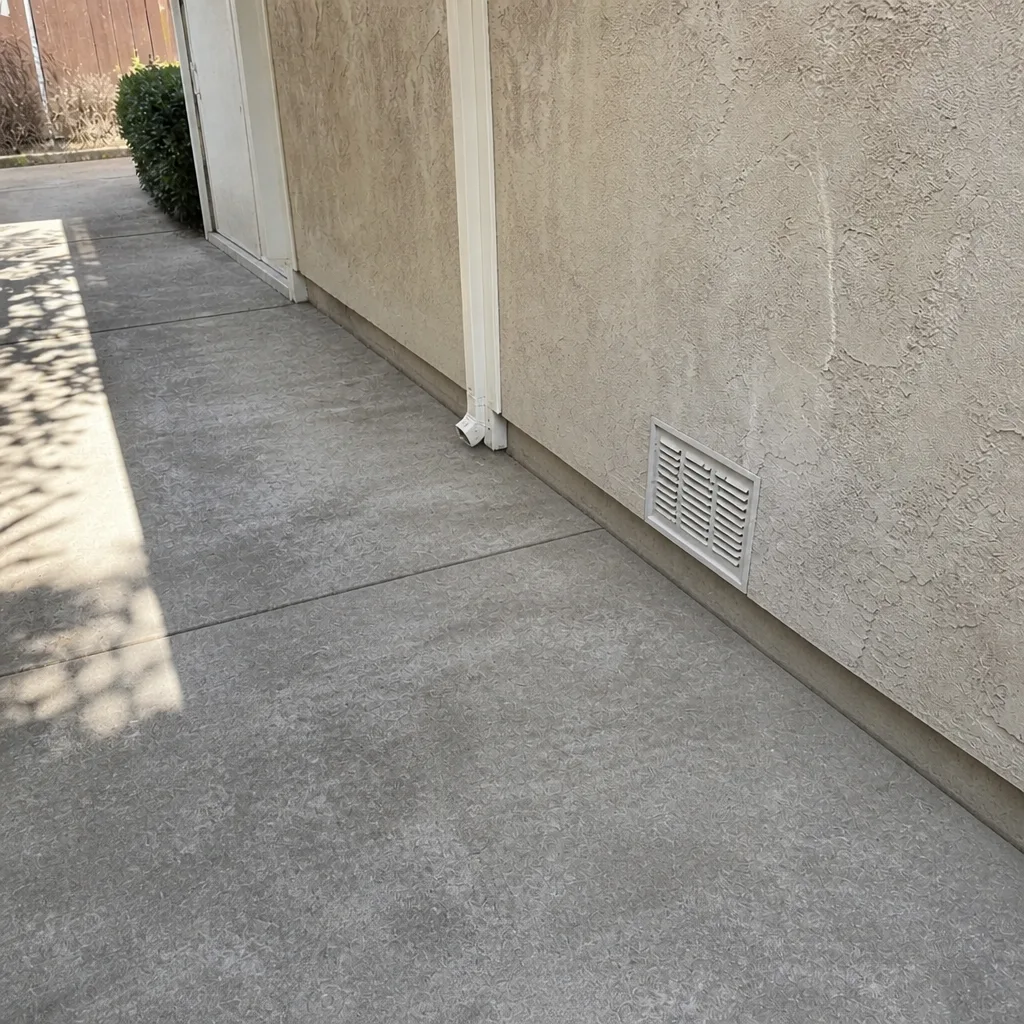 After
When to Call a Professional
Call a professional when the ducts haven’t been cleaned in a long stretch, when someone in the home is showing new allergy or asthma symptoms, when you’ve moved into a house with unknown duct history, or when the HVAC system or dryer has been running noticeably warmer or slower than usual. Call when you’ve finished a renovation and the drywall dust has cycled through the system. Call when you can see visible debris at the registers or smell something musty coming from a vent. And call when you’re comparing quotes and want a straight answer on scope before anyone shows up.
Woodbridge Air Duct Cleaning offers free estimates in Woodbridge. Call (855) 658-4123. We answer 24/7. Fast dispatch from 7am to 7pm, Sunday through Friday. The vetted local pro is licensed and insured as their state requires, and the written estimate sets the final price before any work starts.
Frequently Asked Questions
Air duct cleaning in Woodbridge is priced per system, by written estimate, after an inspection. Whole-system cleaning for a typical single-family home generally falls in the low-to-mid hundreds, and jobs that include repair and sealing or HVAC cleaning land higher. The number that matters is the one on your estimate, not a teaser on a coupon. Call (855) 658-4123 for an exact quote. Estimates are free.
Cheap quotes are usually built on equipment cuts: consumer vacuums instead of contractor-grade extraction, no containment, no HEPA filtration, and a per-vent price that grows once the technician is on site. The low number buys a surface pass, not a full-system clean. Ask what machine is used and whether containment is part of the job. The answer explains the price gap.
Ask for before-and-after photos of your own ducts and a camera inspection if the runs are accessible. A serious operator will happily show you, and will walk you through what the inspection found. Our crews shoot before-and-after photos as standard practice, so the record is yours, not a claim on a website. Call (855) 658-4123 to set up an inspection.
Most homes fall into a multi-year cycle, and the honest answer is that it depends on pets, smoking, renovation dust, allergies, and whether the ducts are sealed. A household with pets, allergy sufferers, and a recent renovation moves up the schedule. A clean, sealed system with no complaints can go longer. Our air duct cleaning service starts with an inspection that tells you where your home actually sits.
No. Franchise agreements standardize marketing and customer service, and equipment is often left to the individual operator. A franchise location can run the same portable shop vac as an unlicensed solo operator. Judge the equipment and the process, not the logo. If the operator can’t name the tools and the filtration, that’s your answer.
Probably, if the dryer is more than a few years old and the vent has never been cleaned. A clogged dryer vent is a leading cause of residential fires, so it’s worth treating as a safety service rather than a maintenance extra. Our dryer vent cleaning handles it as its own job. Call (855) 658-4123 for a free estimate on both.
The Bottom Line
Choosing an air duct cleaning brand in Woodbridge comes down to evaluating the operator, not the sign. A franchise background neither guarantees nor prevents good work. Contractor-grade equipment from Rotobrush and Nikro, containment and HEPA filtration from Abatement Technologies, a written scope that includes repair and sealing, and before-and-after evidence of your own ducts: those are the things that make a job worth paying for. Review count is noise. Tool names, process descriptions, and follow-up details are signal. Ask the questions, get the estimate in writing, and let the equipment do the talking.
Woodbridge Air Duct Cleaning covers the full air pathway with five connected services: air duct cleaning, dryer vent cleaning, HVAC cleaning, duct repair and sealing, and air quality and sanitizing. Our technicians have up to 9 years of experience. If you want your whole system evaluated by an operator who names the tools, we’re glad to help. Learn more about us at Woodbridge Air Duct Cleaning, or call (855) 658-4123. We answer 24/7. Fast dispatch from 7am to 7pm, Sunday through Friday.
Written by the team at Woodbridge Air Duct Cleaning.