
Last updated November 24, 2026
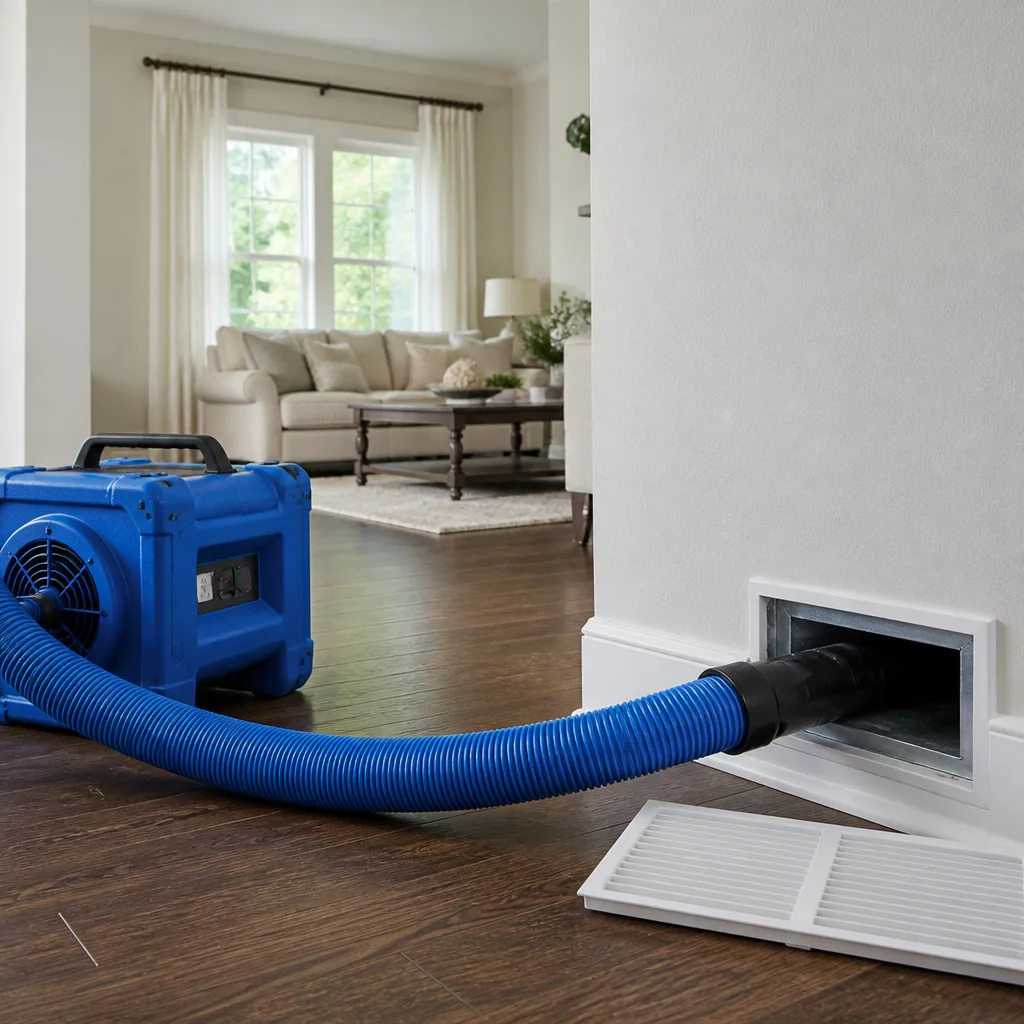 Whole-home duct cleaning
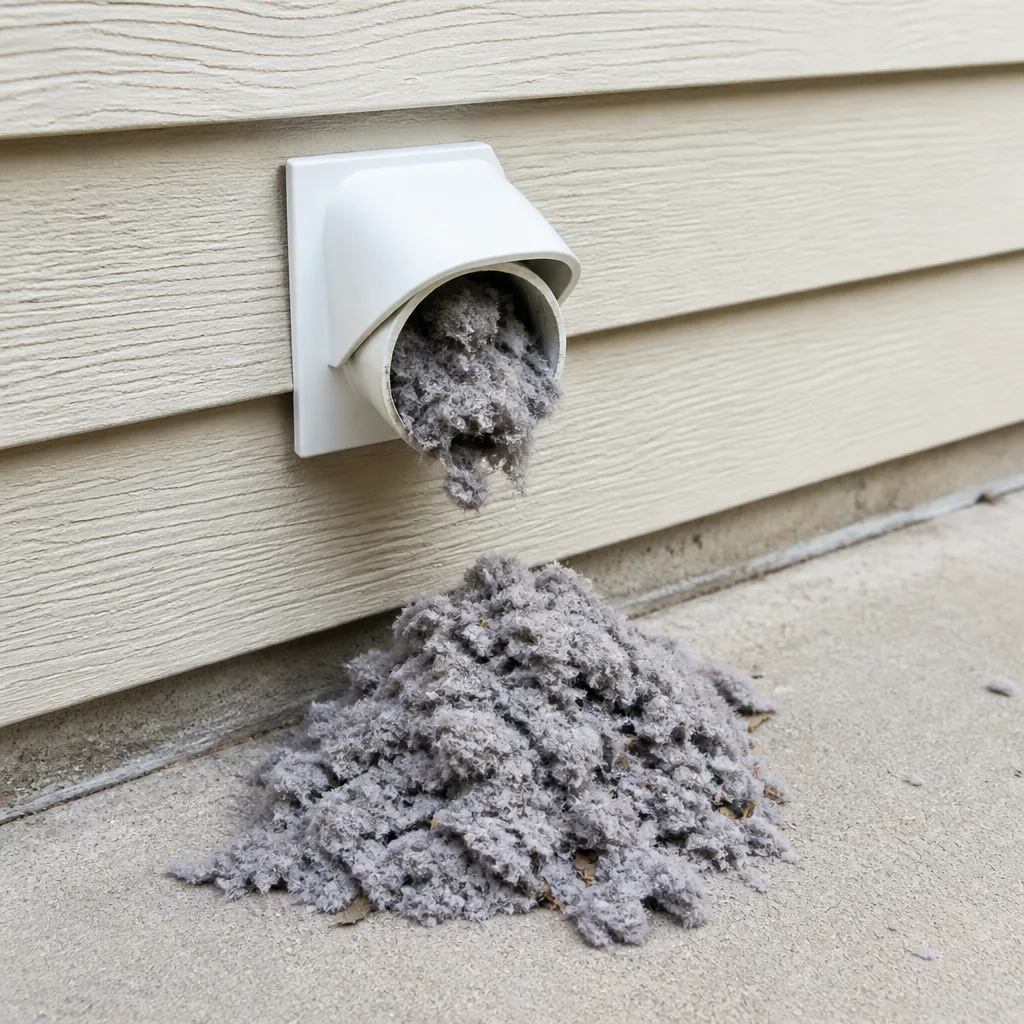 Dryer vent cleaning
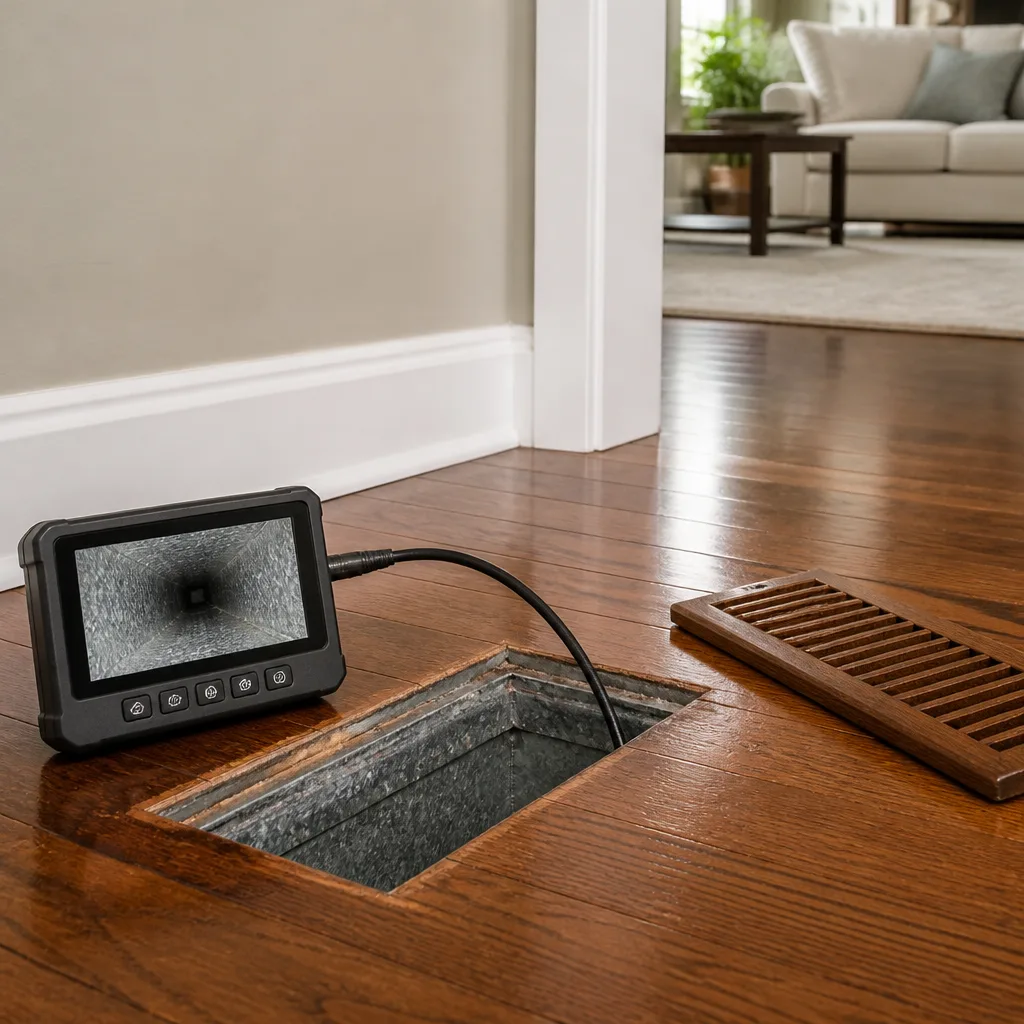 Camera inspection
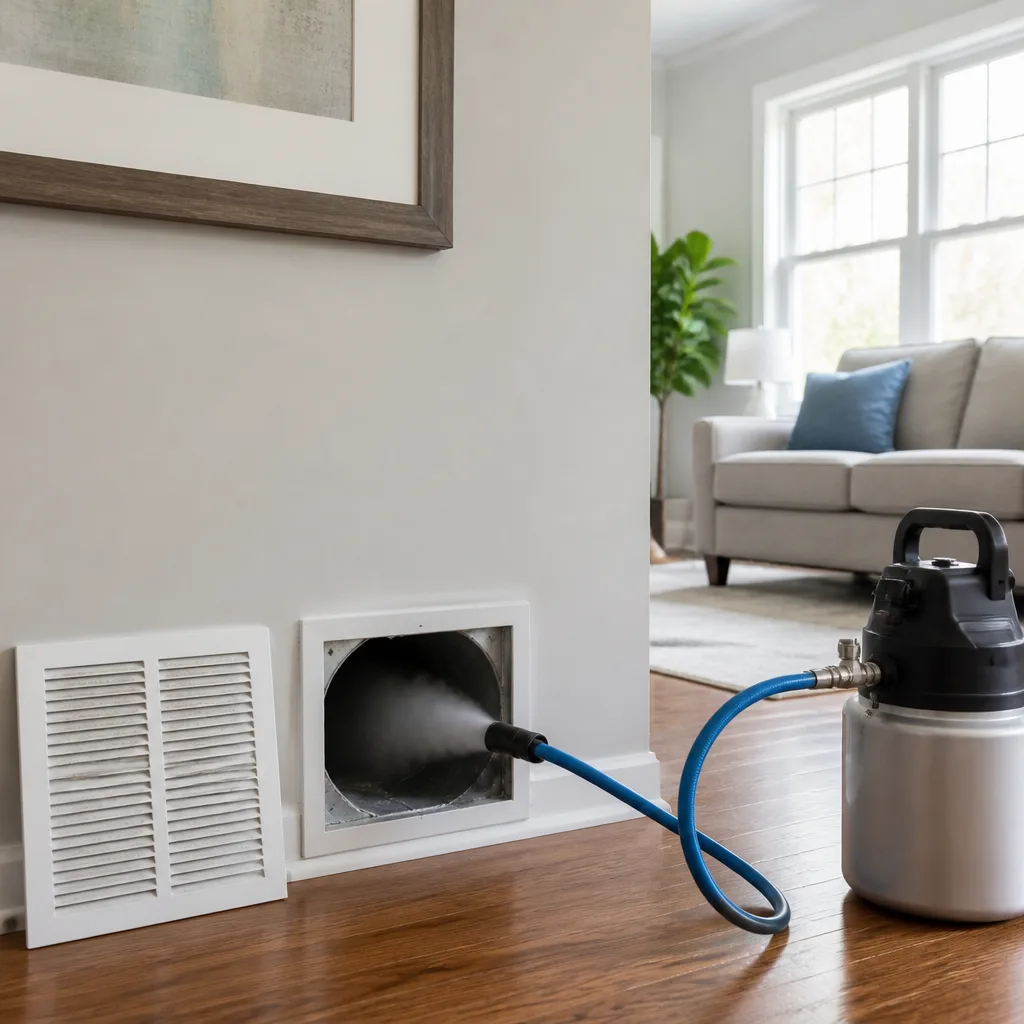 Sanitizing & deodorizing
Whole-system duct and dryer vent check with before-and-after photos - you see exactly what came out of your vents
That "$99 whole-house special" is a bait ad - the real number appears once they are in your hallway, or the "clean" is a shop-vac at the register. We photograph the inside of your ducts before and after instead.
DIY vs Professional Air Duct Cleaning: The Woodbridge Homeowner’s Decision Guide
Every DIY duct cleaning kit sold online shares one flaw, and it has nothing to do with the brush. It’s the suction. A shop vac or a consumer rotary tool pulls roughly 150 cubic feet per minute through a hose. The extraction systems we run pull many times that and, more importantly, hold the whole duct system under negative pressure while the brush turns. Remove that containment and cleaning becomes agitation: debris loosens, goes airborne, and settles somewhere else in the house. This guide lays out exactly what a Woodbridge homeowner can safely handle, what genuinely needs contractor-grade equipment, and how to compare the real three-year cost of each path.
Quick Answer
Surface work is genuinely DIY-friendly: registers, grilles, filter swaps, and a visual dryer vent check. Deep cleaning of the duct interior is not, because source removal depends on negative pressure containment that consumer equipment can’t produce. A DIY kit mostly moves dust around inside the system; a professional job with HEPA filtration and containment actually removes it from the home. If your ducts haven’t been opened in years, or anyone in the house has asthma or allergies, the professional route is the one that produces a measurable result.
Styles & brands we work with
- Whole-home duct cleaning
- Dryer vent cleaning
- Camera inspection
- Sanitizing & deodorizing
Table of Contents
- The Physics of Source Removal: Why Containment Isn’t Optional
- What Woodbridge Homeowners Can Legitimately Do Themselves
- What Belongs Exclusively in Professional Hands
- The Real Cost Comparison Over Three Years
- When DIY Is Fine and When It Creates Liability
- What Contractor-Grade Equipment Actually Looks Like
- Signs Your Woodbridge Home Needs Professional Duct Work
- Common Mistakes to Avoid
The Physics of Source Removal: Why Containment Isn’t Optional
Duct cleaning has a technical name in the industry: source removal. The word “source” matters. The goal isn’t to freshen the air in the room; it’s to take the accumulated material out of the duct system and put it in a sealed container. That only happens when two things occur at once: the debris is agitated loose, and the entire system is held under vacuum so the loosened material travels toward the collection point instead of leaking out of every seam and register boot.
Here’s how contamination moves when containment is missing. A brush spins inside a supply run. Dust, pet hair, and settled particulate lift off the duct wall and become airborne inside a system that is still connected to every room in the house. The return side pulls some of it toward the air handler. The rest finds the path of least resistance: gaps at joints, unsealed register boots, cracks in flex duct, and the supply registers themselves. The homeowner sees dust puff out of a vent and assumes the cleaning worked. What actually happened is redistribution. The material moved from the duct into the living space, where it settles on furniture, bedding, and floors.
Negative pressure flips that. When the system is sealed and held under vacuum with HEPA filtration running, loosened debris has one direction to travel. Abatement Technologies containment and HEPA filtration let us capture what the brush frees rather than recirculating it into the rooms. The brush does the loosening; the vacuum does the removing. Skip the second half and you’ve done half a job with a full measure of disruption.
This is why the DIY-versus-professional question in Woodbridge isn’t really about skill or effort. A careful homeowner with good intentions still can’t generate the pressure differential that makes source removal work. The equipment is the argument.
What Woodbridge Homeowners Can Legitimately Do Themselves
We’re not going to tell you everything requires a phone call. Plenty of air quality maintenance is well within reach of anyone comfortable on a step stool, and doing it yourself saves money without compromising the system. Here’s the honest shortlist.
- Register and grille cleaning. Remove the supply and return grilles, wash them in a tub with mild soap, dry them fully, and reinstall. Loose dust on the face of a grille is cosmetic and easy to handle. This is the single most useful DIY task and it’s genuinely safe.
- Filter replacement. Check the filter monthly during heavy-use months and replace it on the schedule the manufacturer prints on the frame. A clogged filter strains the blower and cuts airflow. This is the highest-return five minutes in home maintenance.
- Dryer vent inspection. Pull the dryer out, disconnect the vent, and look inside with a flashlight. Clear the immediate lint trap area and check the exterior flap opens freely when the dryer runs. If you see heavy lint buildup deeper in the run, stop there and book a professional cleaning. Dryer vent lint is a leading cause of residential fires, so this is a safety item, not a chore.
- Exterior vent screening. Make sure outdoor vent terminations have intact screens and flaps. A missing screen invites birds, insects, and rodents into the duct path. Replacing a damaged screen is a hardware-store job.
- Furniture and airflow basics. Keep return grilles unblocked by rugs, furniture, or storage. Half the “weak airflow” complaints we hear trace back to a blocked return, not a dirty duct.
Notice what’s absent from that list: anything that reaches inside the ductwork itself. That line is where DIY stops being helpful and starts being a way to stir up what you were trying to remove.
What Belongs Exclusively in Professional Hands
Some tasks require equipment, training, and containment that no consumer product supplies. These are the jobs where a DIY attempt ranges from wasted effort to genuinely unsafe. Internal duct agitation with simultaneous extraction tops the list, because it’s the core of the service and it depends entirely on the negative pressure setup described above. Mold treatment inside a duct system is another: mold needs to be identified, the moisture source corrected, and the affected area treated with products rated for HVAC surfaces, and doing that wrong can spread spores rather than remove them.
Duct sealing is a third. Leaky ducts waste conditioned air and pull contaminated air from crawlspaces and attics into the living space. Finding those leaks means pressure testing and, often, camera inspection of the duct interior. Sealing them properly means mastic, mesh, or aerosol sealing applied to the right locations. Cleaning alone can’t fix a leak, which is why we treat repair and sealing as part of the same full air pathway rather than a separate upsell.
- Camera inspection. A borescope shows what’s actually inside the ducts: debris depth, moisture, pest evidence, damaged flex, disconnected joints. Without it, any recommendation is guesswork.
- Internal agitation and extraction. Rotary brushes and air whips driven through every branch line while the system is under negative pressure.
- Mold identification and treatment. Locating the moisture source first, then treating the affected surfaces with appropriate products.
- Duct repair and sealing. Fixing disconnected joints, crushed flex runs, and leaks that cleaning can’t address.
- System pressure testing. Verifying airflow and static pressure before and after work so the result is measured, not assumed.
- HVAC component cleaning. The blower, coil, and cabinet are part of the air pathway and need attention alongside the ducts.
If your system includes any of these conditions, the professional route isn’t a luxury. It’s the only route that produces a real result. You can read more about the full process on our air duct cleaning page.
The Real Cost Comparison Over Three Years
The DIY-versus-professional cost comparison is usually framed as one-time numbers. That framing misses the point, because a DIY attempt that redistributes debris doesn’t leave the system clean. It leaves it disturbed, and the dust settles back into the same ducts. Three years is a better window, because it captures what actually happens when a system is properly cleaned versus merely agitated.
Consider the two paths side by side:
- DIY path. Buy a consumer kit or rent a shop vac attachment. Spend a weekend on it. Notice dust settling on surfaces afterward. Repeat the effort because the result didn’t hold. Replace filters more often because the system is still loaded. Possibly pay for professional cleaning anyway once symptoms persist, on top of what was already spent. Nothing is guaranteed, and no documentation exists that the work was done.
- Professional path. One scheduled visit with containment and HEPA filtration. Full source removal from every branch line. A camera record of before-and-after conditions. Any leaks found get sealed, which reduces future debris intake. Filters last closer to their rated interval because the system is cleaner upstream. The result is measurable and documented.
The DIY path can look cheaper on day one. Over three years, the question shifts to what you actually received. A cleaning that redistributes contamination and needs repeating isn’t a bargain; it’s a delay with extra steps. We’d rather you understand the tradeoff than be sold on a low headline figure. We set one flat price per system and agree it before any work begins, and the written estimate is what the final invoice reflects.
If you want a specific number for your Woodbridge home, call (855) 658-4123. Estimates are free, and we’ll walk you through what the system actually needs.
When DIY Is Fine and When It Creates Liability
The scenarios split cleanly once you know where the danger lines are. Surface maintenance on the outside of the system is yours. Anything that requires opening or disturbing the ductwork itself is where DIY turns into a liability problem.
DIY is acceptable when:
- You’re washing register covers and grilles with soap and water.
- You’re replacing air filters on schedule.
- You’re doing a visual check of the dryer vent and clearing the immediate lint trap.
- You’re confirming exterior vent screens are intact.
- You’re keeping returns unblocked and airflow paths clear.
DIY creates liability when:
- You’re disturbing insulated flex duct in a crawlspace. Flex duct is easily torn, and a torn liner becomes an unfiltered pathway pulling crawlspace air into the living space.
- You’re cleaning around an older HVAC system that may contain asbestos-era materials in duct insulation or sealants. Disturbing those materials is a health hazard, and this is exactly the situation where a professional assessment comes first.
- You’re using a shop vac on a system that’s still connected. The vac pushes as much as it pulls, and the push goes into the house.
- You’re treating visible mold with household products without addressing the moisture source. The mold returns, often worse.
- You’re sealing joints with tape that isn’t rated for HVAC use. It fails within a season and leaves a sticky mess.
Woodbridge homes vary widely in duct age and configuration, so what’s safe in one house may not be in the next. If you’re unsure which side of that line your home sits on, that uncertainty is your answer: get it assessed. Our HVAC cleaning service covers the components around the ducts, and we’ll tell you clearly if the ducts themselves need attention.
What Contractor-Grade Equipment Actually Looks Like
The difference between a DIY kit and professional equipment isn’t marketing. It’s the same difference between a garden hose and a fire engine: both move water, but only one has the pressure to do the job. Here’s what we actually bring into a Woodbridge home.
Rotobrush and Nikro extraction systems handle the agitation and extraction. These are the tools commercial contractors use, not entry-level machines. Rotobrush’s rotary brush system reaches into branch lines and scrubs the duct walls while the vacuum pulls; Nikro equipment covers the heavier extraction side. Together they produce the pressure differential that makes source removal work.
Abatement Technologies containment and HEPA filtration seal the work area and capture what the brush frees. This is the piece most DIY attempts lack entirely. Without it, you’re agitating debris into the house. With it, the debris travels one direction and ends up in a collection container, not on your furniture.
Honeywell and Aprilaire IAQ products let us move past cleaning into lasting air quality improvement when a homeowner wants it. That might mean upgraded filtration, humidity control, or other whole-home components integrated into the system. Measured air quality, not just a cleaned vent. We also carry Guardsman products where appropriate.
The point of naming equipment is simple: ask any company what they use. If the answer is vague or the truck carries a shop vac, you’re not getting source removal. You’re getting agitation with a nicer invoice. Woodbridge Air Duct Cleaning uses Rotobrush and Nikro systems on every job, with Abatement containment as standard, because the equipment is what makes the result real.
Signs Your Woodbridge Home Needs Professional Duct Work
Not every home needs duct cleaning on a schedule. Some homes need it urgently, and the signs are usually visible once you know what to look for. Woodbridge’s mild climate means heating and cooling systems run year-round in many households, which keeps air moving through the ducts constantly. That constant cycling moves more debris into the system over time than a seasonal climate would.
- Visible dust puffs from supply registers when the system starts. That’s debris sitting near the register boot.
- Persistent dust on surfaces within days of cleaning. The system is redistributing it.
- Musty or stale odors when the air handler runs. Often a sign of moisture in the system.
- Uneven airflow room to room. Could be a blocked return, a crushed duct, or a disconnected joint.
- Allergy or asthma symptoms that worsen at home. The ducts may be holding what’s triggering them.
- Pest evidence around vents or in the duct path. Rodents and insects find their way in through gaps.
- Recent move-in with unknown duct history. You don’t know what’s accumulated, and a camera inspection tells you.
- A dryer that takes longer than it used to. Lint buildup in the vent is a fire risk and a sign the run needs cleaning.
If two or more of those apply, it’s worth a professional look. Our dryer vent cleaning service handles the safety side of that checklist, and our broader duct work addresses the rest. For a full picture of what we offer, start at Woodbridge Air Duct Cleaning.
Common Mistakes to Avoid
- Assuming a shop vac counts as duct cleaning. A shop vac pushes air as much as it pulls, so it stirs debris rather than containing it. The result can be worse than leaving the ducts alone.
- Skipping the camera inspection. Cleaning without seeing the inside means you don’t know if you’re addressing a debris problem, a moisture problem, or a disconnected duct. Each needs a different fix.
- Cleaning the ducts without sealing leaks. Leaky ducts pull air from crawlspaces and attics, which means new contamination enters as fast as you remove the old. Clean and seal belong together.
- Cranking the system to “blow out” the dust. Running the fan while debris is loose just pushes it into the rooms. This is one of the most common DIY errors and it’s entirely avoidable.
- Ignoring the dryer vent because it’s out of sight. Lint buildup in the vent is a leading cause of residential fires. Visual checks are cheap; the alternative isn’t.
- Disturbing flex duct in a crawlspace. Crawlspace duct runs are easily torn, and a torn liner becomes an unfiltered path for crawlspace air. Leave that work to someone with the right tools.
- Trusting a quote with no scope and no before-and-after record. If a company won’t tell you exactly what they’ll do and show you the result, you can’t verify the work happened. Ask for both.
See the difference
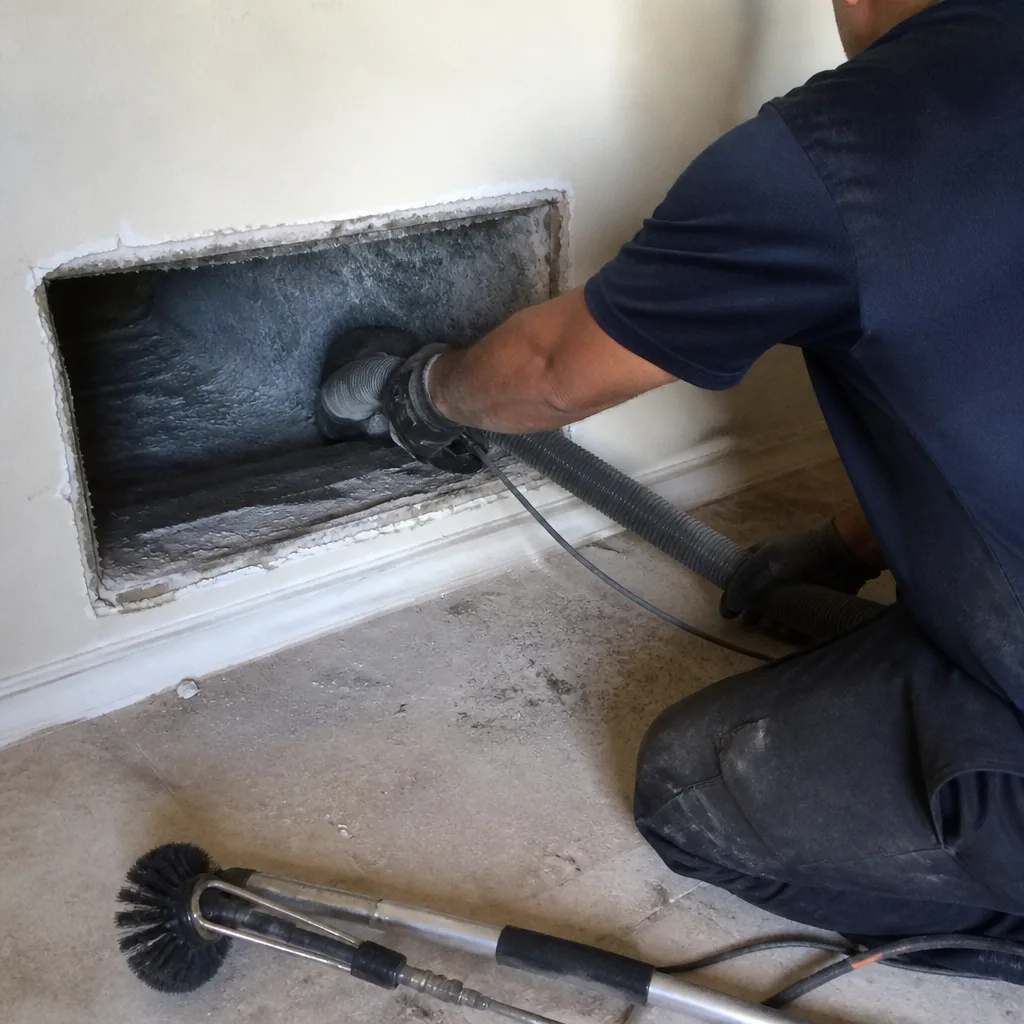 Before
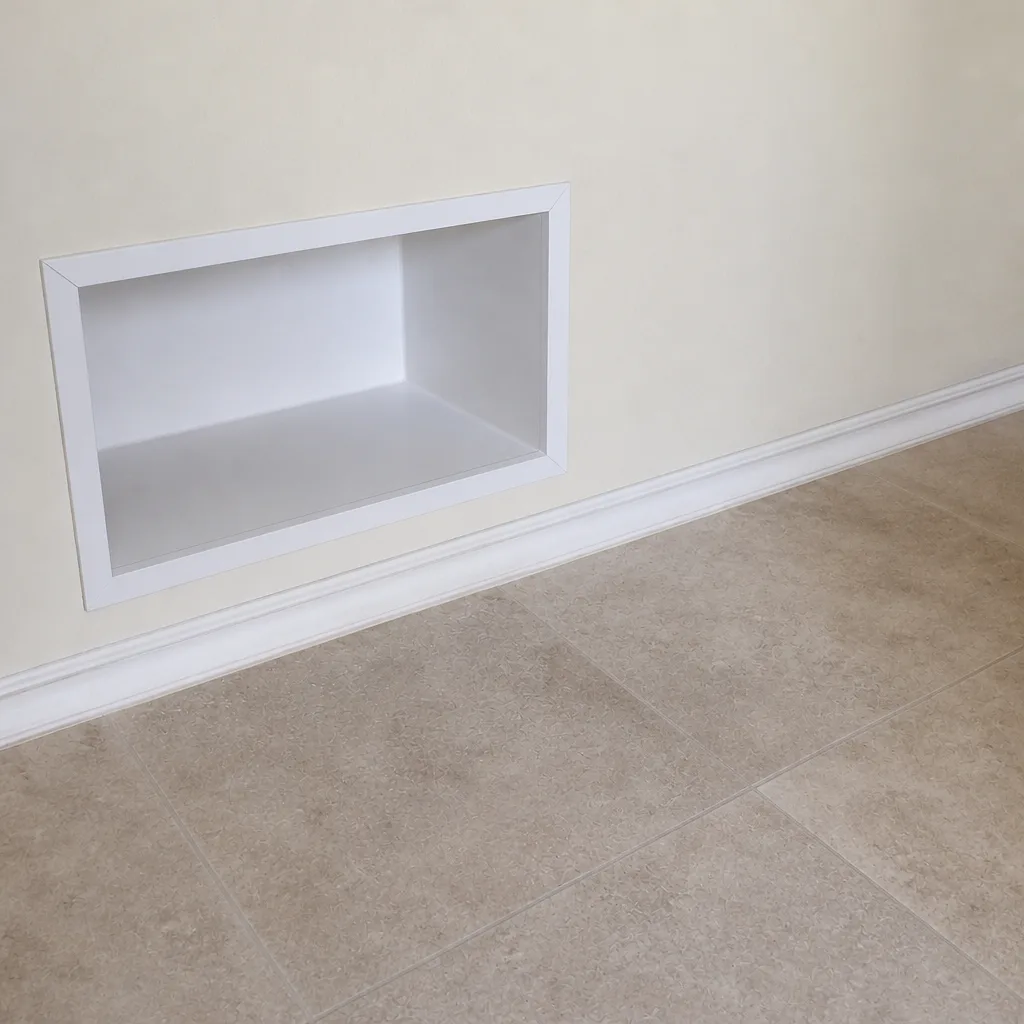 After
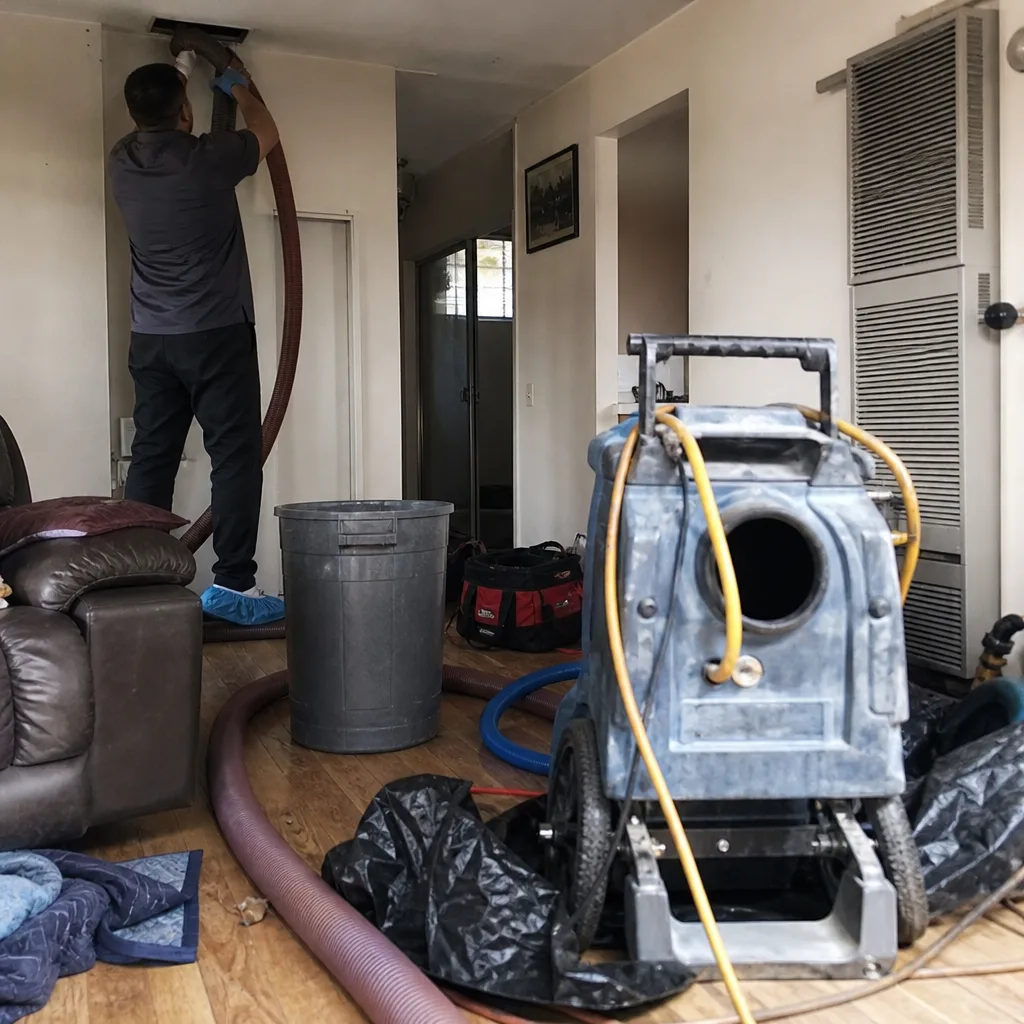 Before
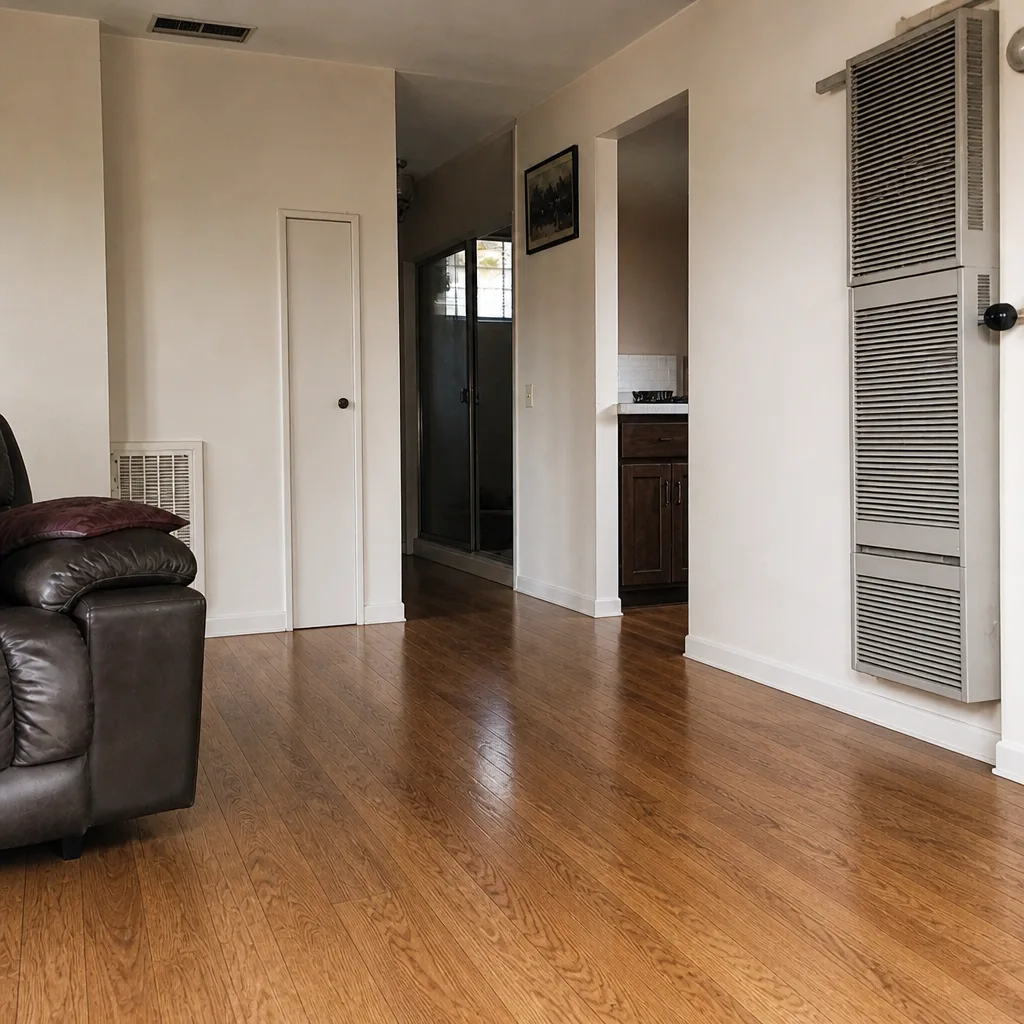 After
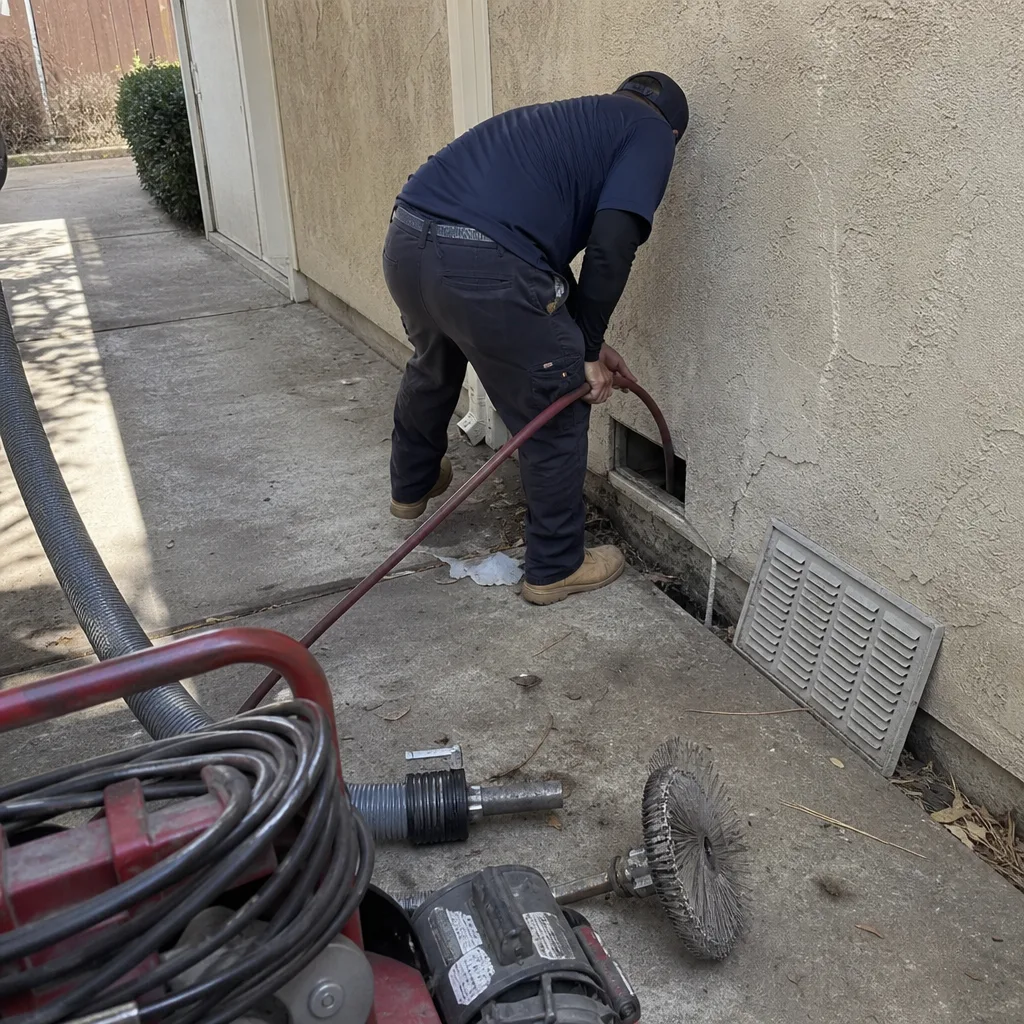 Before
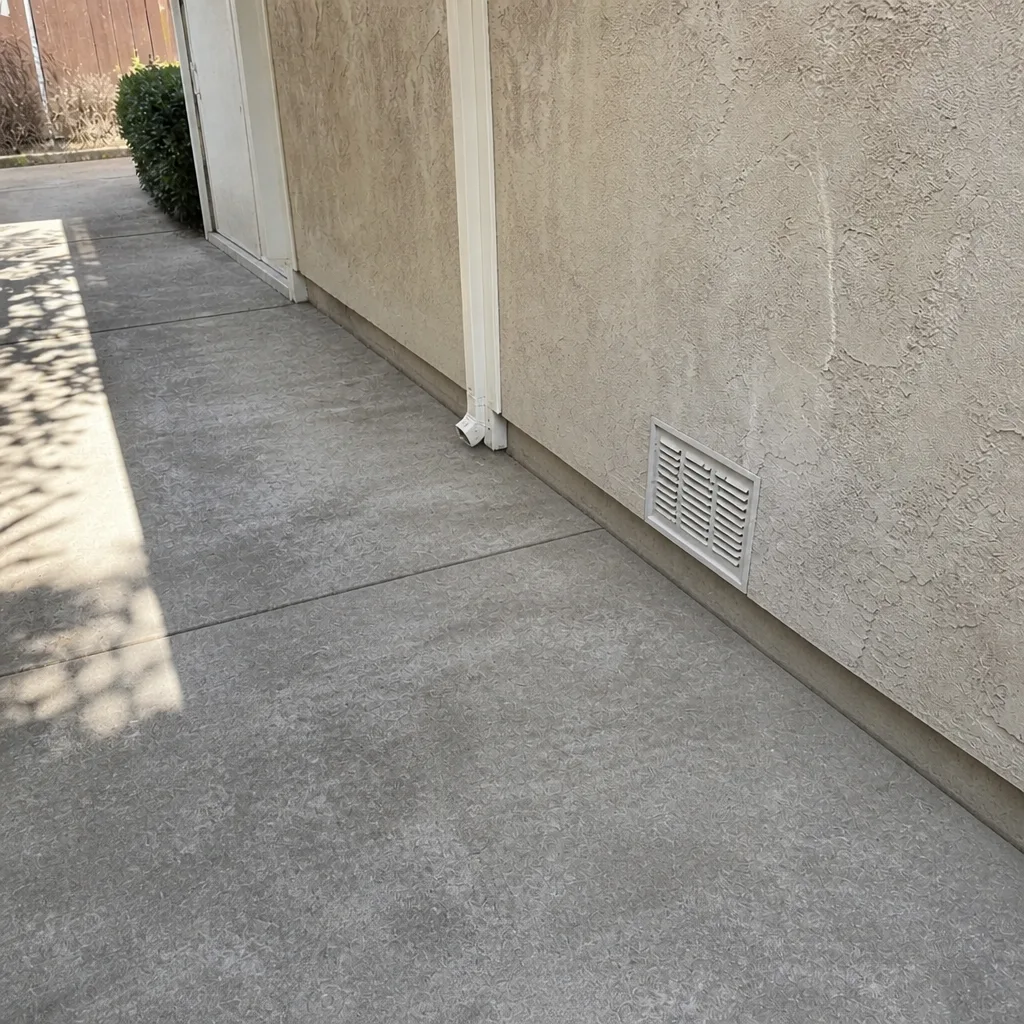 After
When to Call a Professional
Call a professional when the ducts themselves need opening. That includes any debris visible at the registers, recurring dust, musty odors when the system runs, uneven airflow you’ve already traced to something other than a blocked return, an asthma or allergy sufferer in the house, a recent move into a home with unknown duct history, or any suspicion of mold or pest activity inside the system. It also includes the dryer vent once lint buildup is more than surface-level. In each case, the work requires containment, agitation with extraction, and often camera inspection and sealing, none of which a consumer kit supplies. Woodbridge Air Duct Cleaning offers free estimates in Woodbridge. Call (855) 658-4123. We answer 24/7. Fast dispatch from 7am to 7pm, Sunday through Friday. Our technicians have up to 9 years of experience, and every job includes before-and-after documentation of your own ducts.
Frequently Asked Questions
If the only issue is dusty register covers or a filter that needs changing, a DIY pass handles it. If you’re seeing dust puffs from registers, recurring dust on surfaces, musty smells when the system runs, or uneven airflow, the debris is inside the ducts and needs source removal. Call (855) 658-4123 for a free estimate and we’ll tell you which category your home falls into.
Cheap quotes usually reflect equipment and scope, not efficiency. A low figure often means no containment, no HEPA filtration, no camera inspection, and a shop vac instead of contractor-grade extraction, which means the work redistributes debris rather than removing it. We set one flat price per system and agree it in writing before work starts, with before-and-after photos so you can see what changed. Call (855) 658-4123 for an honest number.
It can, yes. Consumer kits pull far less air than professional systems, and without negative pressure containment, the debris a brush loosens has to go somewhere. Much of it settles back into the ducts or escapes through seams and register boots into the rooms. You’ve spent the effort without getting source removal. That’s not a reason to panic, but it is a reason to leave the interior work to a company with the right equipment.
Register and grille cleaning, filter replacement, visual dryer vent inspection, exterior vent screen checks, and keeping returns unblocked are all reasonable DIY tasks. The line is at the duct interior. Internal agitation, mold treatment, sealing, and camera inspection need professional tools and containment, and disturbing flex duct in a crawlspace can create a real problem. When in doubt, get an assessment first.
There’s no universal schedule; it depends on the home, the occupants, and what’s accumulated. Homes with pets, allergy or asthma sufferers, recent renovations, or unknown duct history tend to need it sooner. A home with a clean system and a good filter routine can go longer. The right way to decide is a camera inspection, not a calendar. Call (855) 658-4123 and we’ll assess yours.
Ask for before-and-after photos of your own ducts and a written scope of what was cleaned. We document the result on every job, and we set the flat price in writing before we start. If a company won’t show you what they did, that’s your answer about whether they did it. Call (855) 658-4123 for a free estimate with a clear scope.
The Bottom Line
The DIY-versus-professional question comes down to one thing: can your equipment hold the duct system under negative pressure while the debris is agitated loose? If not, cleaning becomes redistribution, and the material you were trying to remove ends up somewhere else in the house. Surface maintenance is yours and worth doing. Interior source removal, mold treatment, sealing, and camera inspection belong to a company with contractor-grade extraction, containment, and HEPA filtration. Buy the right path once rather than a cheap one twice. That’s what actually saves money over three years, and it’s what your family breathes every day.
Call (855) 658-4123 for a free estimate. We answer 24/7. Fast dispatch from 7am to 7pm, Sunday through Friday. The local pro is licensed and insured as their state requires, and you’ll get one flat price per system agreed before work starts, with before-and-after photos of your own ducts.
Written by the team at Woodbridge Air Duct Cleaning.