
Last updated November 24, 2026
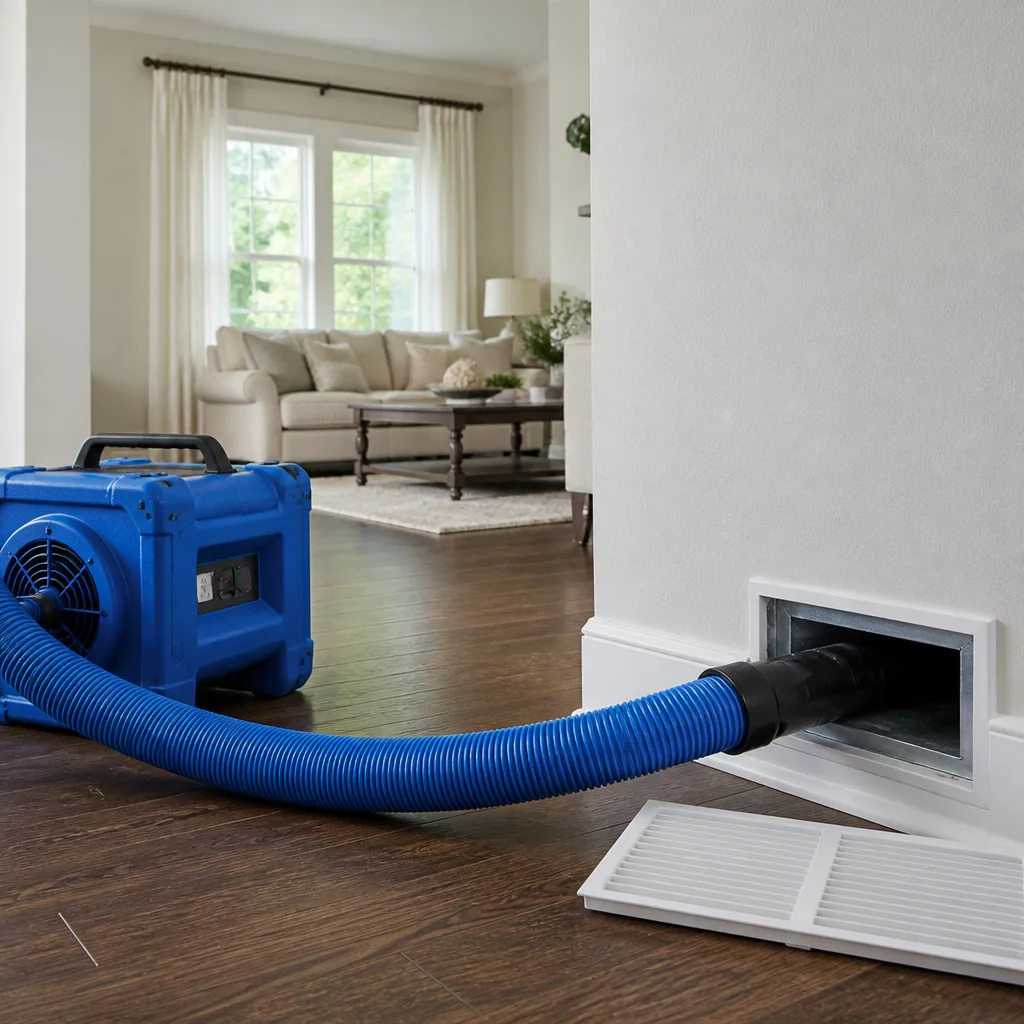 Whole-home duct cleaning
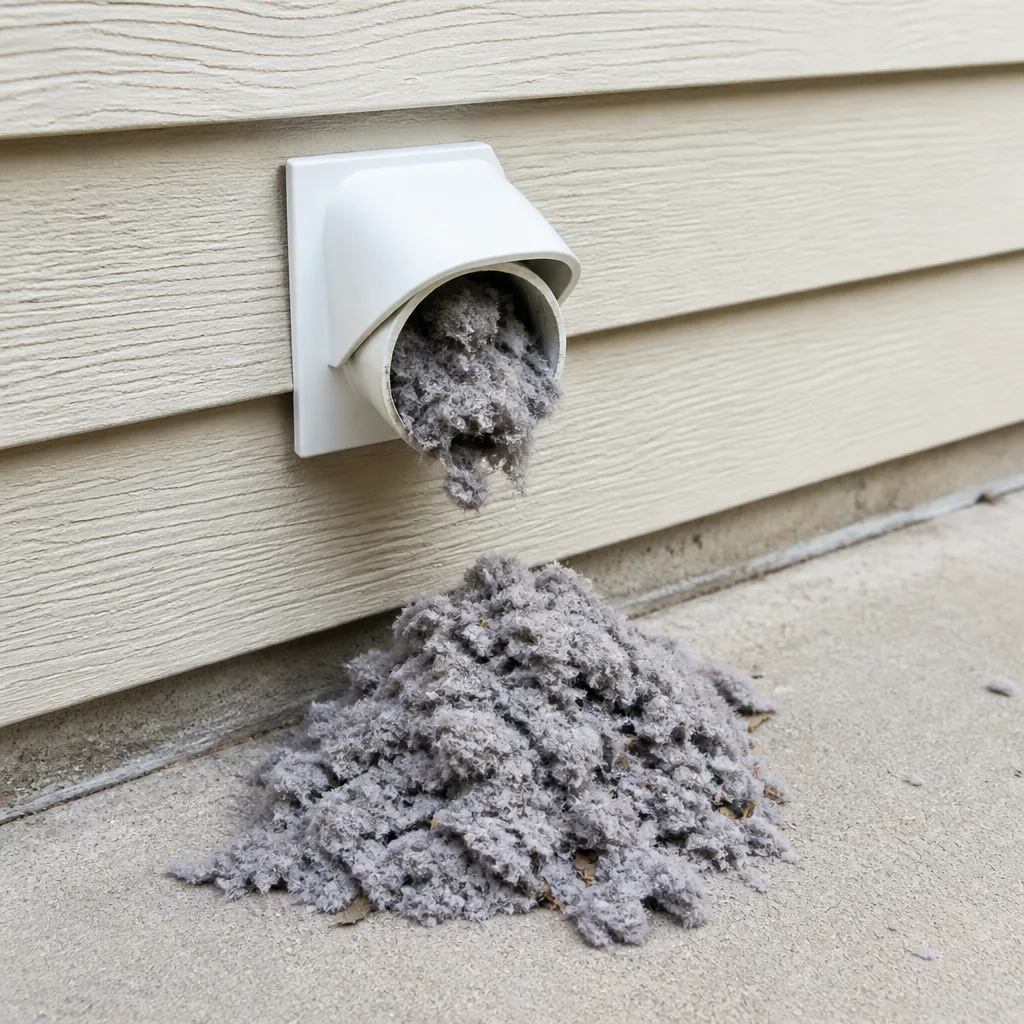 Dryer vent cleaning
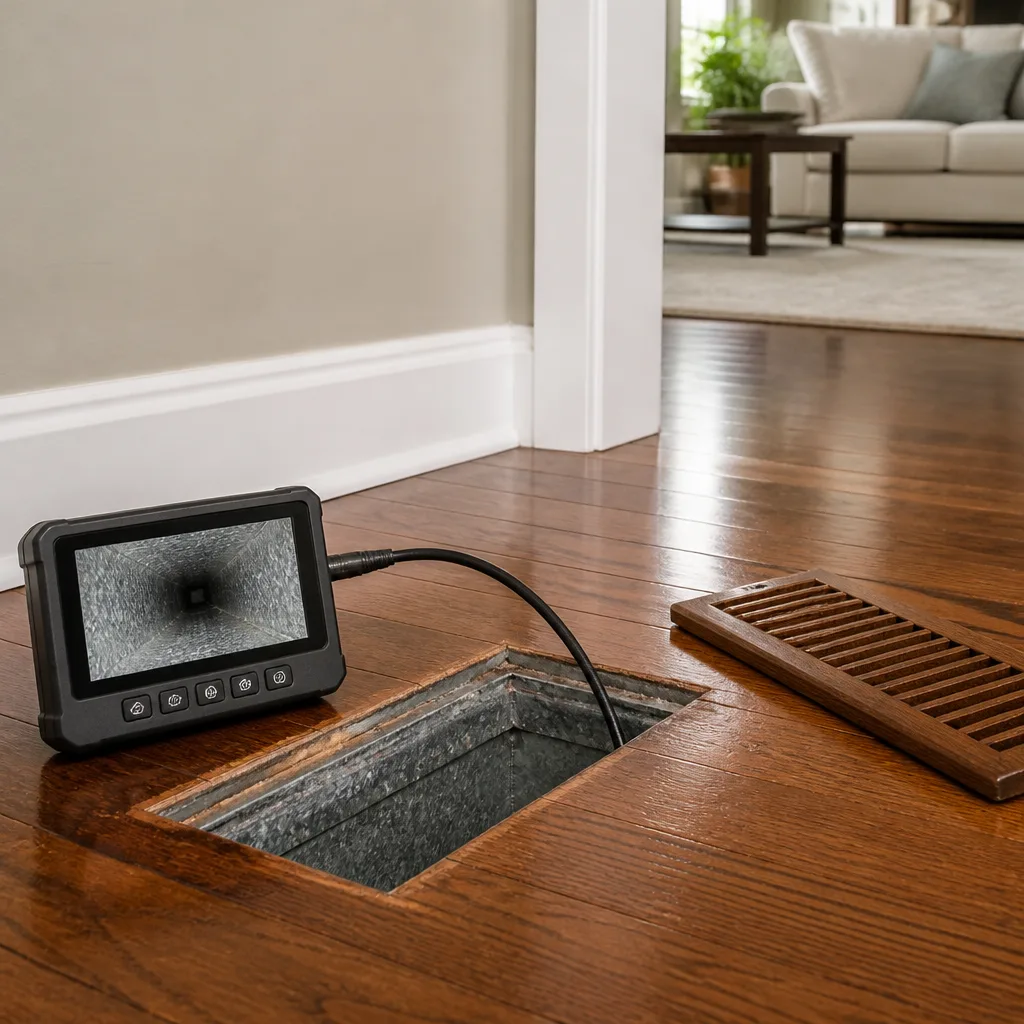 Camera inspection
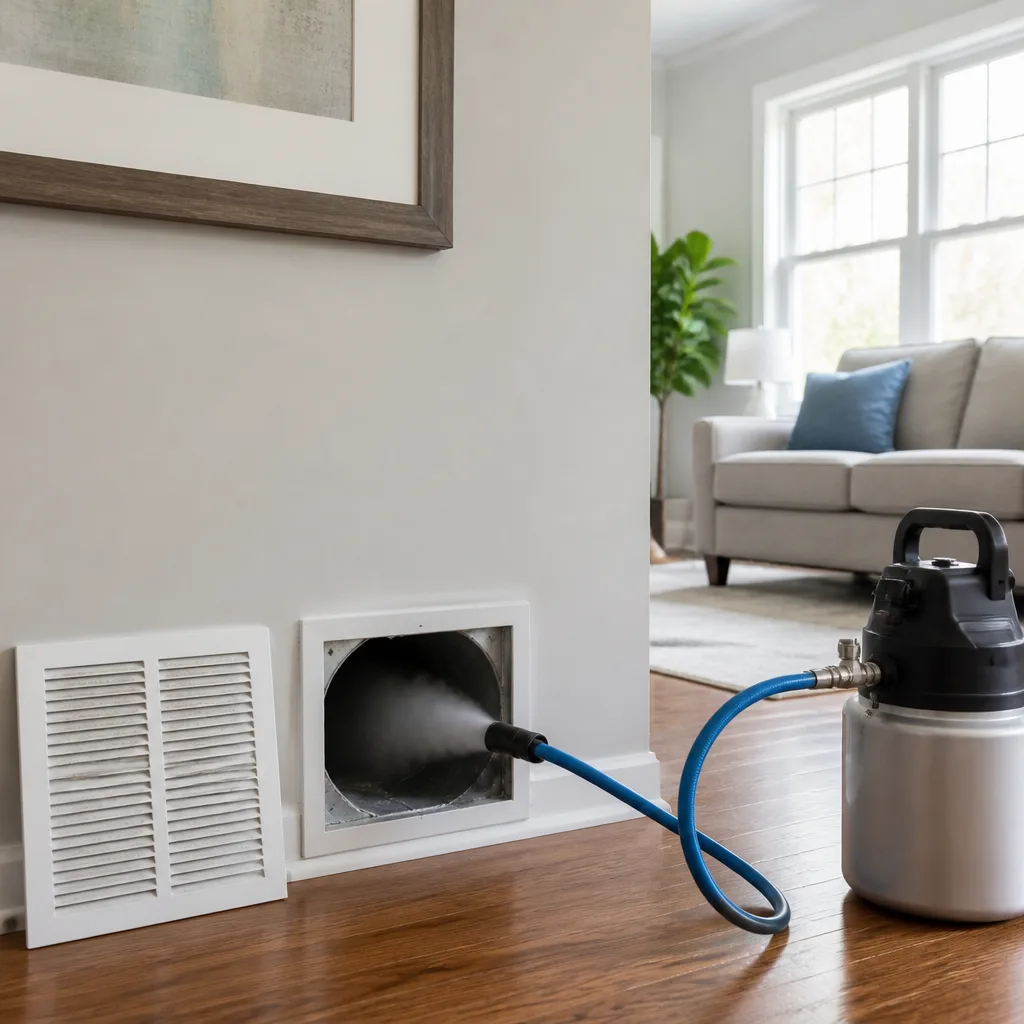 Sanitizing & deodorizing
Whole-system duct and dryer vent check with before-and-after photos - you see exactly what came out of your vents
That "$99 whole-house special" is a bait ad - the real number appears once they are in your hallway, or the "clean" is a shop-vac at the register. We photograph the inside of your ducts before and after instead.
Air Duct Cleaning Cost Breakdown: The Woodbridge Homeowner’s Reference for 2026
Most homeowners start their duct cleaning research by searching for a national average and anchoring on a number somewhere between $300 and $500. That figure is real, but it describes a very particular job: a truck-mounted vacuum on a small single-story house with around eight vents and one return. It tells you almost nothing about what a full-system cleaning should cost in a larger home with two zones, flex duct runs, and a central return in the hallway ceiling. Which is why so many Woodbridge homeowners end up comparing quotes that were never comparable in the first place. This guide breaks the price into line items so you can measure any quote against actual scope, and spot both the too-cheap bait-and-switch and the inflated one.
Quick Answer
Air duct cleaning in Woodbridge typically runs about $400 to $850 for a whole-house system with a standard vent count, and $850 to $1,400 or more for larger two-story homes with two-zone systems, long flex runs, and multiple returns. Per-vent pricing is what creates the wide $89-to-$1,200 spread you see online, because it pays for speed rather than thoroughness. What actually sets the final number is scope: how many access points must be cut, how the system is routed, how many zones and returns there are, and whether agitation equipment can reach every branch.
Styles & brands we work with
- Whole-home duct cleaning
- Dryer vent cleaning
- Camera inspection
- Sanitizing & deodorizing
Table of Contents
- Why the national average doesn’t apply to a Woodbridge home
- Per-vent pricing vs. whole-system pricing
- Line-item breakdown: what each part of the job should cost
- What drives price variation in this area
- How to sanity-check a quote in two minutes
- What should never be an upsell
- What legitimately costs more
- How a full-system cleaning actually runs
Why the national average doesn’t apply to a Woodbridge home
The national average assumes a floor plan. A 1,200 square foot ranch with eight supply vents, one return, and an HVAC unit sitting in a closet next to the ductwork is a simple job. The equipment rolls in, connects once, and the entire system is within arm’s reach. Woodbridge housing stock is not that. Much of it runs larger, and a meaningful share of homes here have two HVAC zones, a second story with its own trunk line, and a central return pulling from an open hallway.
That changes the cost model in three concrete ways.
- More access points. A single-zone ranch may need one or two cuts. A two-story two-zone Woodbridge home can need five or six, one for each trunk segment the vacuum can’t reach from the main connection.
- More run length. A long flex duct run from a second-floor bedroom to a garage-mounted air handler is more than 40 feet. Debris travels that whole distance, and agitation tools have to be fed through it.
- More equipment time. Negative pressure has to hold across a larger volume of duct. That means more setup time, more hose, and more of the technician’s day. A $99 coupon price cannot absorb any of that.
When you see an ad quoting a flat national-average price for “any home,” the ad is assuming the simplest possible house. In Woodbridge, that almost never describes the house you live in. Ask what the price covers before you book, and get it in writing. Our air duct cleaning work starts with a scope walk-through for exactly this reason.
Per-vent pricing vs. whole-system pricing
Per-vent pricing is the single biggest source of confusion in this trade. It works like this: you’re quoted $25 per vent, you have 14 vents, and you assume the math is simple. It isn’t, because per-vent pricing pays the technician by count. The faster they touch each vent, the more homes they fit into a day. That creates an incentive to skip the trunk lines, skip the returns, skip the air handler, and run a brush one pass down each supply branch. The vents get touched. The system doesn’t get cleaned.
A whole-system quote, by contrast, prices the scope of the entire air pathway. Here’s what a legitimate scope-based quote should spell out:
- Supply branch count and trunk access. How many supply runs will be cleaned, and how many access points will be cut to reach the trunk.
- Return duct count. Returns carry as much soil as supplies and are frequently skipped in cheap quotes.
- Air handler and blower compartment. Whether the HVAC unit itself is being cleaned or just the duct that connects to it.
- Negative pressure method. Where the vacuum connects, and how the system is sealed during cleaning.
- Agitation equipment used. Air whips and brushes fed through each branch, or a compressed-air tool if the layout requires one.
- Sanitization, if included. Whether a treatment is part of the price or a separate line.
- Cleanup and verification. Whether the crew photographs before-and-after, and how they confirm the work is complete.
If a quote can’t answer most of those bullets, it isn’t a scope quote. It’s a per-vent price dressed up. We’ve seen Woodbridge homeowners handed a $99 “whole house special” that turned out to be a single air handler wipe-down with no ductwork touched at all. The written scope is what you compare, not the number at the top.
Line-item breakdown: what each part of the job should cost
These are typical 2026 ranges for the Woodbridge market, not exact prices. Every job is quoted per system, and the written estimate is what sets the final number. Use them as a model to check whether a quote you’ve been given adds up.
| Line item | Typical Woodbridge range | What it covers |
|---|---|---|
| Base whole-system cleaning (supply + return + air handler) | $400 – $850 | Negative pressure setup, agitation through branches, trunk and return cleaning, air handler blower compartment wipe-down |
| Access point cutting | $25 – $60 per cut | Cutting a temporary opening to reach trunk segments that can’t be reached from the main vacuum connection; costs more when the duct is above finished ceiling |
| Negative pressure setup and containment | $100 – $250 | Sealing the system, connecting the HEPA-filtered vacuum, and containing debris so it doesn’t recirculate into living space |
| Agitation (brush, air whip, compressed air) | Included in base, sometimes $50 – $150 | Mechanical loosening of debris in each branch before vacuum extraction; the tool varies with duct material |
| Sanitization treatment | $150 – $350 | Fogger or spray application after cleaning; priced by system size |
| Camera inspection (before-and-after) | $75 – $200 | Video documentation of trunk and branch interior; should be included or offered, not sold as a discovery upsell after the work starts |
| Dryer vent cleaning add-on | $125 – $250 | Full lint removal from the dryer vent line, often done same visit as the duct cleaning; higher end for long or roof-terminated runs |
| Duct repair and sealing | Quoted per defect | Patching torn flex, reconnecting separated joints, mastic-sealing leak points; separate line item from cleaning |
Two things to notice. First, most Woodbridge homes will land on the upper half of the base cleaning range, not the bottom, because of system size and access. Second, sanitization, camera inspection, and dryer vent cleaning are the pieces a bait-and-switch quote usually either excludes entirely or slides in after the technician is on site. A real scope estimate lists them before you book, and lets you choose.
What drives price variation in this area
Two homes on the same street in Woodbridge can produce quotes that differ by $400. It’s rarely a scam in either direction. It’s the layout. Here’s what does the driving.
Home age and duct material
Older Woodbridge homes often have rectangular galvanized metal trunks with short transitions to the supplies. Metal is heavy, but it’s smooth inside and debris comes off cleanly. Newer builds lean toward flex duct, which has ribbed interior walls that trap finer soil and require careful low-pressure agitation so the inner liner doesn’t tear. Flex jobs need more time but less aggressive tooling. Metal jobs need less time but more brush control. Both are legitimate and both cost different amounts.
Crawlspace vs. attic routing
Where the ductwork runs changes the whole setup. A system routed through a ventilated crawlspace lets the technician reach the trunk from below, and access cuts are simple. A system routed through a hot attic is slower, safer work: the technician has to manage heat and footing, and access cuts often go through finished ceiling below. Expect attic-routed systems in Woodbridge to price at the top of the base range.
Two-story access complexity
A two-story home with a second-trunk feeding upstairs bedrooms usually needs at least two additional access points. Some second-story trunks are boxed in behind drywall soffits, which requires more careful cutting. A quote that doesn’t ask how many stories your home is wasn’t written for your house.
System size and zone count
A two-zone system is effectively two separate duct networks sharing one air handler or two. That doubles the negative pressure setup and roughly doubles the agitation time. If a quote is the same for a 1,500 square foot one-zone home and a 2,800 square foot two-zone home, the price wasn’t built from scope.
How to sanity-check a quote in two minutes
You don’t need a duct cleaning background to tell a reasonable quote from a suspicious one. You need three numbers and about two minutes.
- Count your supply vents and returns. Walk the house and write down each register you can see. Include the ceiling returns. For a typical 2,400 square foot Woodbridge home, expect roughly 12 to 16 supplies and 2 to 4 returns.
- Note your zone count. Look at the thermostat count. A single thermostat usually means one zone. Two thermostats usually mean two zones.
- Match your system to the range. One zone, under 14 vents, crawlspace routing: base cleaning range bottom to middle. Two zones, 16+ vents, attic routing, or a central return: middle to top. Add sanitization, camera, or dryer vent as separate lines.
Then check the quote against three questions. Does it list supply and return separately? Does it name the air handler as part of the scope? Does it say how many access points are included? A quote that gets all three right is built on scope. A quote that names only a per-vent price isn’t. Our HVAC cleaning estimates follow the same three-question structure, which is why we always put it in writing before any work begins.
What should never be an upsell
Some things in this trade are simply part of doing a job properly. If they show up as add-ons after the technician is inside your home, that’s a signal worth paying attention to.
- Before-and-after photos. A technician with a camera can show you the inside of your own trunk line in under a minute. If photos are being offered for an extra charge, the company doesn’t want you comparing. On every job we run, before-and-after images of your own ducts are part of the price.
- A written scope before the work starts. What’s being cleaned, what isn’t, and how many access points are being cut. That’s not an upgrade. It’s how the price is set. One flat price per system, agreed before work begins, is the model to insist on.
- Basic camera inspection of the trunk. Some companies charge a fee for camera documentation, which can be reasonable if the inspection is thorough and used for diagnosis. But a “we found something” moment mid-job using the same camera is not. If a problem is discovered, you should be shown the footage, told what was found, and be given the option to address it separately.
- Basic containment. If debris is going to be dislodged from the system, the debris needs to be captured, not recirculated into your living room. Negative pressure with HEPA filtration is a standard, not an upgrade. We bring Abatement Technologies containment on every job because a cleaning without containment is a contaminant spread.
- “Disinfection” of an already-cleaned system. Sanitizing has its place after a thorough cleaning, particularly in a home with a pet or allergen concern. But it’s a separate service, priced on its own, not tossed onto the invoice at the door.
What legitimately costs more
Some items go above the base cleaning range, and that’s not a red flag. It’s correct pricing for work that’s usually outside the scope of cleaning itself.
- Mold remediation in the ductwork. If the camera finds active mold growth on the inner liner, cleaning alone won’t solve it. Remediation involves containment, removal, and often liner replacement. It requires a different safety protocol and a separate estimate. Cleaning a moldy system without treating the mold just spreads spores.
- Aeroseal or duct sealing for persistent leaks. A leaky duct system loses conditioned air before it reaches the room. Cleaning can’t fix a torn joint or a separated flex connection. Duct repair and sealing is what closes the gap. This is a separate service from cleaning, and it should be, because the goal is different: cleaning removes what’s inside the duct, sealing makes sure the air stays in it. We integrate dryer vent cleaning the same way on many jobs because the same visit can address a second connected air pathway.
- Full dryer vent replacement. If the vent line is crushed, kinked, or has a transition that lint has clogged beyond cleaning, replacement is the safe answer. The line is a leading cause of residential fires, and a partially cleaned vent is not a resolved one.
- Liner replacement in damaged flex duct. Torn or delaminated inner liners cannot be reliably cleaned. The section is replaced, not scrubbed.
If a company quotes you the same whole-system price for a moldy system as a clean one, ask why. Either they didn’t look, or they don’t intend to address the mold at all.
How a full-system cleaning actually runs
It helps to know the shape of the job so you can measure a quote against the work it pays for. Here’s how a proper Woodbridge full-system cleaning typically goes.
- Walkthrough and scope confirmation. The technician counts vents and returns, notes zone count, and confirms access points. Nothing is cut yet.
- Containment and negative pressure. The system is sealed and the extraction unit is connected. Contractor-grade equipment matters here: a Rotobrush or Nikro extraction system moves enough air to pull debris out of long flex runs, and a HEPA-filtered containment system holds what it dislodges. Consumer-level shop vacuums can’t do either at scale.
- Access cutting. Where the trunk can’t be reached from the main connection, small openings are cut and later sealed. This is priced by cut, and it’s the line item most cheap quotes quietly exclude.
- Agitation through every branch. Brushes and air whips are fed through each supply, then returns, then the air handler compartment. Debris loosened here is captured by the extraction unit, not blown into your living room.
- Air handler and blower cleaning. The blower wheel and cabinet interior collect soil, and if they’re left alone, the first hour of running the system puts it back into the ductwork.
- Camera verification. Before-and-after images of the trunk and a sample of branches.
- Sanitizing, if included. Applied by fogger or spray and priced by system size.
- Access point sealing. Every cut gets closed and sealed properly so it doesn’t become a new leak.
Nine years of technician experience has taught us that step 2, containment, is what separates a real cleaning from a dust redistribution. It’s the same professional-grade setup commercial contractors use, and it’s why the price has a floor.
Common Mistakes to Avoid
- Comparing raw numbers instead of scope. A $199 quote and an $800 quote are not the same product. Compare what’s included: supply count, return count, air handler, containment, camera, number of access cuts.
- Accepting a per-vent price without asking about returns. Returns are half the duct system and the most commonly skipped part of a cheap job. Ask whether return ducts are in the scope, explicitly.
- Booking a coupon “whole house special” that never mentions the air handler. Many low-priced ads clean the supply branches only. The air handler blower is where soil builds up fastest and where the first hour of running the system re-contaminates the ductwork.
- Skipping containment. If the company doesn’t bring a HEPA extraction and containment setup, debris will end up in your breathing air. Ask what equipment they use and what brand.
- Scheduling cleaning right before allergy season without a camera inspection first. If you’re booking duct cleaning because someone in the home has allergies or asthma, ask for a camera inspection of the trunk before the cleaning is scheduled. It costs a small amount and it tells you whether cleaning will help.
- Treating sanitization as a substitute for cleaning. A fogger over a dirty system just coats the soil in a chemical layer. Sanitizing comes after cleaning, never instead of it.
- Forgetting the dryer vent. A dryer vent cleaning add-on is $125 to $250 and addresses a leading cause of residential fires. Combining it with the duct cleaning visit saves the second trip.
See the difference
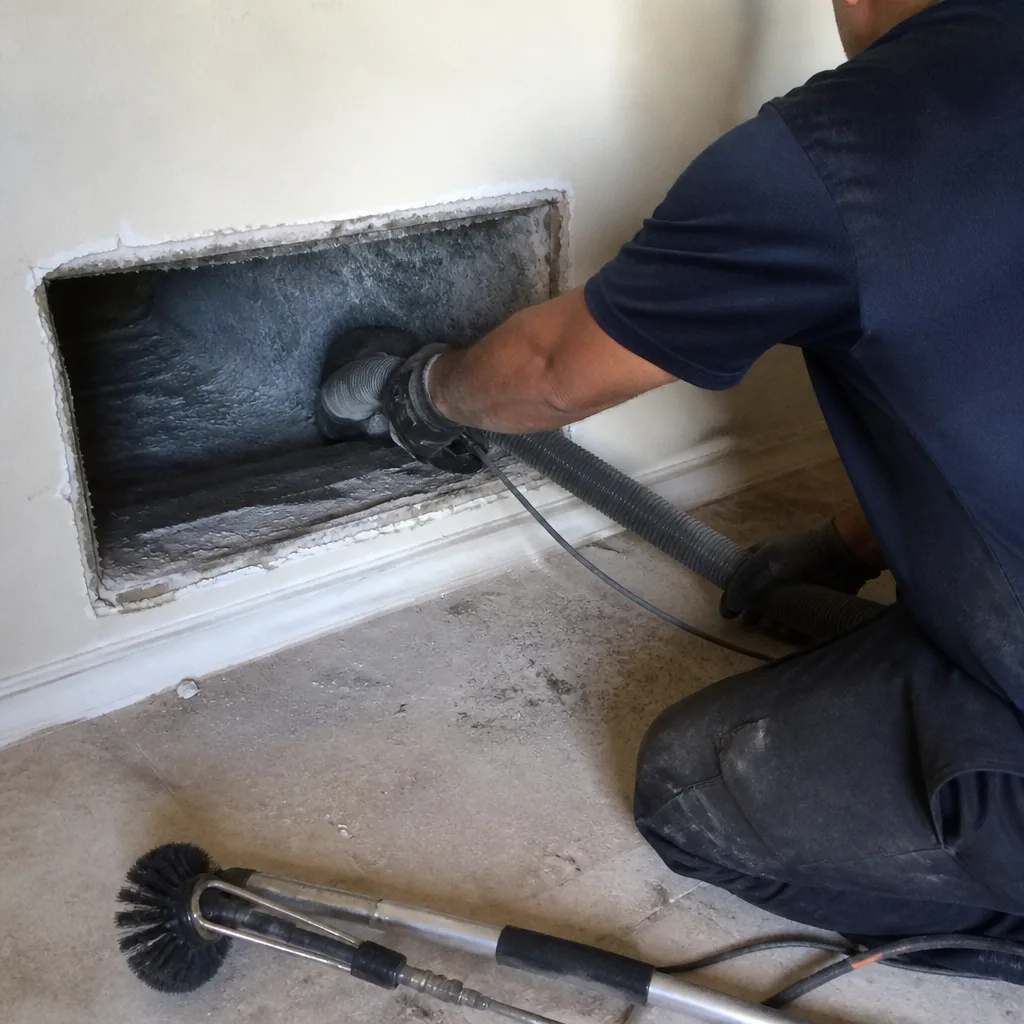 Before
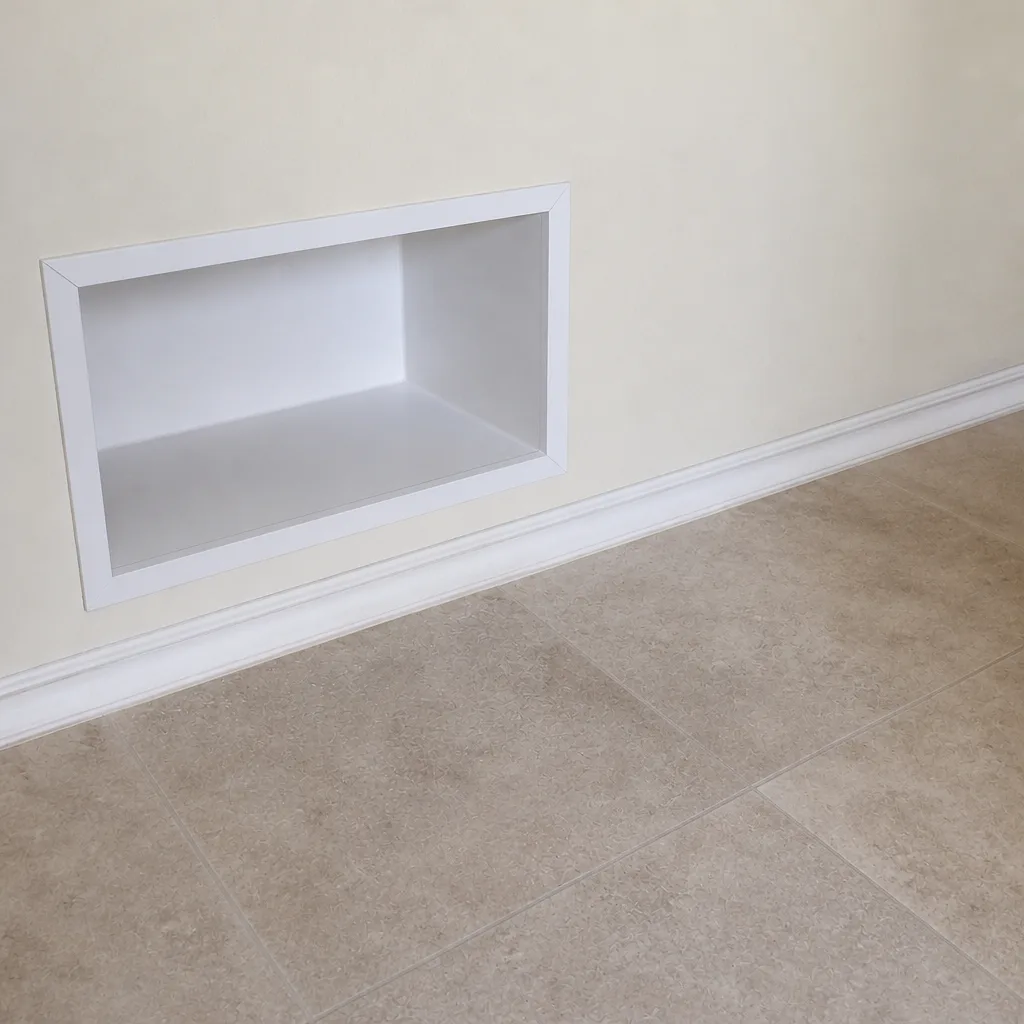 After
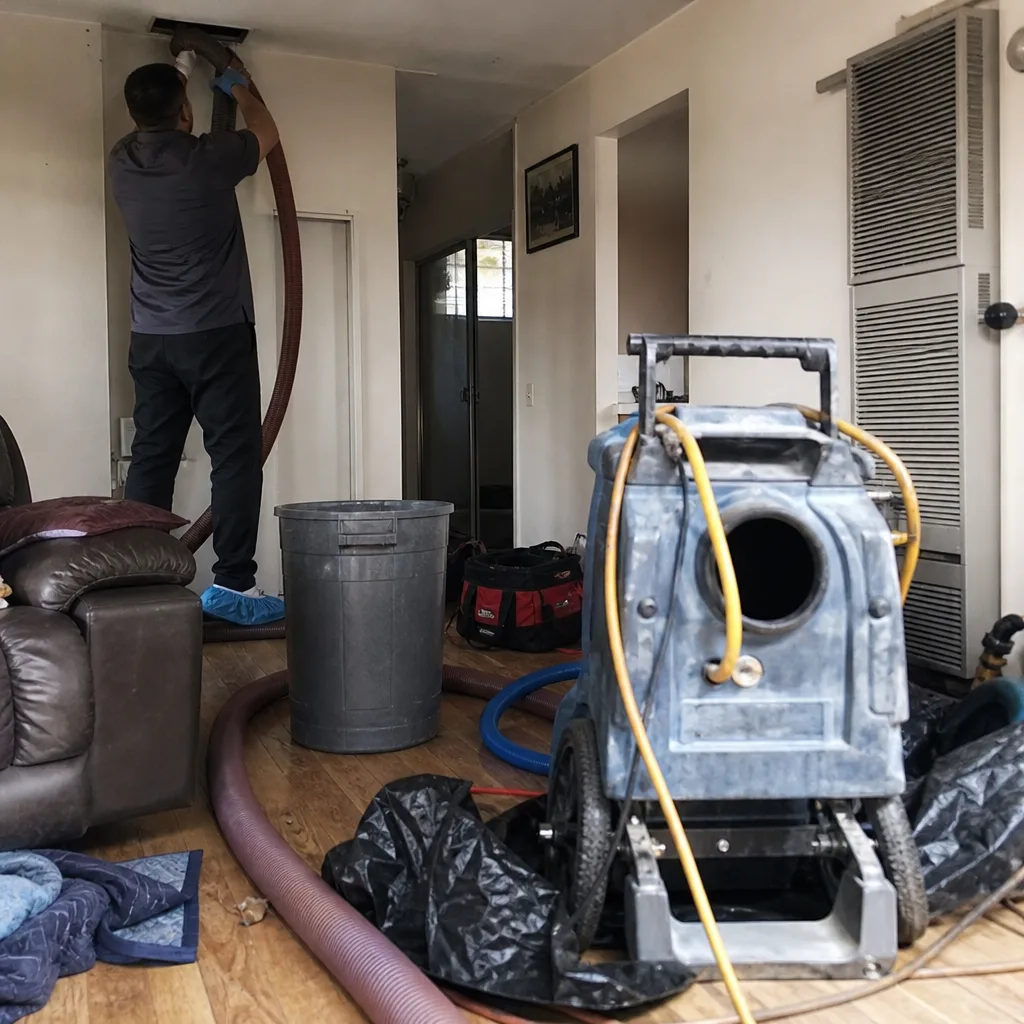 Before
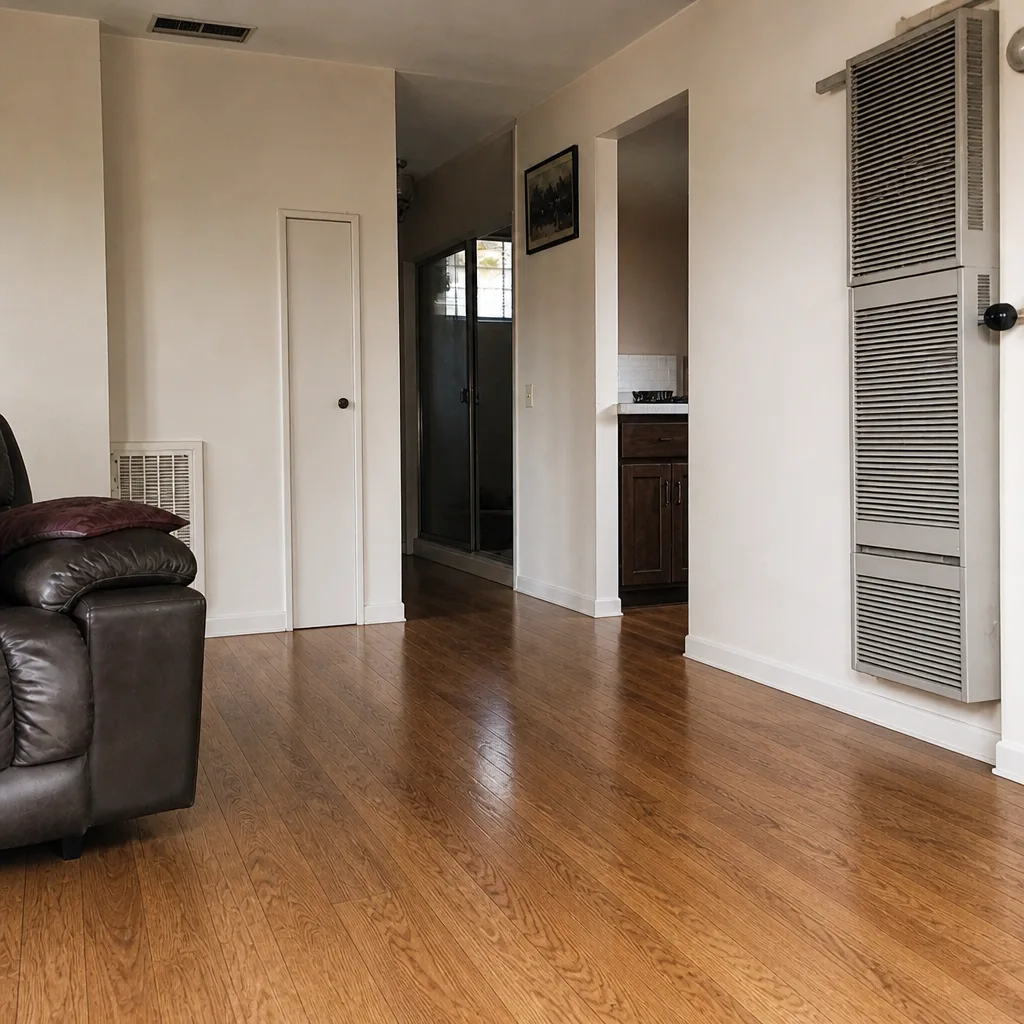 After
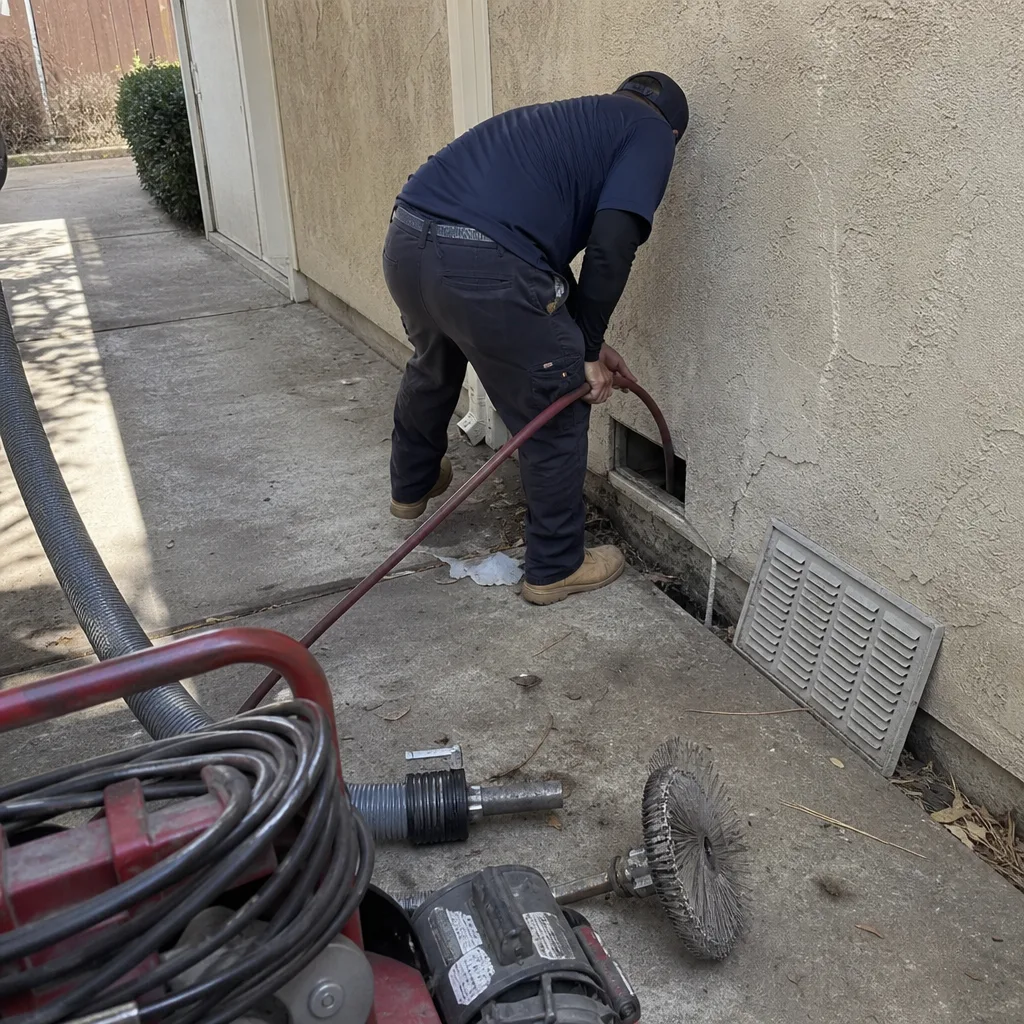 Before
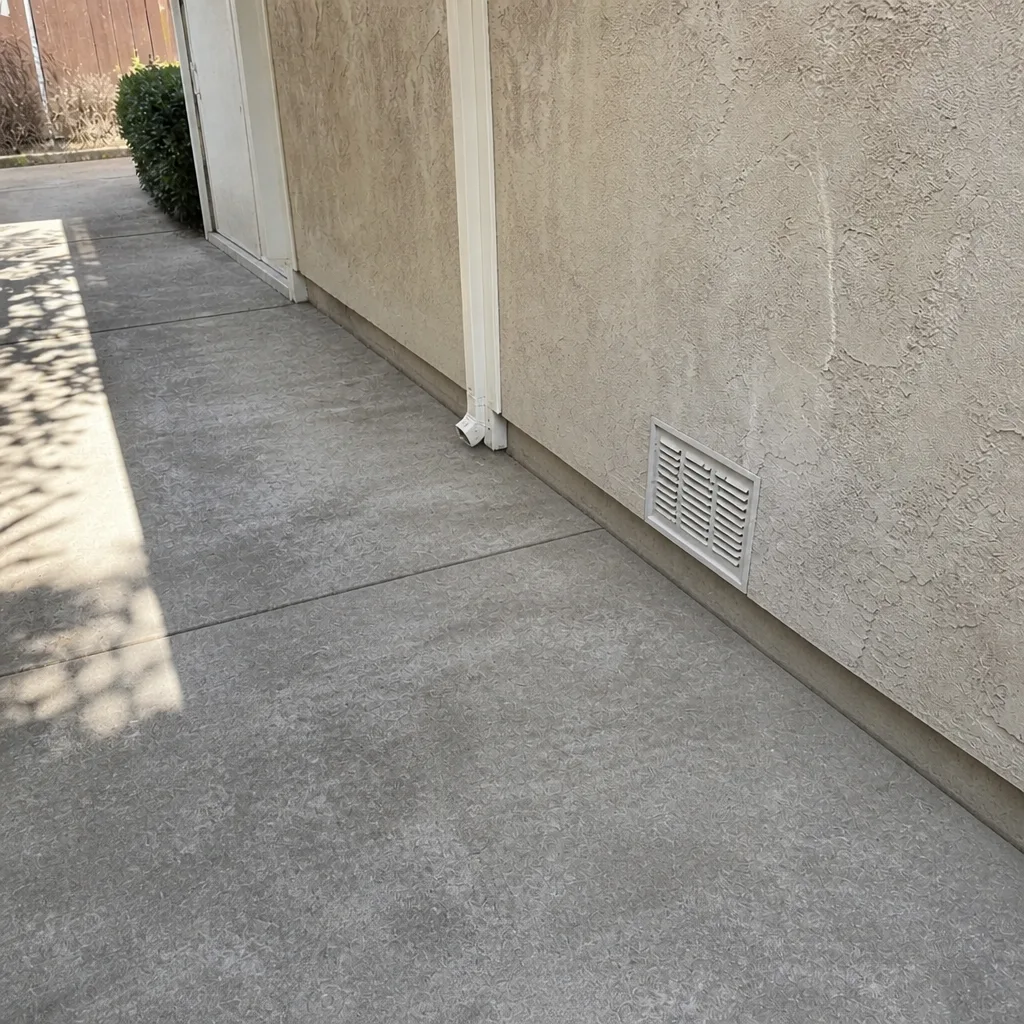 After
When to Call a Professional
Duct cleaning isn’t an annual chore for every home. But there are clear signals that it’s time. If you’ve just moved into a Woodbridge home with an unknown duct history, that’s the strongest signal: you have no idea what the previous occupants left behind. If you’re seeing visible dust blowing from registers when the system starts up, or noticing a musty smell when the heat or AC engages, that’s debris and likely moisture in the system, not a filter issue. Persistent allergy symptoms that don’t ease when you’re away from home, or a home with pets or a recent renovation, are also worth a look. If your dryer is taking two cycles to dry a normal load, the dryer vent is clogged and that’s a safety concern. Woodbridge Air Duct Cleaning offers free estimates in Woodbridge, so the first step is a phone call, not a payment.
Frequently Asked Questions
Most Woodbridge homes land between $400 and $850 for a whole-system cleaning, and $850 to $1,400 or more for larger two-story homes with two zones, long flex runs, and multiple returns. The written estimate is what sets your final price. Call (855) 658-4123 for an exact quote; estimates are free.
Because they usually don’t include what a real cleaning does. A very low quote typically covers one air handler wipe-down or a quick pass through the supply branches, with no returns, no containment, no camera, and no access cutting. It’s not a scam in the sense of doing nothing. It’s a different, smaller job at a smaller price.
Ask for before-and-after photos of your own ducts, and ask for camera verification of the trunk line. A company using professional equipment is comfortable showing you the interior of your system before and after. If photos aren’t offered, ask for them.
For most homes, every three to five years is a reasonable interval. Homes with pets, recent renovations, a smoker, or family members with allergies or asthma may want it more often. Newly purchased homes should get a cleaning regardless of the prior owner’s schedule, since you don’t know the duct history.
Usually yes, and it should. Two zones mean two trunk networks, more access points, and more equipment time. Expect the base range to land closer to the top half. If a quote is identical for a single-zone ranch and a two-zone home, the price wasn’t built from scope.
It’s the most efficient time to do it. A dryer vent cleaning add-on is typically $125 to $250 on the same visit, and it addresses a leading cause of residential fires. If your dryer is taking longer to dry loads than it used to, the vent is clogged. Call (855) 658-4123 and we’ll quote both together.
The Bottom Line
The $89 quote and the $1,200 quote can both be honest. What tells them apart is scope, not price. Build a scope model before you call: count your vents, note your returns, note your zone count, and write down what equipment and lines are included. Compare quotes line by line against the ranges in this guide. A written scope with supply, return, air handler, containment, camera, and access cuts named is a real estimate. A per-vent price with a coupon is not. One flat price per system, agreed before work begins, is the model to insist on. And when the quote comes in, make sure the containment and extraction equipment match the price. The team at Woodbridge Air Duct Cleaning brings Rotobrush and Nikro extraction plus Abatement Technologies containment to every job, and we put the scope in writing before the first cut is made. Call (855) 658-4123 for a free estimate. We answer 24/7. Fast dispatch from 7am to 7pm, Sunday through Friday.
Written by the team at Woodbridge Air Duct Cleaning.